Lecture 4
Boolean algebra
Johannes Korbmacher Lecture slides
Use ← / →, Page Up / Page Down, or Space to navigate. Press F for full screen and Esc to exit. Each slide has a shareable URL.
What is on the slidesWritten description
Written description of every slide. Each entry says what the slide shows, including its drawings and diagrams, so the lecture can be read without seeing it. The textbook chapter explains the same material at length.
1. Logical methods for AI — Lecture 4
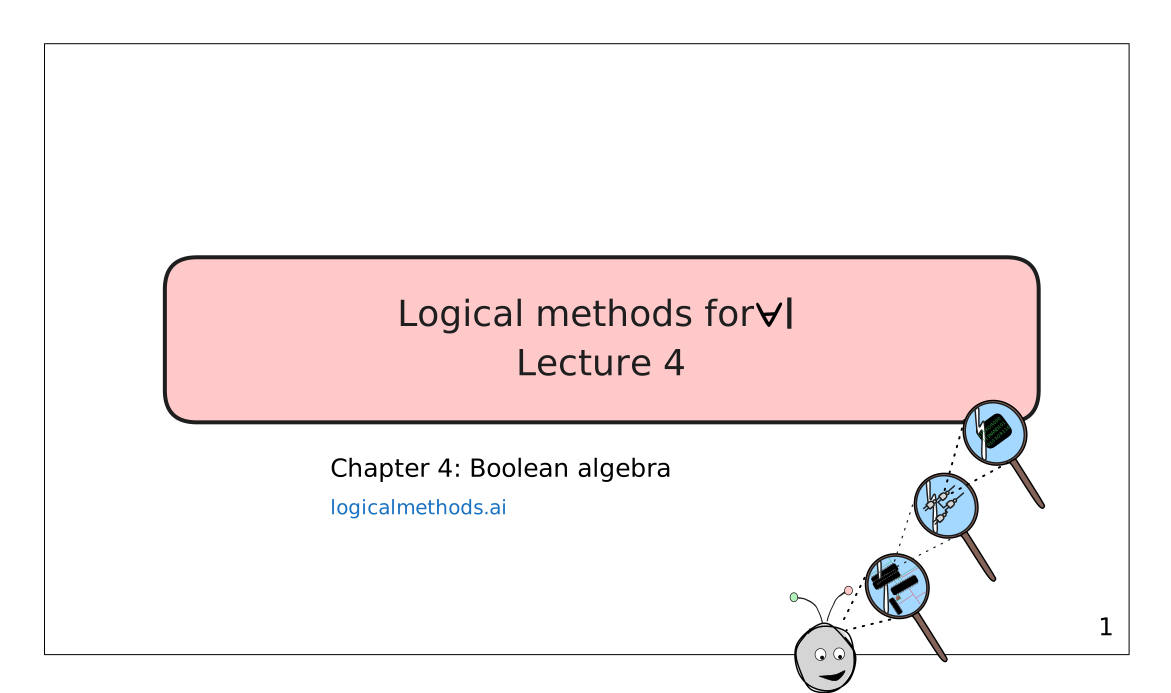
A pink title card reads "Logical methods for ∀I, Lecture 4". The A of AI is drawn as the upside-down A of the universal quantifier, ∀, which is the course mascot's name.
Below the card: "Chapter 4: Boolean algebra", and the course address, logicalmethods.ai. At the right the mascot ∀I peers through a chain of magnifying glasses, each one showing a smaller part of a chip.
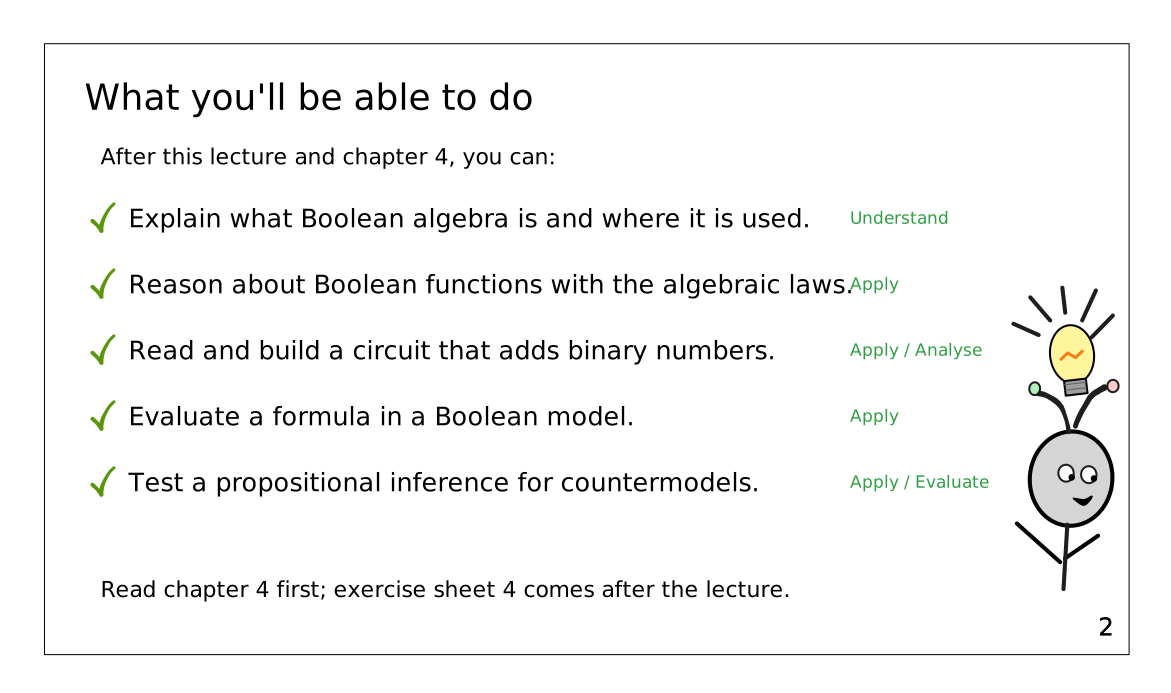
2. What you'll be able to do
Heading: "What you'll be able to do". Introduction: "After this lecture and chapter 4, you can:". Five goals follow, each ticked off with a green check mark and tagged on the right with its level in Bloom's revised taxonomy.
One: explain what Boolean algebra is and where it is used. Understand. Two: reason about Boolean functions with the algebraic laws. Apply. Three: read and build a circuit that adds binary numbers. Apply and analyse. Four: evaluate a formula in a Boolean model. Apply. Five: test a propositional inference for countermodels. Apply and evaluate.
Closing line: "Read chapter 4 first; exercise sheet 4 comes after the lecture." The mascot ∀I stands at the right wearing a lit lightbulb.
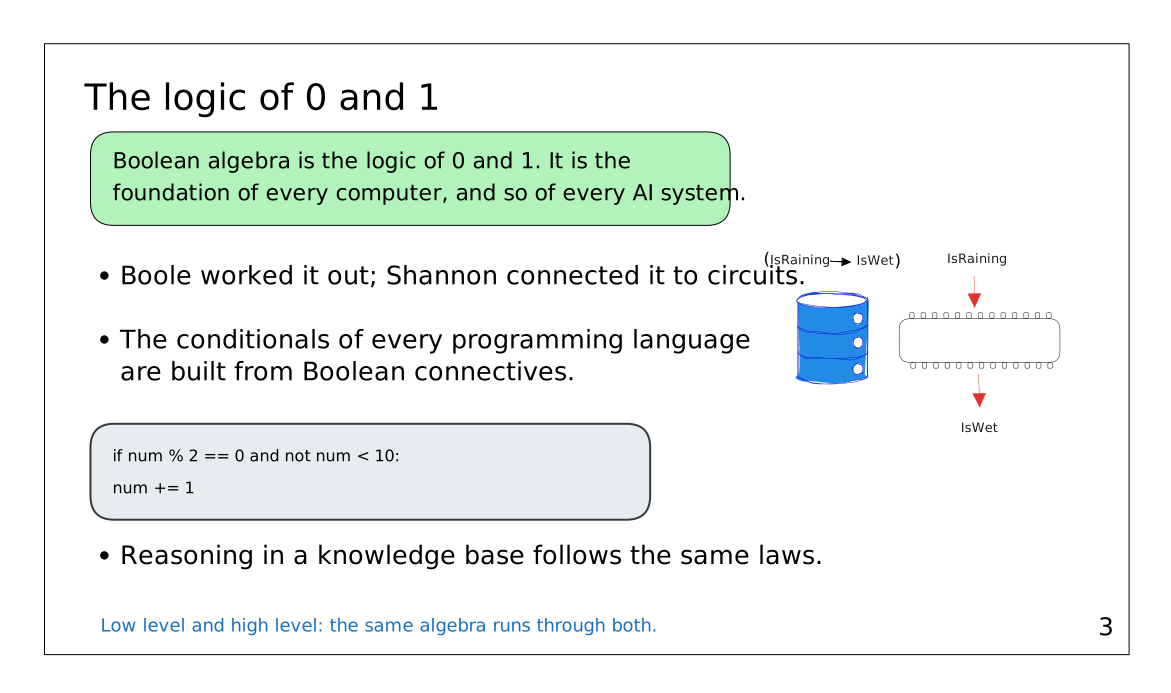
3. The logic of 0 and 1
Heading: "The logic of 0 and 1". A green box: Boolean algebra is the logic of 0 and 1, the foundation of every computer and so of every AI system.
Three points: Boole worked it out and Shannon connected it to circuits; the conditionals of every programming language are built from Boolean connectives; and reasoning in a knowledge base follows the same laws.
A grey panel holds two lines of Python: an if-statement testing "num % 2 == 0 and not num < 10", which increments num. At the right, a drawing of a database feeding a chip, with IsRaining going in and IsWet coming out.
Closing line: "Low level and high level: the same algebra runs through both."
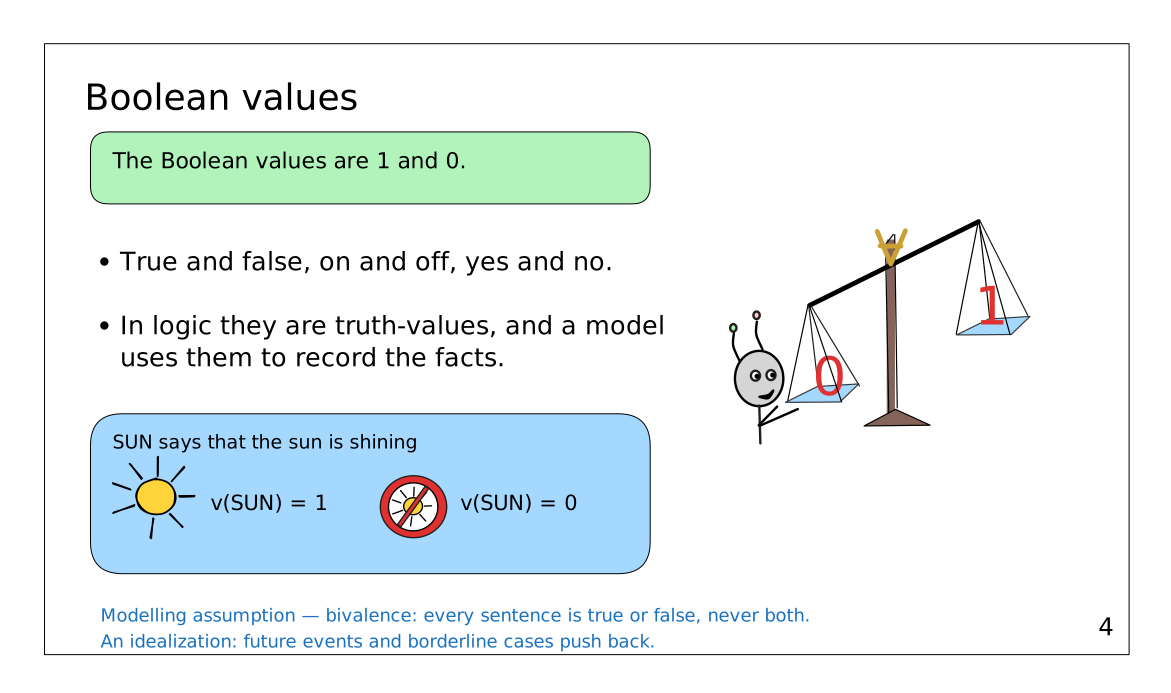
4. Boolean values
Heading: "Boolean values". A green box: the Boolean values are 1 and 0.
Two points: they can be read as true and false, on and off, yes and no; in logic they are truth-values, and a model uses them to record the facts.
A blue panel: "SUN says that the sun is shining". Below it, a drawing of the sun beside "v(SUN) = 1", and a crossed-out sun beside "v(SUN) = 0". At the right, the mascot ∀I holds a pair of scales weighing a 0 against a 1.
Closing lines: "Modelling assumption — bivalence: every sentence is true or false, never both," and "An idealization: future events and borderline cases push back."
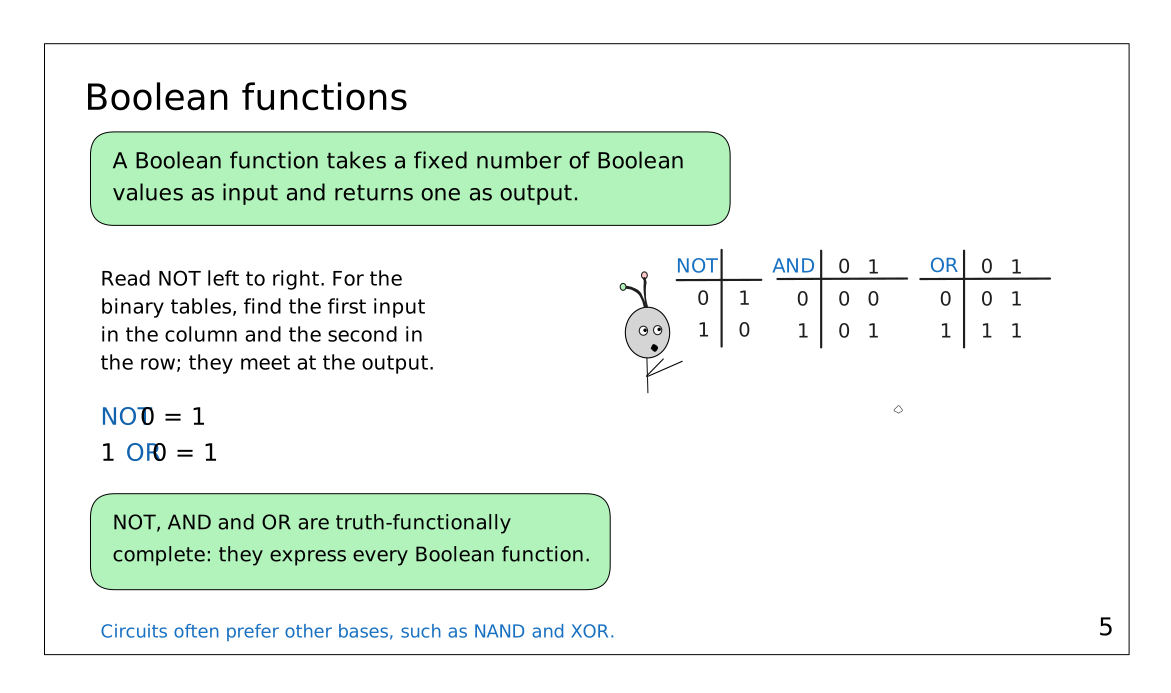
5. Boolean functions
Heading: "Boolean functions". A green box: a Boolean function takes a fixed number of Boolean values as input and returns one as output.
At the left, how to read the tables: NOT goes left to right; for the binary tables, find the first input in the column and the second in the row, and they meet at the output. Two examples follow, with the operators in the book's blue: NOT 0 = 1, and 1 OR 0 = 1.
A green box: NOT, AND and OR are truth-functionally complete — they express every Boolean function.
At the right, the book's drawing of the three function tables, with the mascot pointing at them.
Closing line: "Circuits often prefer other bases, such as NAND and XOR."
6. Relay switches
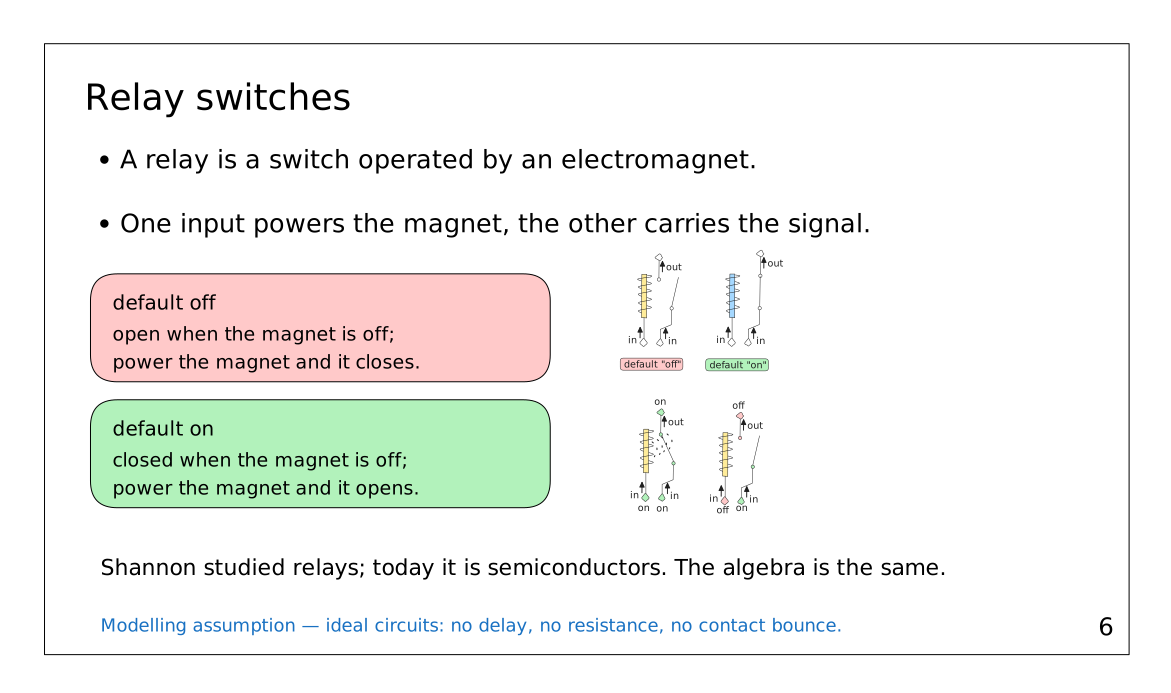
Heading: "Relay switches". Two points: a relay is a switch operated by an electromagnet; one input powers the magnet, the other carries the signal.
A red box, "default off": open when the magnet is off; power the magnet and it closes. A green box, "default on": closed when the magnet is off; power the magnet and it opens. At the right, the book's drawing of both relays in both states.
Closing lines: "Shannon studied relays; today it is semiconductors. The algebra is the same," and "Modelling assumption — ideal circuits: no delay, no resistance, no contact bounce."
7. Implementing NOT, AND, OR
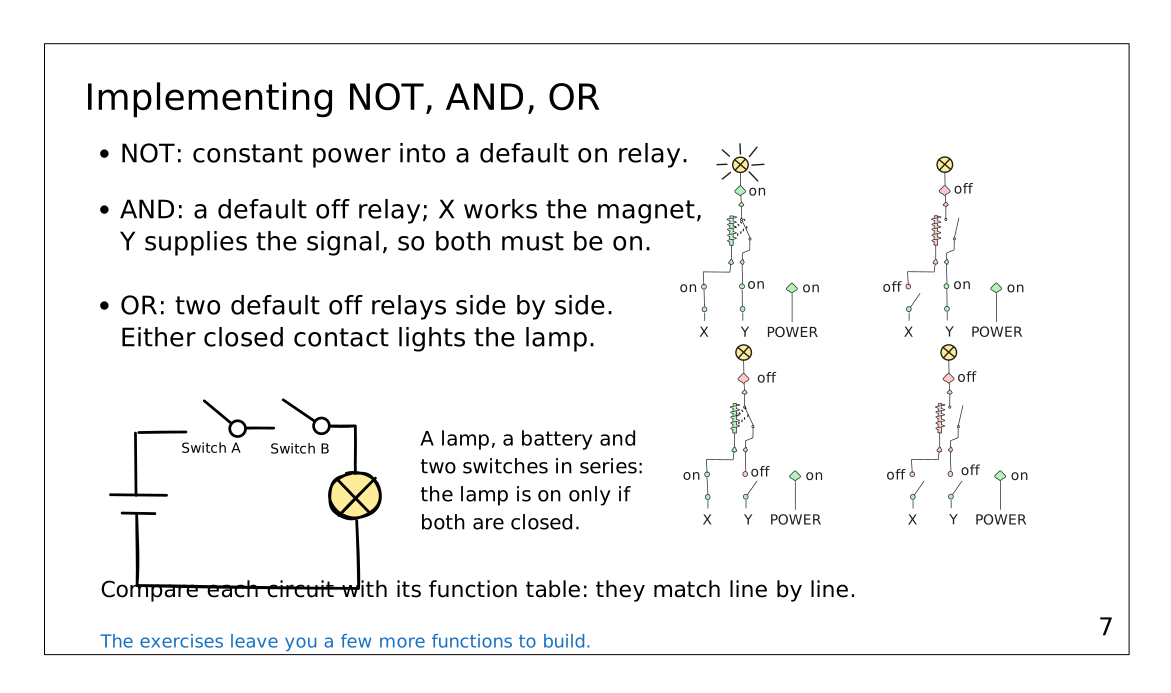
Heading: "Implementing NOT, AND, OR". Three points. NOT: constant power into a default on relay. AND: a default off relay, with X working the magnet and Y supplying the signal, so both must be on. OR: two default off relays side by side, where either closed contact lights the lamp.
At the left, a simple circuit drawing: a battery, two switches in series labelled A and B, and a lamp. Beside it: the lamp is on only if both are closed. At the right, the book's drawing of the relay implementations, each with inputs X, Y and POWER.
Closing lines: "Compare each circuit with its function table: they match line by line," and "The exercises leave you a few more functions to build."
8. Boolean laws
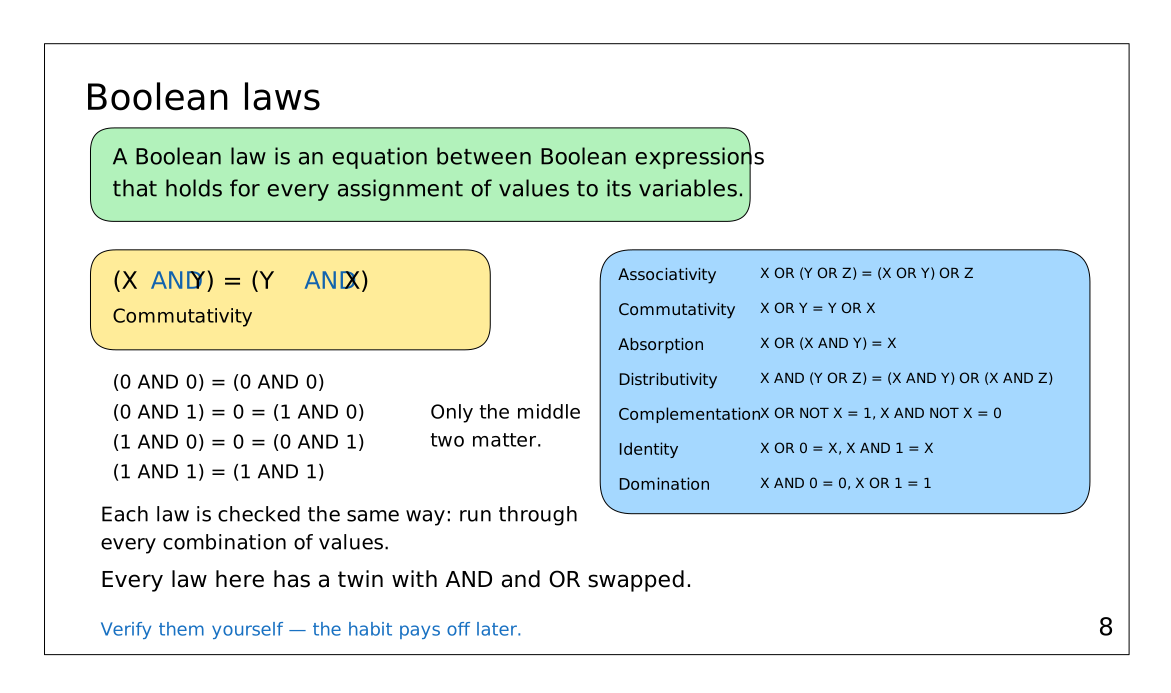
Heading: "Boolean laws". A green box: a Boolean law is an equation between Boolean expressions that holds for every assignment of values to its variables.
A yellow box gives one: (X AND Y) = (Y AND X), named Commutativity. Below it the four calculations: 0 AND 0 equals itself; 0 AND 1 = 0 = 1 AND 0; 1 AND 0 = 0 = 0 AND 1; and 1 AND 1 equals itself. Beside them: only the middle two matter.
A blue panel lists the laws by name: associativity, commutativity, absorption, distributivity, complementation, identity and domination, each with its identity.
Closing lines: "Each law is checked the same way: run through every combination of values.", "Every law here has a twin with AND and OR swapped," and "Verify them yourself — the habit pays off later."
9. Deriving new laws
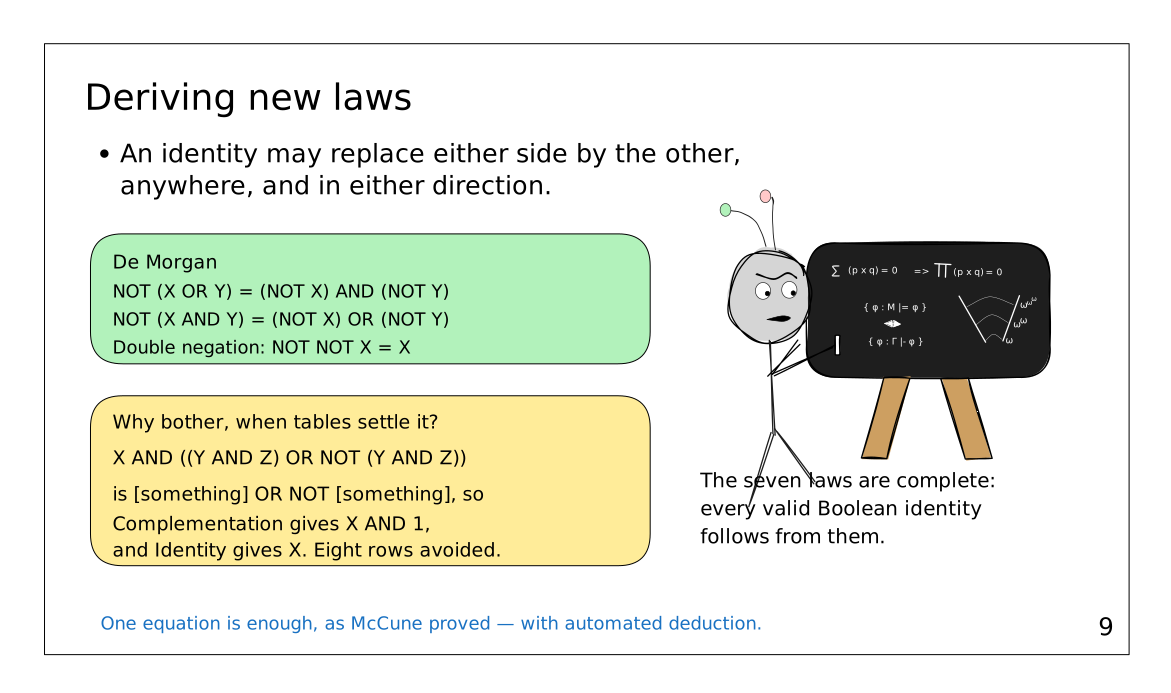
Heading: "Deriving new laws". One point: an identity may replace either side by the other, anywhere, and in either direction.
A green box gives De Morgan's two laws — NOT (X OR Y) = (NOT X) AND (NOT Y), and NOT (X AND Y) = (NOT X) OR (NOT Y) — together with double negation, NOT NOT X = X.
A yellow box asks why bother when tables settle it, and answers with X AND ((Y AND Z) OR NOT (Y AND Z)). That is [something] OR NOT [something], so Complementation gives X AND 1, and Identity gives X. Eight rows avoided.
At the right, the mascot works at a blackboard. Beside it: the seven laws are complete — every valid Boolean identity follows from them.
Closing line: "One equation is enough, as McCune proved — with automated deduction."
10. Binary numbers
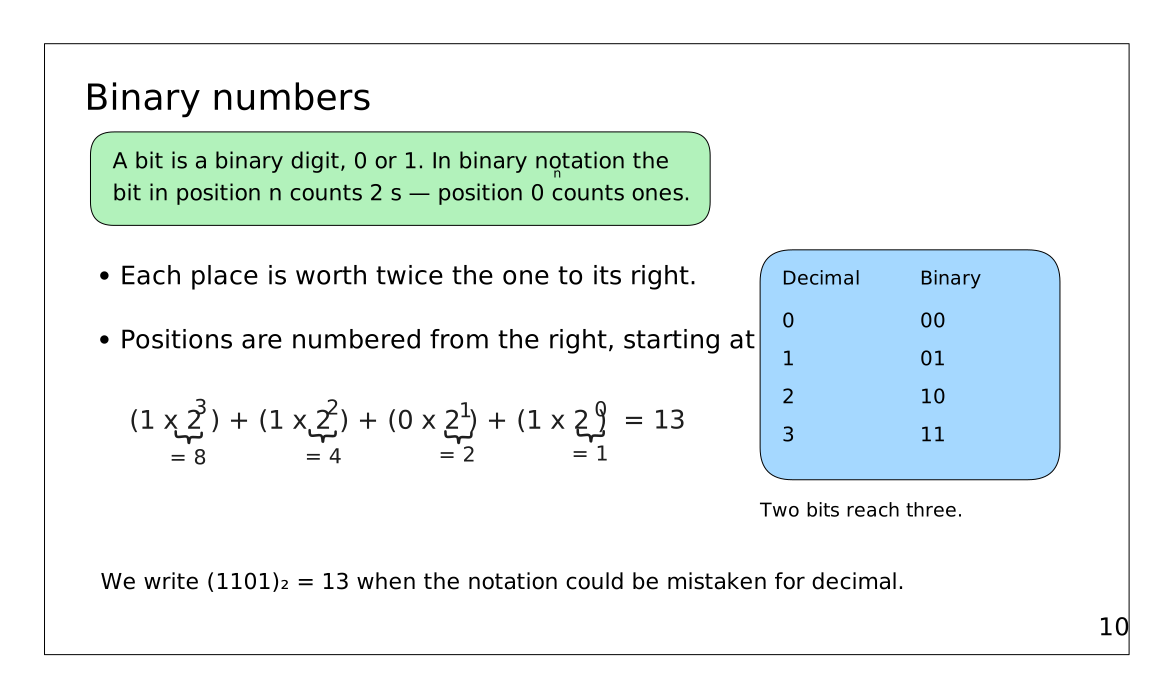
Heading: "Binary numbers". A green box: a bit is a binary digit, 0 or 1, and in binary notation the bit in position n counts 2 to the n — so position 0 counts ones.
Two points: each place is worth twice the one to its right; positions are numbered from the right, starting at 0.
Below, the book's drawing expanding 1101 as (1 × 2³) + (1 × 2²) + (0 × 2¹) + (1 × 2⁰), which is 8 + 4 + 0 + 1 = 13. At the right, a blue table pairing the decimals 0 to 3 with the binary strings 00, 01, 10 and 11, noting that two bits reach three.
Closing line: "We write (1101)₂ = 13 when the notation could be mistaken for decimal."
11. Binary addition
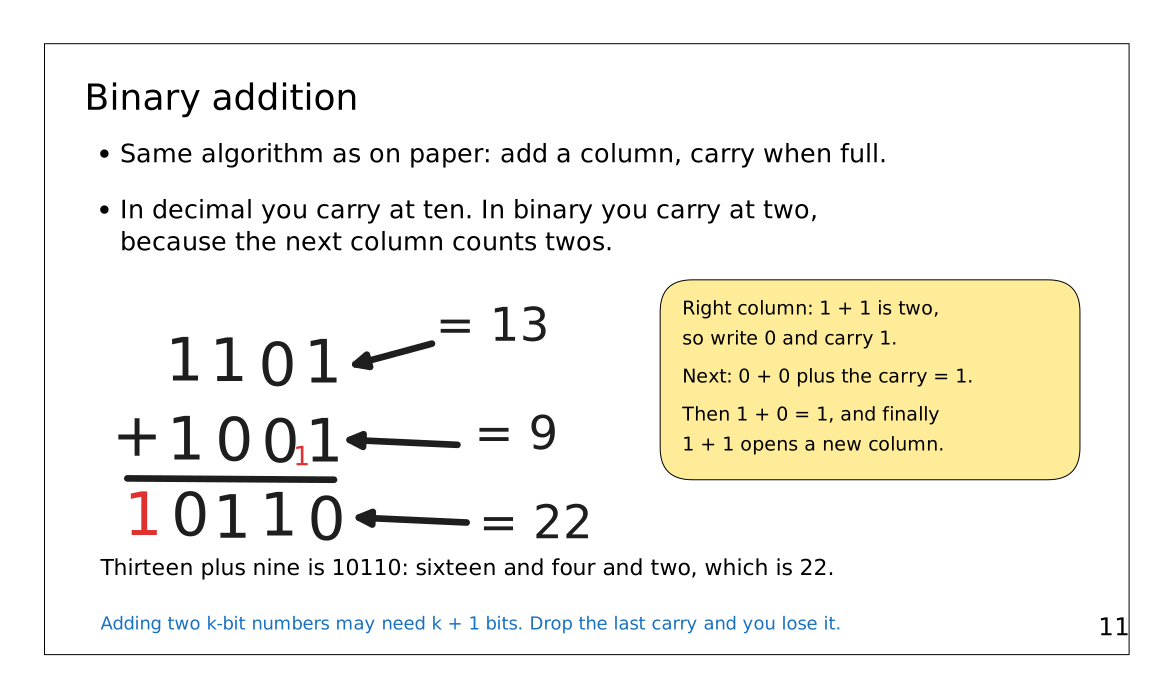
Heading: "Binary addition". Two points: it is the same algorithm as on paper — add a column and carry when full; in decimal you carry at ten, in binary at two, because the next column counts twos.
The book's worked example: 1101 (thirteen) plus 1001 (nine) gives 10110 (twenty-two), with the carries marked in red.
A yellow box walks through it: the right column, 1 + 1, is two, so write 0 and carry 1; next, 0 + 0 plus the carry is 1; then 1 + 0 is 1; and finally 1 + 1 opens a new column.
Closing lines: "Thirteen plus nine is 10110: sixteen and four and two, which is 22," and "Adding two k-bit numbers may need k + 1 bits. Drop the last carry and you lose it."
12. The half adder
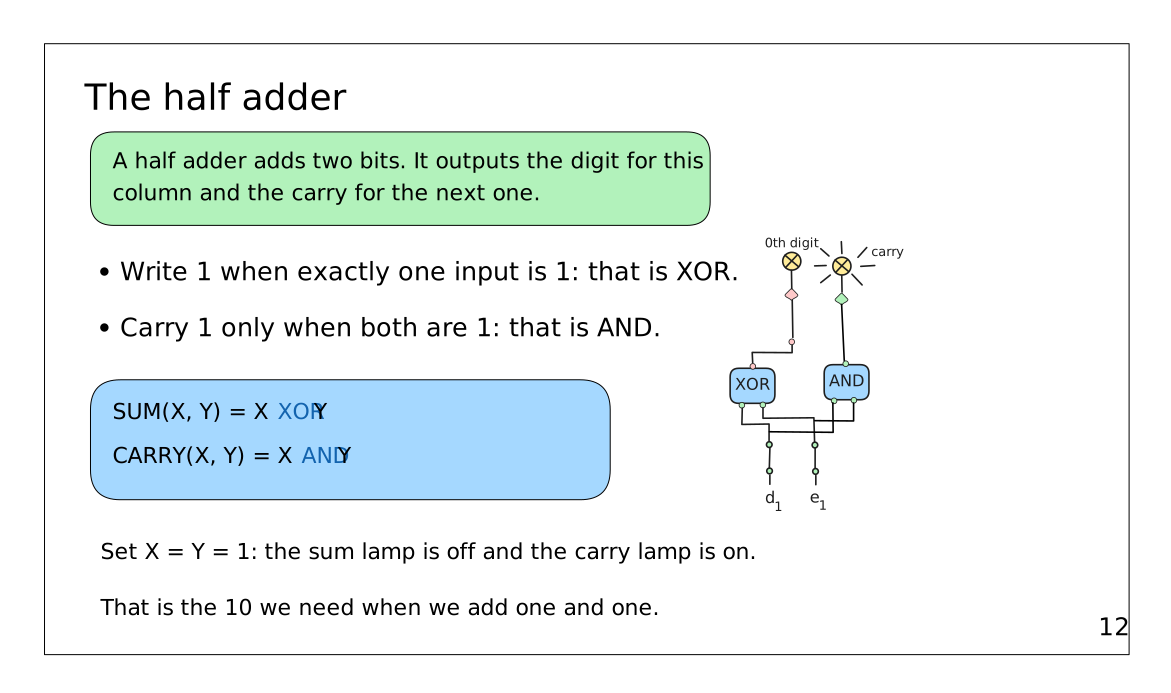
Heading: "The half adder". A green box: a half adder adds two bits, and outputs the digit for this column and the carry for the next one.
Two points: write 1 when exactly one input is 1, which is XOR; carry 1 only when both are 1, which is AND.
A blue box gives the formulas, the operators in the book's blue: SUM(X, Y) = X XOR Y, and CARRY(X, Y) = X AND Y. At the right, the book's circuit: an XOR box and an AND box sharing the same two inputs, each feeding its own lamp.
Closing lines: "Set X = Y = 1: the sum lamp is off and the carry lamp is on," and "That is the 10 we need when we add one and one."
13. The full adder
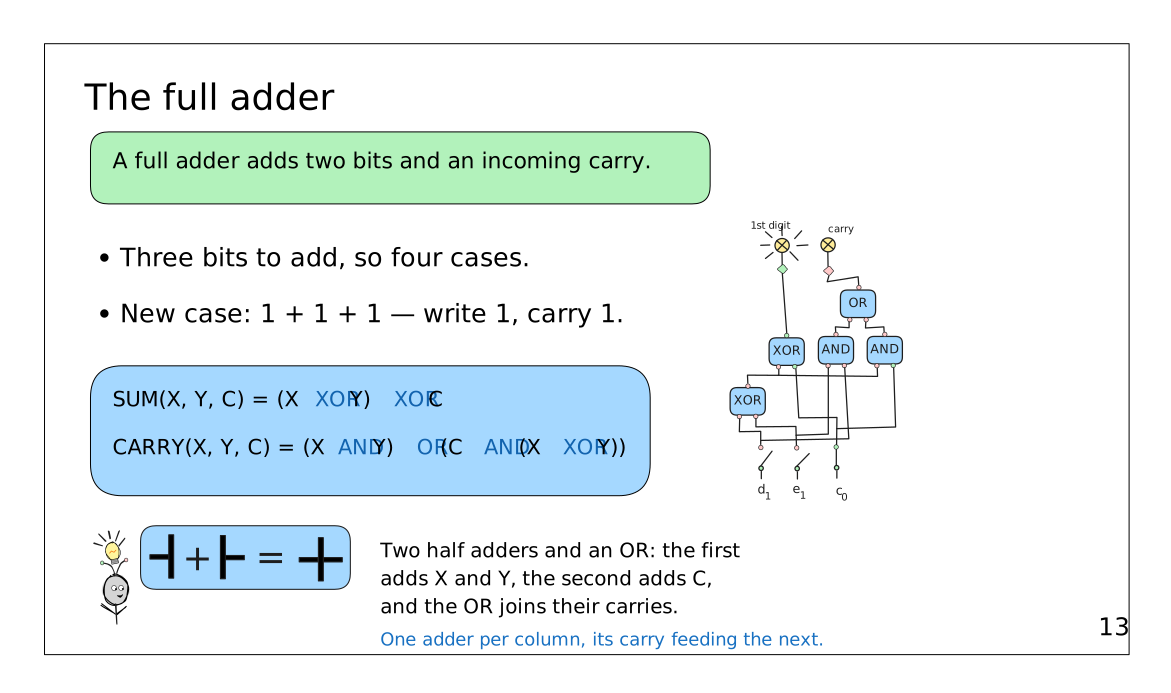
Heading: "The full adder". A green box: a full adder adds two bits and an incoming carry.
Two points: three bits to add, so four cases; the new case is 1 + 1 + 1, which is three — write 1 and carry 1.
A blue box gives the formulas: SUM(X, Y, C) = (X XOR Y) XOR C, and CARRY(X, Y, C) = (X AND Y) OR (C AND (X XOR Y)). At the right, the book's full-adder circuit.
Below, the drawing of two half-adder symbols adding to a full adder, with the explanation: two half adders and an OR — the first adds X and Y, the second adds C, and the OR joins their carries.
Closing line: "One adder per column, its carry feeding the next."
14. Boolean models
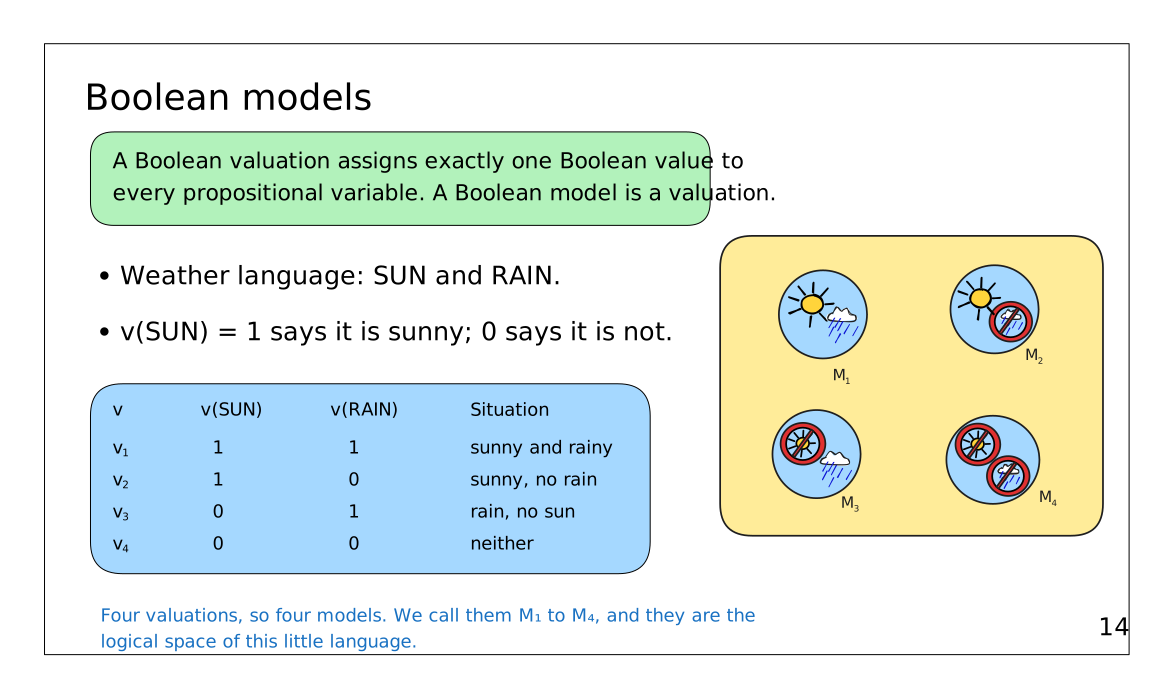
Heading: "Boolean models". A green box: a Boolean valuation assigns exactly one Boolean value to every propositional variable, and a Boolean model is a valuation.
Two points: the weather language has SUN and RAIN; v(SUN) = 1 says it is sunny, and 0 says it is not.
A blue table lists all four valuations, v₁ to v₄, with their values for SUN and RAIN and the situation each describes: sunny and rainy; sunny, no rain; rain, no sun; neither.
At the right, the book's drawing of the logical space: a yellow field holding the four weather worlds, labelled M₁ to M₄.
Closing line: "Four valuations, so four models. We call them M₁ to M₄, and they are the logical space of this little language."
15. How many models?
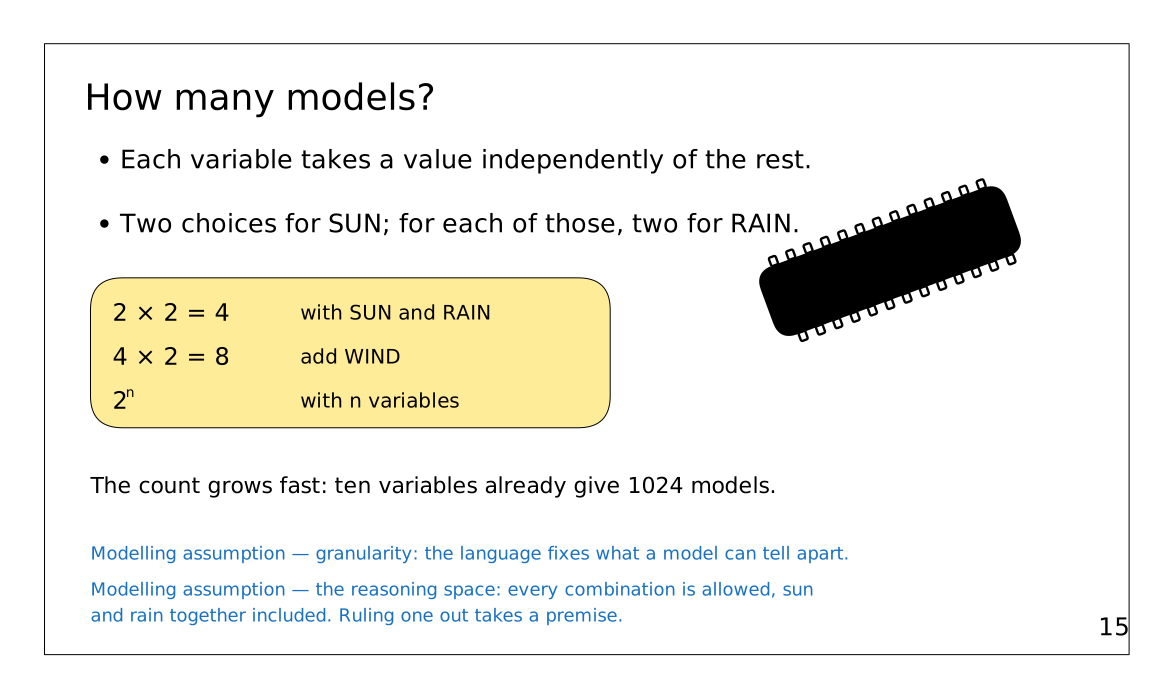
Heading: "How many models?". Two points: each variable takes a value independently of the rest; two choices for SUN, and for each of those, two for RAIN.
A yellow box does the arithmetic: 2 × 2 = 4 with SUN and RAIN; 4 × 2 = 8 once we add WIND; and 2 to the n with n variables. At the right, a drawing of a chip.
Closing lines: "The count grows fast: ten variables already give 1024 models.", "Modelling assumption — granularity: the language fixes what a model can tell apart," and "Modelling assumption — the reasoning space: every combination is allowed, sun and rain together included. Ruling one out takes a premise."
16. Boolean evaluation
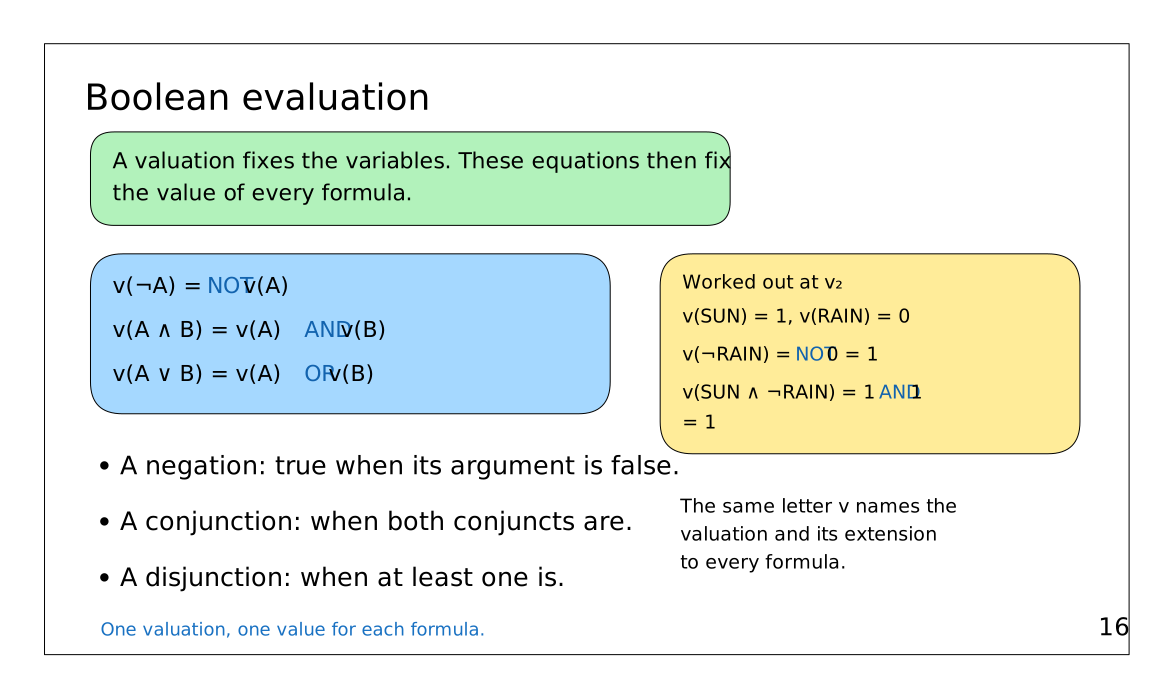
Heading: "Boolean evaluation". A green box: a valuation fixes the variables, and these equations then fix the value of every formula.
A blue box gives the three clauses, the operators in the book's blue: v(¬A) = NOT v(A); v(A ∧ B) = v(A) AND v(B); v(A ∨ B) = v(A) OR v(B).
Three points: a negation is true when its argument is false; a conjunction when both conjuncts are; a disjunction when at least one is.
A yellow box works it out at v₂, where v(SUN) = 1 and v(RAIN) = 0: v(¬RAIN) = NOT 0 = 1, so v(SUN ∧ ¬RAIN) = 1 AND 1 = 1. Beside it: the same letter v names the valuation and its extension to every formula.
Closing line: "One valuation, one value for each formula."
17. Parsing and evaluation
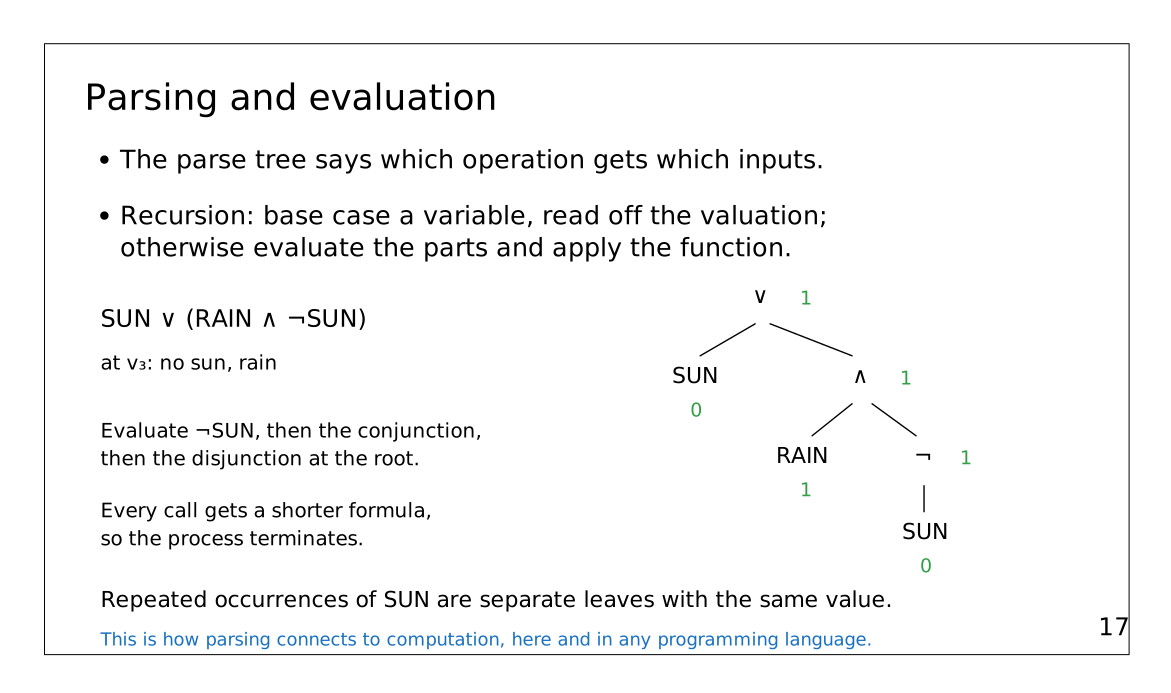
Heading: "Parsing and evaluation". Two points: the parse tree says which operation gets which inputs; and evaluation is recursion — the base case is a variable, read off the valuation, and otherwise you evaluate the parts and apply the function.
The formula SUN ∨ (RAIN ∧ ¬SUN), evaluated at v₃: no sun, rain. At the right, its tree, with each node's value in green beside it. The SUN leaf is 0; RAIN is 1; the SUN under the negation is 0, so ¬ gives 1; the conjunction gives 1; and the disjunction at the root gives 1.
Beside the tree: evaluate ¬SUN, then the conjunction, then the disjunction at the root. Every call gets a shorter formula, so the process terminates.
Closing lines: "Repeated occurrences of SUN are separate leaves with the same value," and "This is how parsing connects to computation, here and in any programming language."
18. Propositions
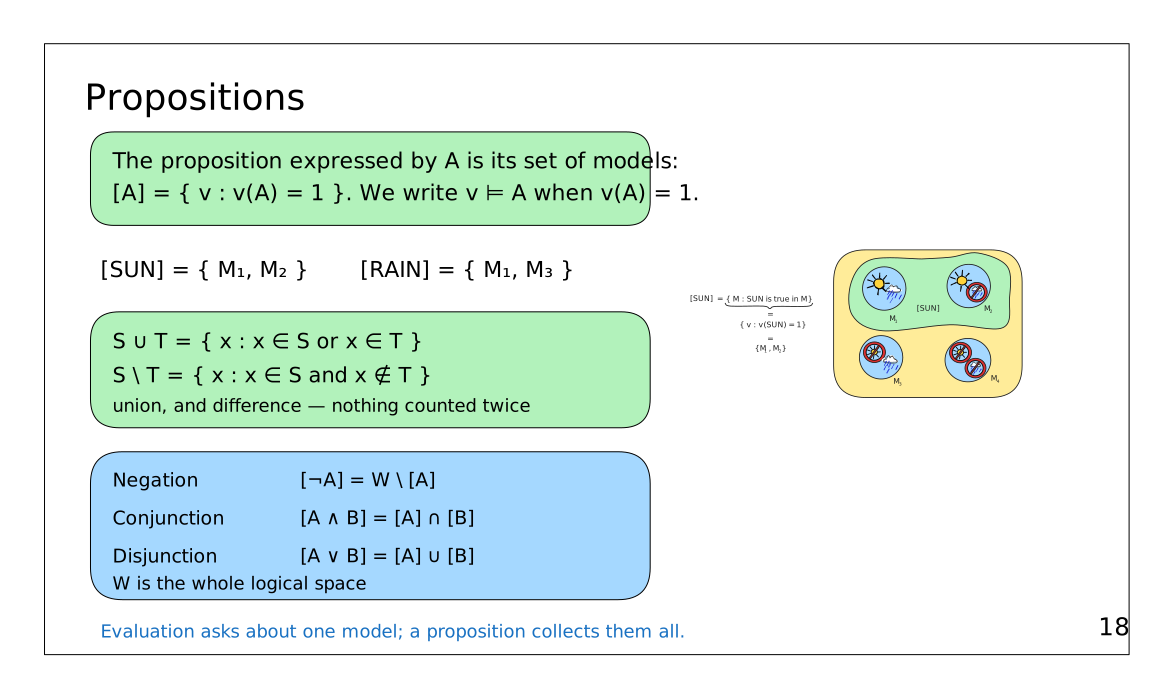
Heading: "Propositions". A green box: the proposition expressed by A is its set of models, [A] = { v : v(A) = 1 }, and we write v ⊨ A when v(A) = 1.
Two examples: [SUN] = { M₁, M₂ } and [RAIN] = { M₁, M₃ }.
A green box defines two set operations: union, S ∪ T = { x : x ∈ S or x ∈ T }, and difference, S \ T = { x : x ∈ S and x ∉ T } — nothing counted twice.
A blue box pairs each connective with its operation: negation, [¬A] = W \ [A]; conjunction, [A ∧ B] = [A] ∩ [B]; disjunction, [A ∨ B] = [A] ∪ [B]. W is the whole logical space.
At the right, the book's drawing of the logical space with [SUN] outlined in green around M₁ and M₂.
Closing line: "Evaluation asks about one model; a proposition collects them all."
19. Testing an inference
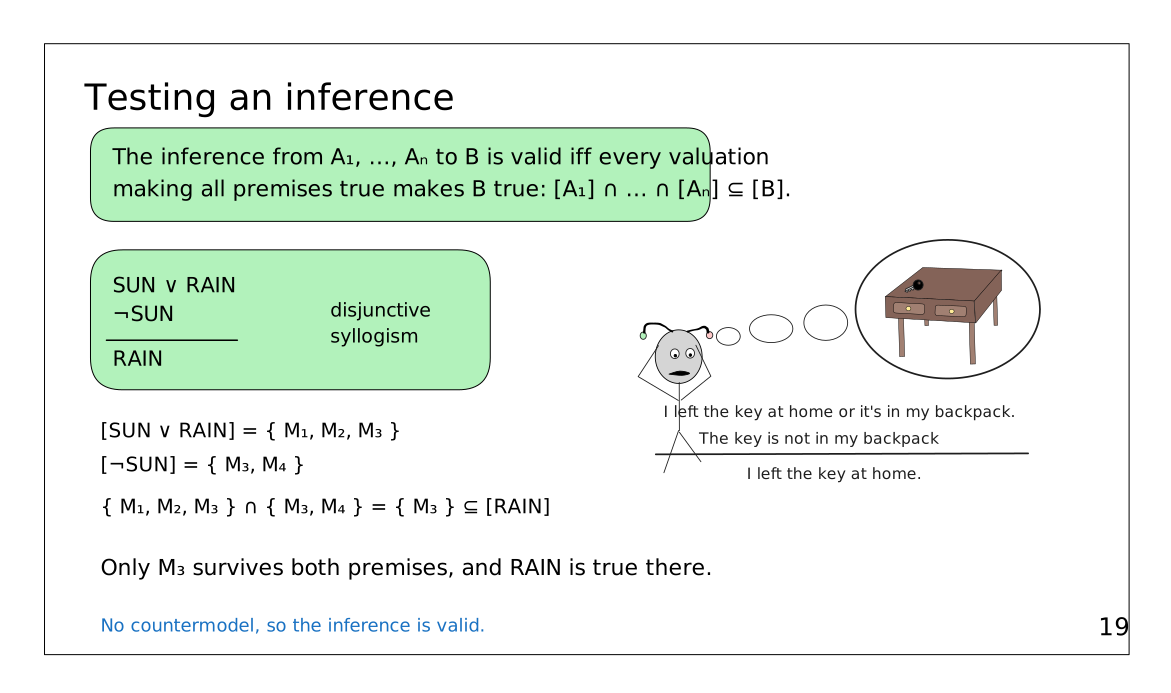
Heading: "Testing an inference". A green box: the inference from A₁, …, Aₙ to B is valid iff every valuation making all premises true makes B true — that is, [A₁] ∩ … ∩ [Aₙ] ⊆ [B].
A green panel holds the inference: from SUN ∨ RAIN and ¬SUN, infer RAIN — disjunctive syllogism. At the right, the mascot thinks about a desk with drawers, reasoning that the key is at home because it is not in the backpack.
The calculation: [SUN ∨ RAIN] = { M₁, M₂, M₃ } and [¬SUN] = { M₃, M₄ }, so their intersection is { M₃ }, which is inside [RAIN].
Closing lines: "Only M₃ survives both premises, and RAIN is true there," and "No countermodel, so the inference is valid."
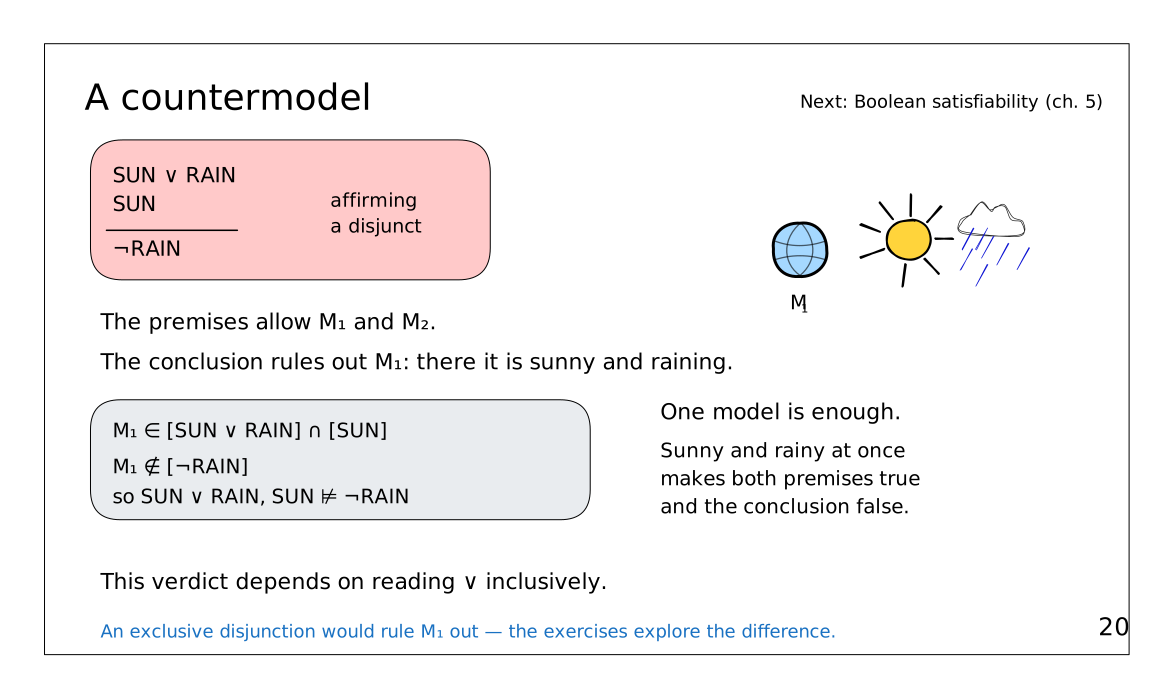
20. A countermodel
Heading: "A countermodel". At the top right: "Next: Boolean satisfiability (ch. 5)".
A red panel holds the inference: from SUN ∨ RAIN and SUN, infer ¬RAIN — affirming a disjunct.
Then: the premises allow M₁ and M₂, but the conclusion rules out M₁, because there it is sunny and raining. At the right, a little world labelled M₁ beside drawings of the sun and of rain.
A grey box writes it out: M₁ ∈ [SUN ∨ RAIN] ∩ [SUN], M₁ ∉ [¬RAIN], so SUN ∨ RAIN, SUN ⊭ ¬RAIN. Beside it: one model is enough — sunny and rainy at once makes both premises true and the conclusion false.
Closing lines: "This verdict depends on reading ∨ inclusively," and "An exclusive disjunction would rule M₁ out — the exercises explore the difference."