Lecture 3

Valid inference

Johannes Korbmacher Lecture slides

Title slide for Logical methods for AI, Lecture 3, on valid inference.
1 / 20 · Logical methods for AI — Lecture 3
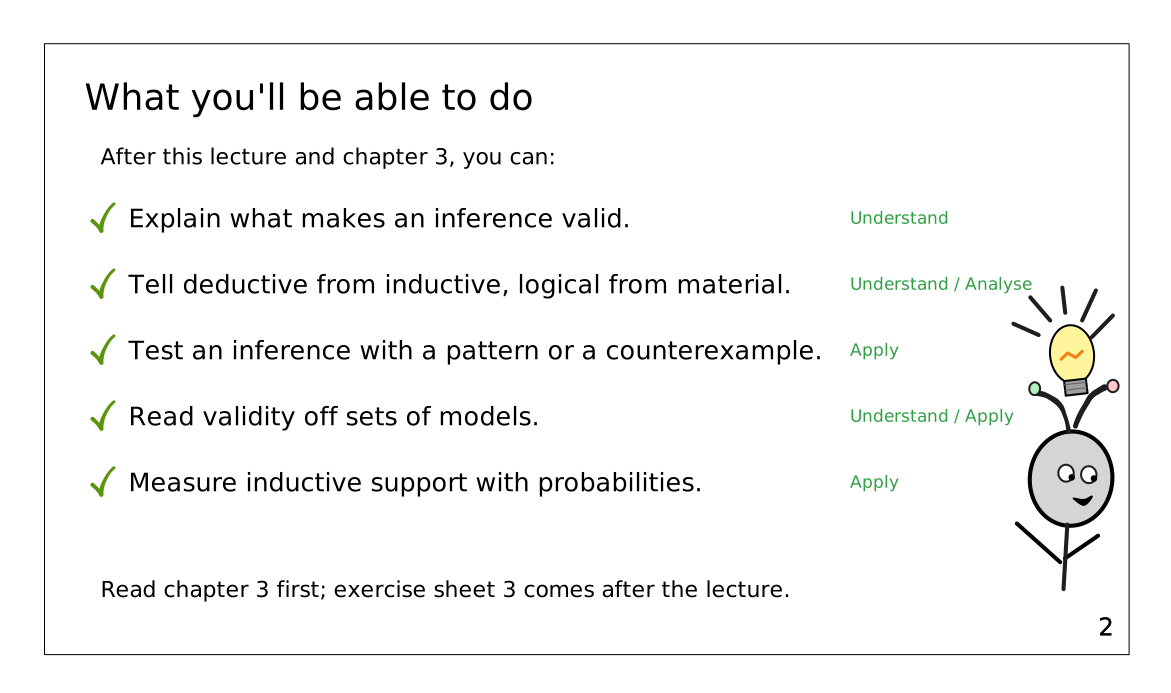
The five learning goals for this lecture, each tagged with a level of Bloom's taxonomy.
2 / 20 · What you'll be able to do
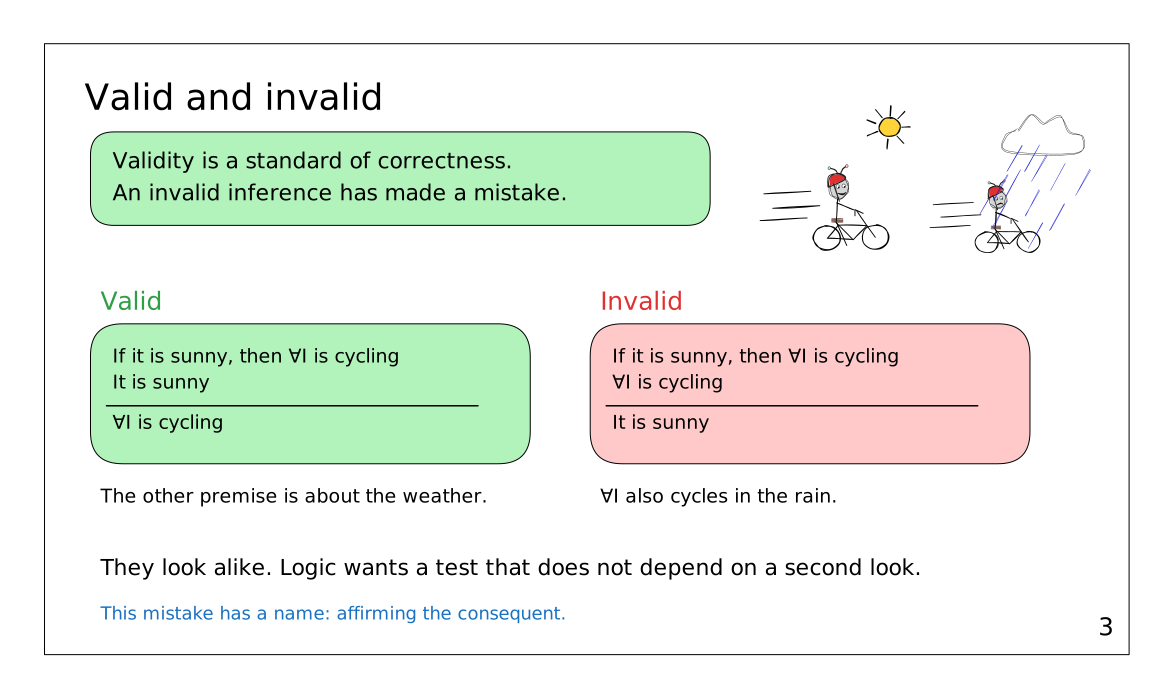
A valid inference and an invalid one that looks almost the same.
3 / 20 · Valid and invalid
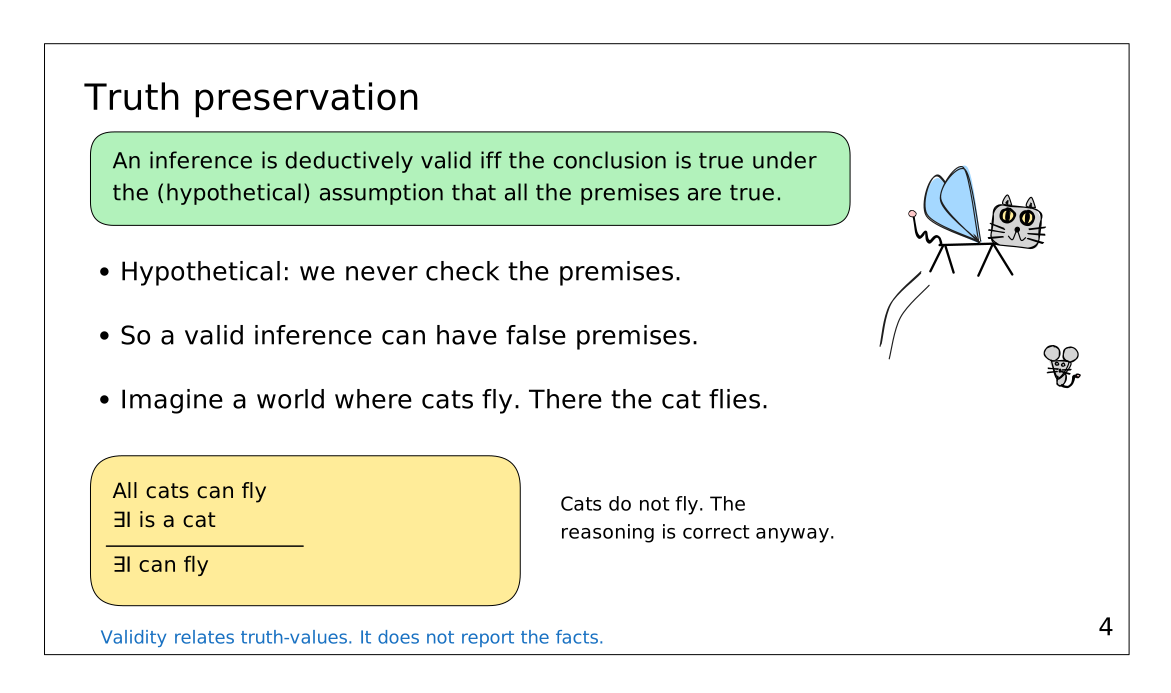
Validity as truth preservation, illustrated with the flying cat.
4 / 20 · Truth preservation
Three inferences showing that truth of the premises and validity come apart.
5 / 20 · Valid, sound, true
The same logical form behind two inferences, and the notation for inference and for validity.
6 / 20 · Logical form
Material validity, the failed replacement, and Carnap's meaning postulate.
7 / 20 · Material validity
Deductive validity as truth preservation in every situation, with the asteroid calculation.
8 / 20 · Always: deductive validity
Deduction in everyday reasoning and in a Python program.
9 / 20 · Deduction at work
Three valid schemas beside the three matching fallacies.
10 / 20 · Schemas and fallacies
Models, the logical space, and the proposition expressed by a formula.
11 / 20 · Models
Subset and intersection, shown with the book's picture sets.
12 / 20 · Sets again
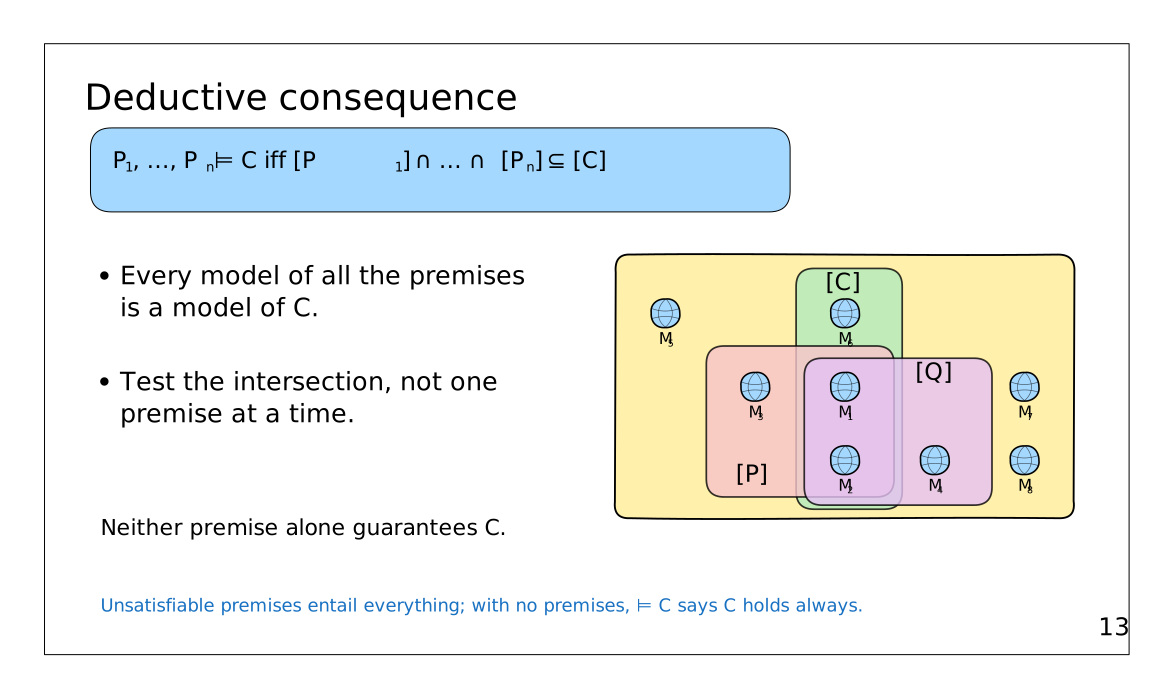
Deductive consequence as a subset claim about the joint premise region.
13 / 20 · Deductive consequence
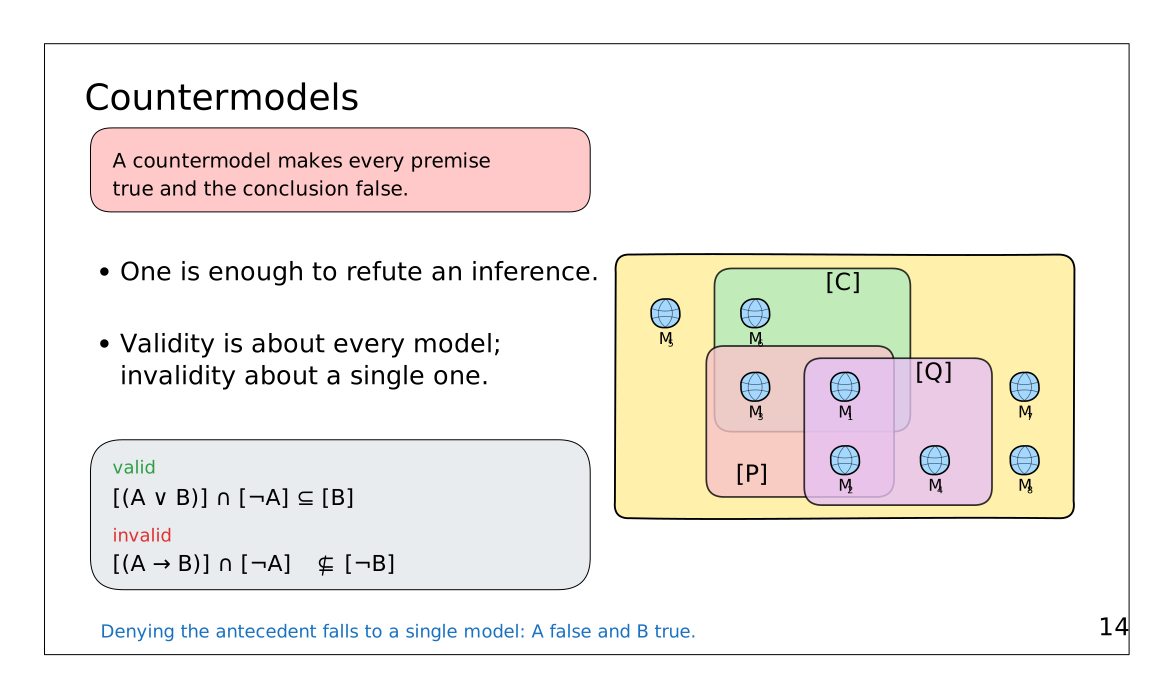
A countermodel sitting inside both premise regions but outside the conclusion region.
14 / 20 · Countermodels
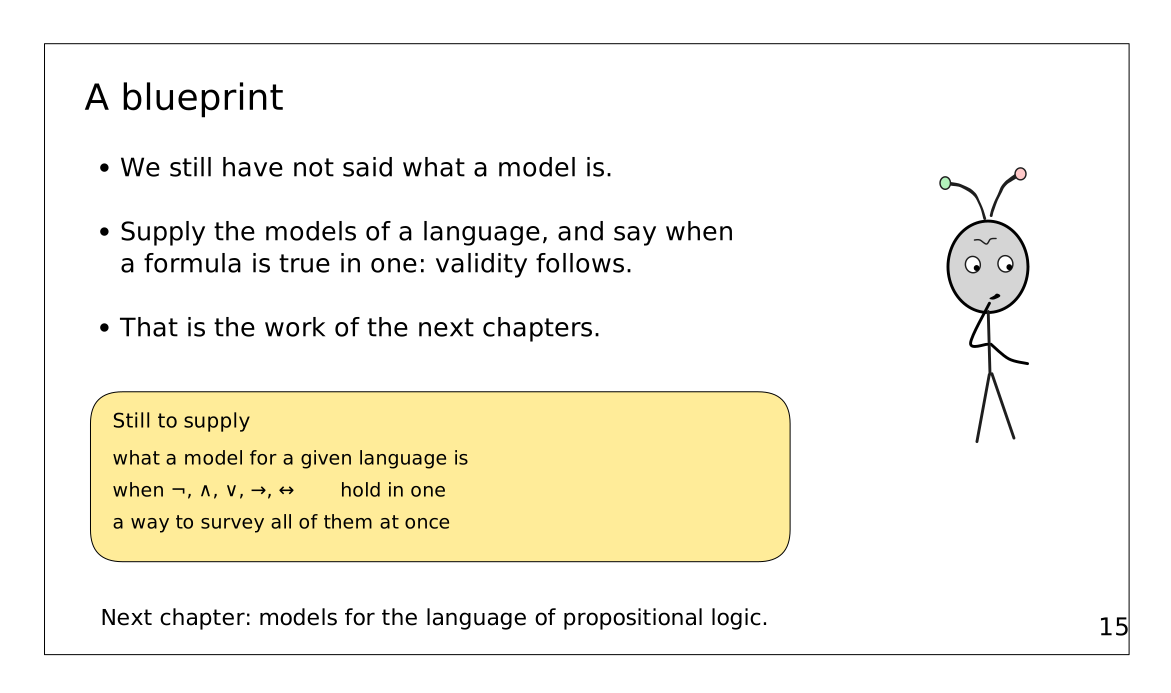
What the account of deductive validity still leaves to be supplied.
15 / 20 · A blueprint
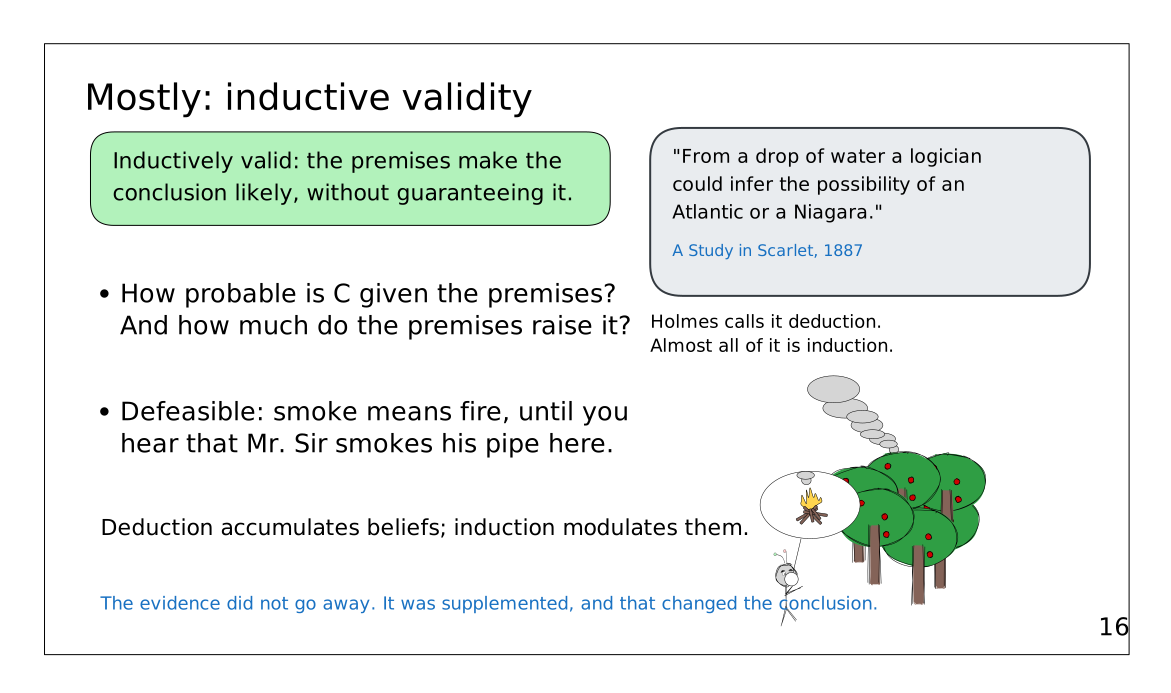
Inductive validity, Sherlock Holmes, and the smoke in the woods.
16 / 20 · Mostly: inductive validity
The swans, the marbles, and the shared form of enumerative induction.
17 / 20 · Enumerative induction
The six models of a die roll, and two probability functions over them.
18 / 20 · Probabilities over models
The definition of conditional probability and the two dice worked through.
19 / 20 · Conditional probability
Probability-raising support, and support that holds under every probability function.
20 / 20 · Support, and logical support

What is on the slidesWritten description

Written description of every slide. Each entry says what the slide shows, including its drawings and diagrams, so the lecture can be read without seeing it. The textbook chapter explains the same material at length.

1. Logical methods for AI — Lecture 3

A pink title card reads "Logical methods for ∀I, Lecture 3". The A of AI is drawn as the upside-down A of the universal quantifier, ∀, which is the course mascot's name.

Below the card: "Chapter 3: Valid inference", and the course address, logicalmethods.ai. At the right the mascot ∀I holds up a green board carrying the inference from all humans being mortal and Socrates being human to Socrates being mortal.

2. What you'll be able to do

Heading: "What you'll be able to do". Introduction: "After this lecture and chapter 3, you can:". Five goals follow, each ticked off with a green check mark and tagged on the right with its level in Bloom's revised taxonomy.

One: explain what makes an inference valid. Understand. Two: tell deductive from inductive, logical from material. Understand and analyse. Three: test an inference with a pattern or a counterexample. Apply. Four: read validity off sets of models. Understand and apply. Five: measure inductive support with probabilities. Apply.

Closing line: "Read chapter 3 first; exercise sheet 3 comes after the lecture." The mascot ∀I stands at the right wearing a lit lightbulb.

3. Valid and invalid

Heading: "Valid and invalid". A green box states that validity is a standard of correctness, and that an invalid inference has made a mistake. At the top right the mascot cycles twice: once under the sun, once under a rain cloud.

Two inferences stand side by side. The green one, labelled Valid: from "If it is sunny, then ∀I is cycling" and "It is sunny", infer "∀I is cycling". The red one, labelled Invalid: from the same conditional and "∀I is cycling", infer "It is sunny".

Under the green one: the other premise is about the weather. Under the red one: ∀I also cycles in the rain.

Closing lines: "They look alike. Logic wants a test that does not depend on a second look," and "This mistake has a name: affirming the consequent."

4. Truth preservation

Heading: "Truth preservation". A green box gives the definition: an inference is deductively valid if and only if the conclusion is true under the hypothetical assumption that all the premises are true.

Three points: the test is hypothetical, so we never check the premises; a valid inference can therefore have false premises; imagine a world where cats fly, and there the cat flies.

A yellow box holds the inference: from "All cats can fly" and "∃I is a cat", infer "∃I can fly". Beside it: cats do not fly, and the reasoning is correct anyway. At the right, the drawing of a winged cat chasing a mouse.

Closing line: "Validity relates truth-values. It does not report the facts."

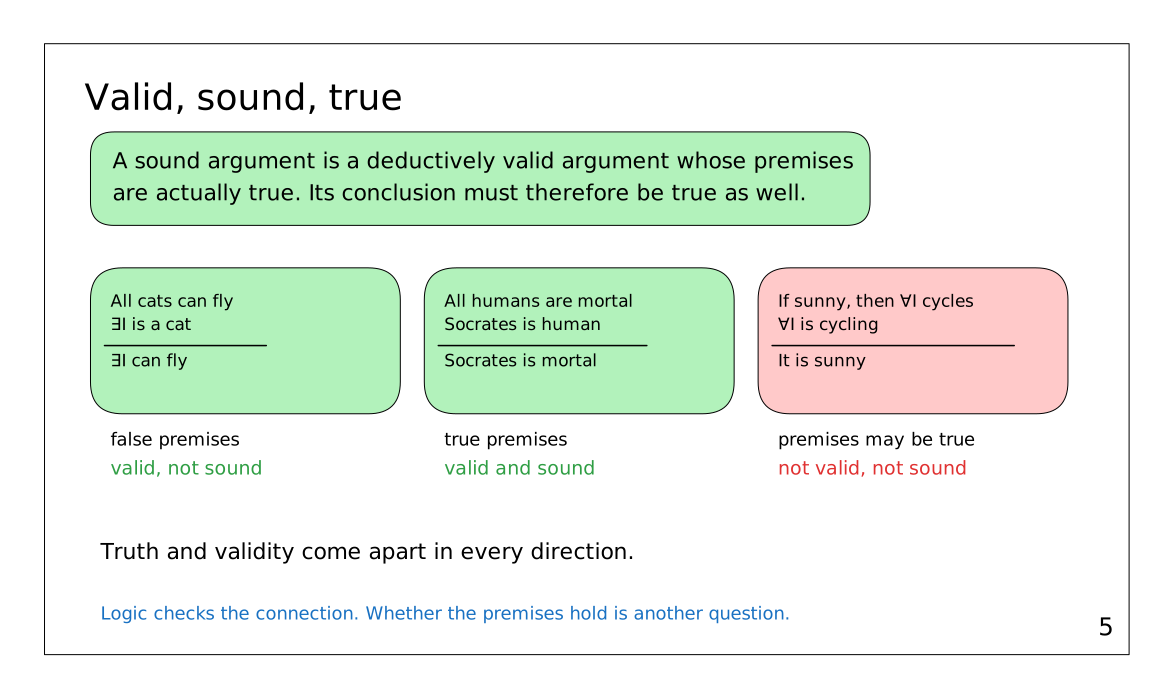
5. Valid, sound, true

Heading: "Valid, sound, true". A green box defines a sound argument as a deductively valid argument whose premises are actually true, so its conclusion must be true as well.

Three panels. First, green: all cats can fly, ∃I is a cat, so ∃I can fly — false premises, valid but not sound. Second, green: all humans are mortal, Socrates is human, so Socrates is mortal — true premises, valid and sound. Third, red: if sunny then ∀I cycles, ∀I is cycling, so it is sunny — the premises may well be true, but this is not valid and not sound.

Closing lines: "Truth and validity come apart in every direction," and "Logic checks the connection. Whether the premises hold is another question."

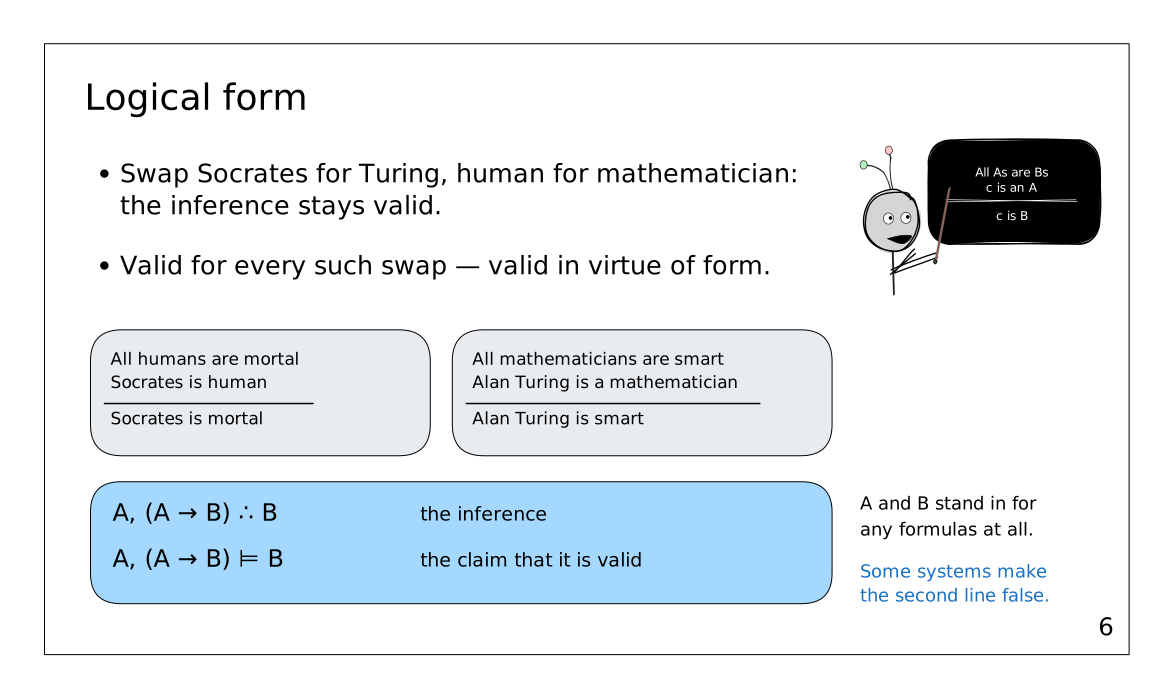
6. Logical form

Heading: "Logical form". Two points: swapping Socrates for Turing and human for mathematician leaves the inference valid; and since it is valid for every such swap, it is valid in virtue of form.

Two grey panels show the pair: all humans are mortal and Socrates is human, so Socrates is mortal; all mathematicians are smart and Alan Turing is a mathematician, so Alan Turing is smart. At the right the mascot presents the shared schema on a blackboard: all As are Bs, c is an A, so c is B.

A blue box separates two notations. "A, (A → B) ∴ B" is the inference. "A, (A → B) ⊨ B" is the claim that it is valid. Beside it: A and B stand in for any formulas at all, and some systems make the second line false.

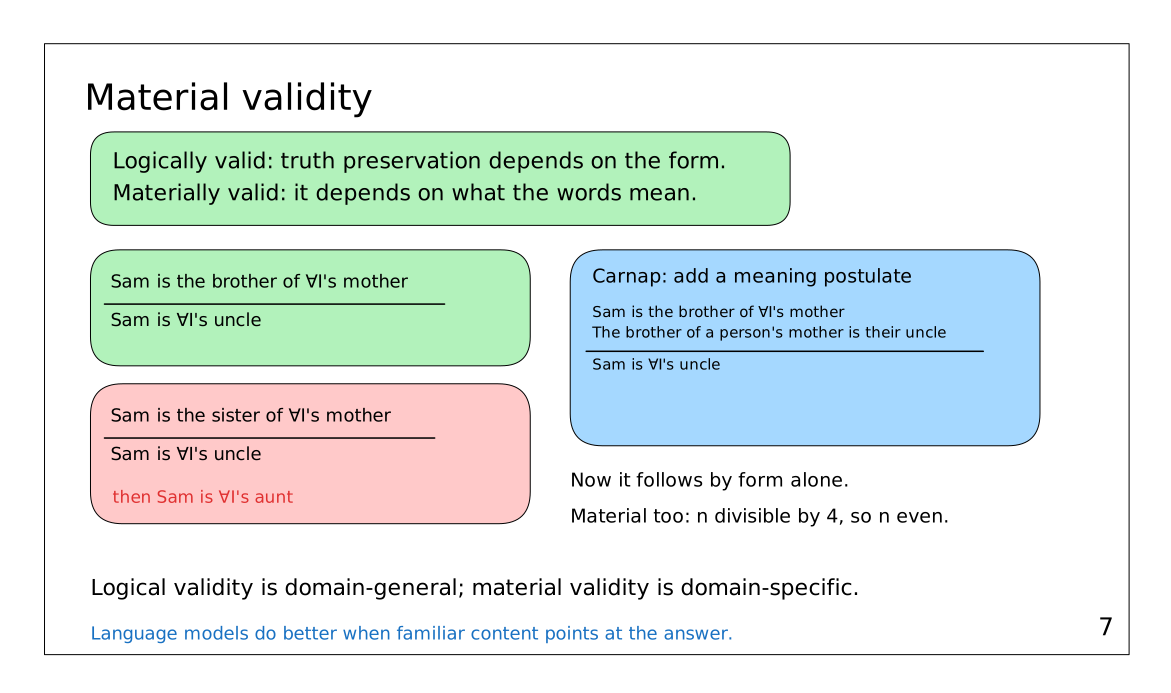
7. Material validity

Heading: "Material validity". A green box contrasts the two: logically valid means truth preservation depends on the form; materially valid means it depends on what the words mean.

In green: from "Sam is the brother of ∀I's mother" infer "Sam is ∀I's uncle". In red, with "brother" replaced by "sister": the same conclusion no longer follows, because then Sam is ∀I's aunt.

A blue box, headed "Carnap: add a meaning postulate", adds the premise "The brother of a person's mother is their uncle" to the first inference. Beside it: now it follows by form alone; and mathematics is material too, since n divisible by 4 makes n even.

Closing lines: "Logical validity is domain-general; material validity is domain-specific," and "Language models do better when familiar content points at the answer."

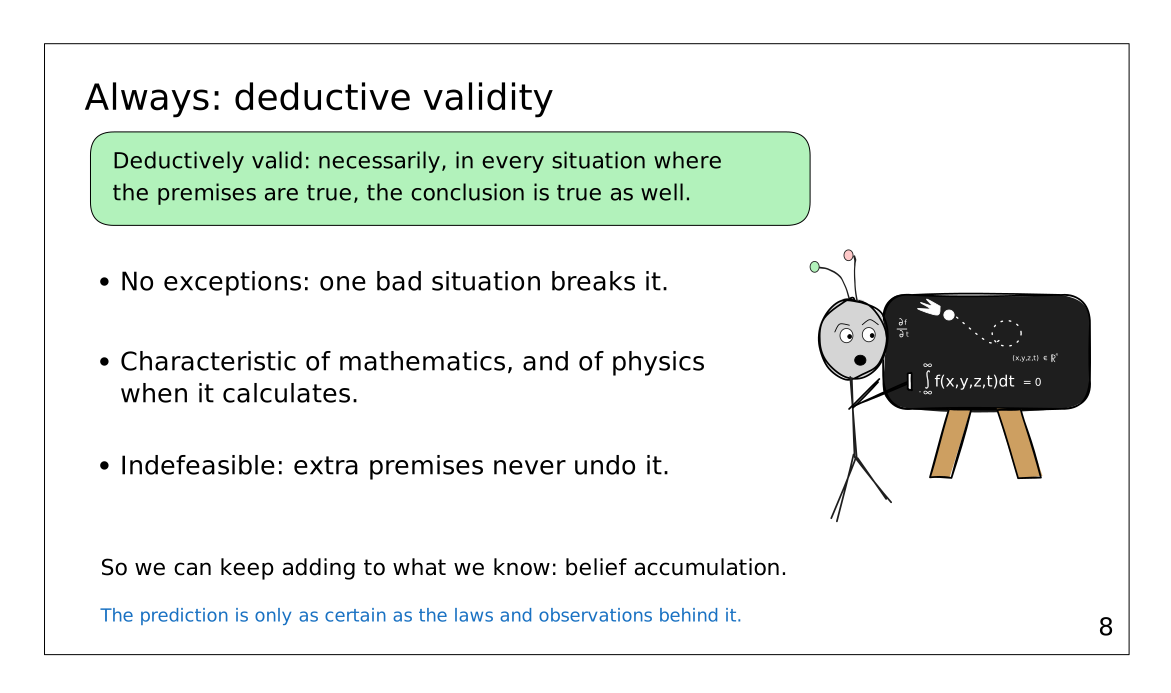
8. Always: deductive validity

Heading: "Always: deductive validity". A green box: deductively valid means that necessarily, in every situation where the premises are true, the conclusion is true as well.

Three points. No exceptions: one bad situation breaks it. It is characteristic of mathematics, and of physics when it calculates. And it is indefeasible: extra premises never undo it. At the right, the mascot works an integral out at a blackboard.

Closing lines: "So we can keep adding to what we know: belief accumulation," and "The prediction is only as certain as the laws and observations behind it."

9. Deduction at work

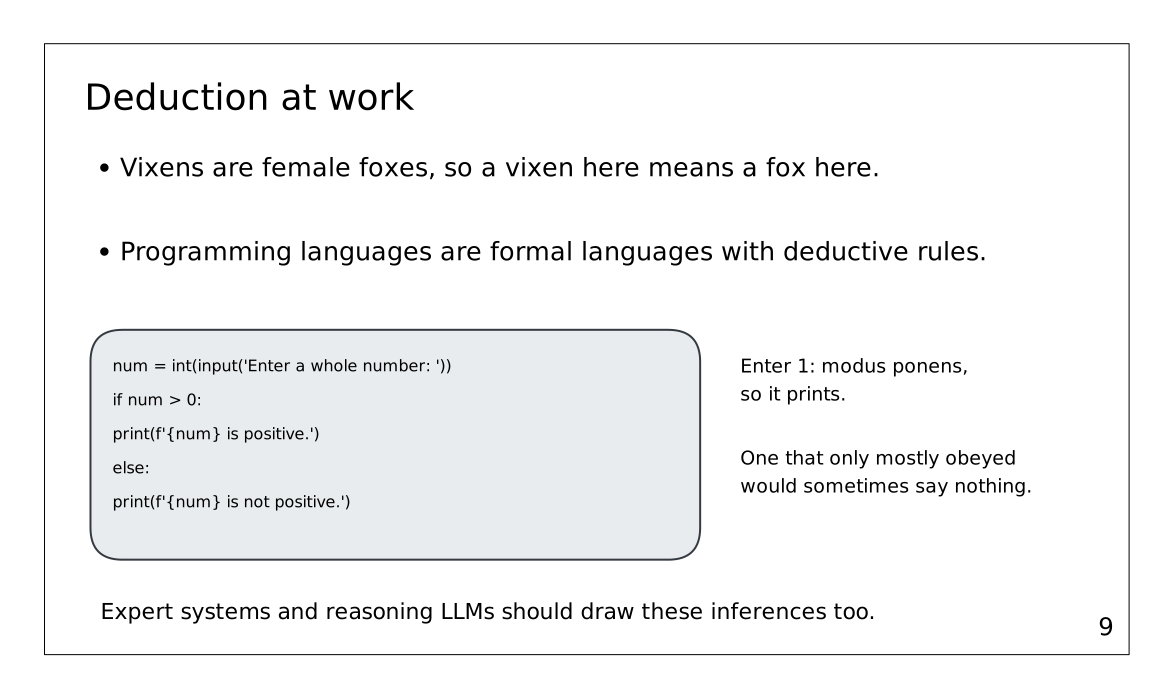
Heading: "Deduction at work". Two points: vixens are female foxes, so a vixen here means a fox here; and programming languages are formal languages with deductive rules.

A grey panel holds a five-line Python program. It reads a whole number with int(input(...)), and prints that the number is positive if num is greater than 0, and that it is not positive otherwise.

Beside it: enter 1 and modus ponens applies, so it prints. One that only mostly obeyed would sometimes say nothing.

Closing line: "Expert systems and reasoning LLMs should draw these inferences too."

10. Schemas and fallacies

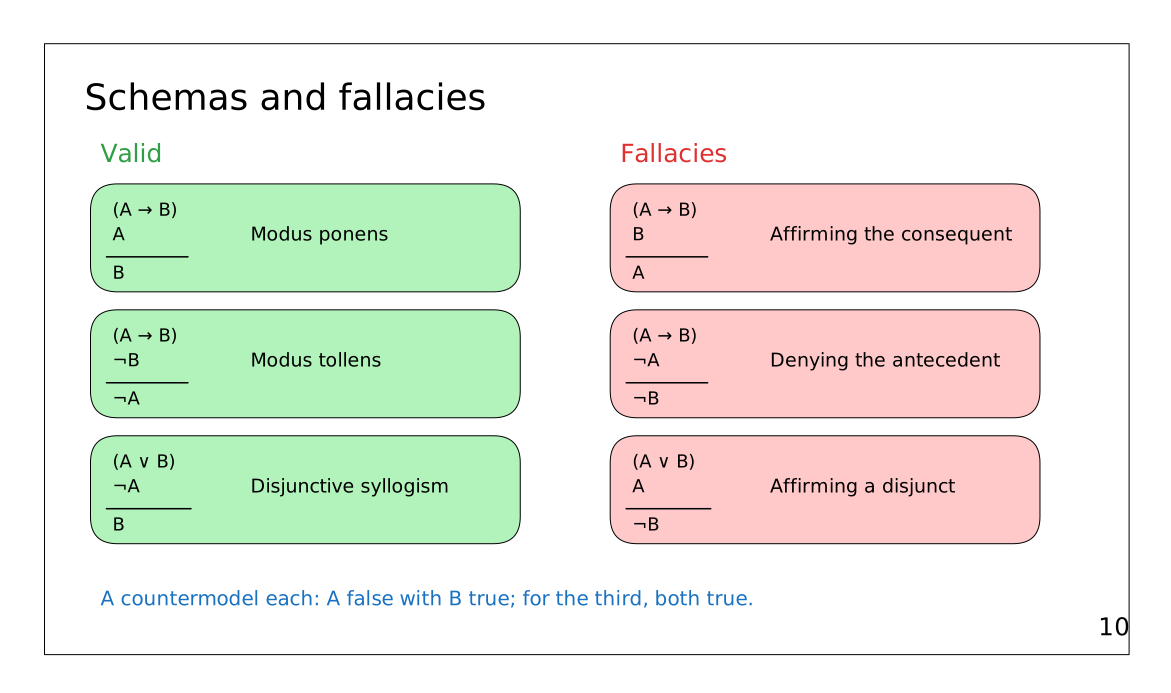
Heading: "Schemas and fallacies", in two columns.

Valid, in green: modus ponens, from (A → B) and A infer B; modus tollens, from (A → B) and ¬B infer ¬A; disjunctive syllogism, from (A ∨ B) and ¬A infer B.

Fallacies, in red: affirming the consequent, from (A → B) and B to A; denying the antecedent, from (A → B) and ¬A to ¬B; affirming a disjunct, from (A ∨ B) and A to ¬B.

Closing line: "A countermodel each: A false with B true; for the third, both true."

11. Models

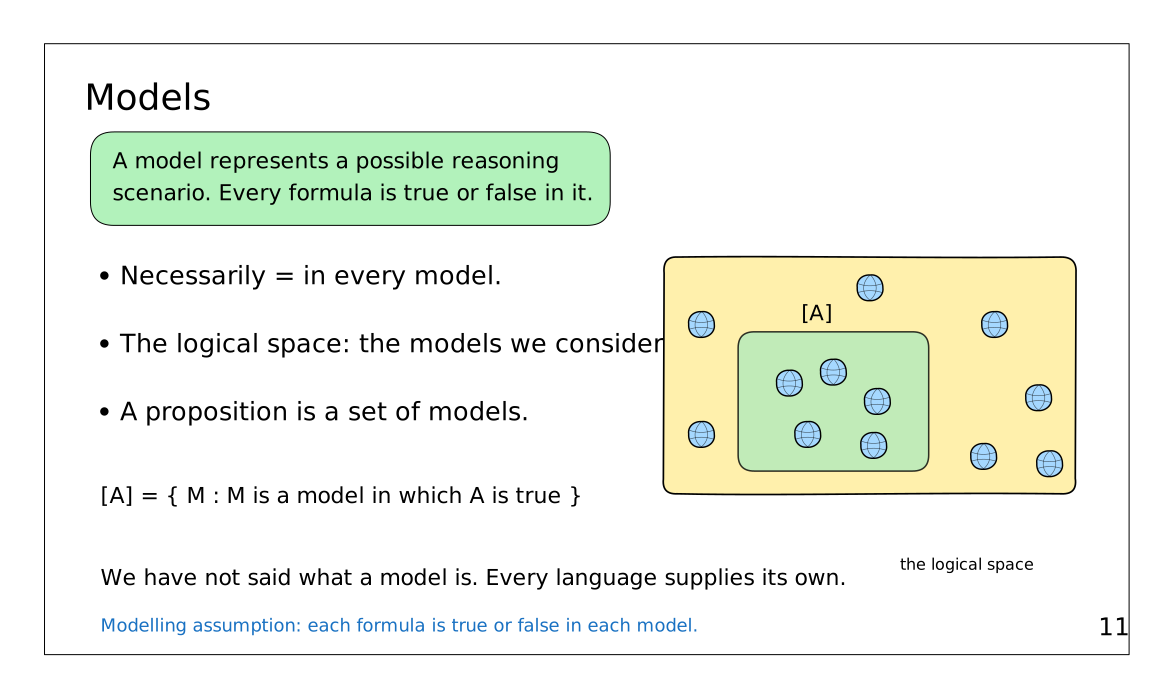
Heading: "Models". A green box: a model represents a possible reasoning scenario, and every formula is true or false in it.

Three points: necessarily means in every model; the logical space is the models we consider; a proposition is a set of models. Below them, the definition "[A] = { M : M is a model in which A is true }".

At the right, the chapter's set diagram: a yellow logical space, labelled below, holding twelve little worlds. A green region labelled [A] gathers five of them.

Closing lines: "We have not said what a model is. Every language supplies its own," and "Modelling assumption: each formula is true or false in each model."

12. Sets again

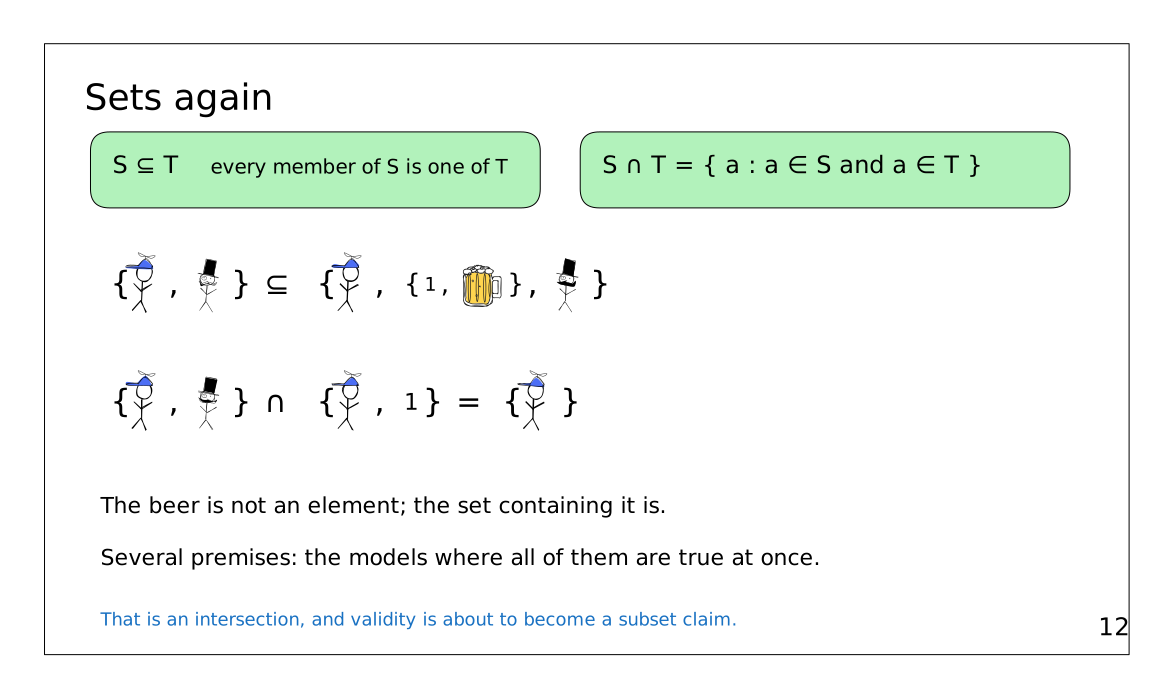
Heading: "Sets again". Two green boxes: "S ⊆ T", every member of S is one of T; and "S ∩ T = { a : a ∈ S and a ∈ T }".

Two rows of picture sets follow. First: the set containing Little Jimmy and Mr. Sir is a subset of the set containing Little Jimmy, the set containing 1 and a beer, and Mr. Sir. Second: the set containing Little Jimmy and Mr. Sir, intersected with the set containing Little Jimmy and 1, is the set containing Little Jimmy.

Closing lines: "The beer is not an element; the set containing it is.", "Several premises: the models where all of them are true at once," and "That is an intersection, and validity is about to become a subset claim."

13. Deductive consequence

Heading: "Deductive consequence". A blue box states the definition: P₁, …, Pₙ ⊨ C if and only if [P₁] ∩ … ∩ [Pₙ] ⊆ [C].

Two points: every model of all the premises is a model of C; and test the intersection, not one premise at a time.

At the right, the chapter's valid-consequence diagram. Eight little worlds, M₁ to M₈, sit in a yellow logical space. The regions [P] and [Q] overlap, and the tall region [C] covers the whole overlap: M₁ and M₂ lie in all three. M₃ is in [P] only, M₄ in [Q] only, M₆ in [C] only, and M₅, M₇ and M₈ outside everything.

Closing lines: "Neither premise alone guarantees C," and "Unsatisfiable premises entail everything; with no premises, ⊨ C says C holds always."

14. Countermodels

Heading: "Countermodels". A red box: a countermodel makes every premise true and the conclusion false.

Two points: one is enough to refute an inference; validity is about every model, invalidity about a single one.

A grey panel shows both jobs in notation. Valid: [(A ∨ B)] ∩ [¬A] ⊆ [B]. Invalid: [(A → B)] ∩ [¬A] is not a subset of [¬B], the subset sign struck through.

At the right, the chapter's countermodel diagram: the same eight worlds, but [C] now sits higher. M₂ lies in the overlap of [P] and [Q] and outside [C] — both premises true, the conclusion false.

Closing line: "Denying the antecedent falls to a single model: A false and B true."

15. A blueprint

Heading: "A blueprint". Three points: we still have not said what a model is; supply the models of a language and say when a formula is true in one, and validity follows; that is the work of the next chapters. At the right, the mascot ∀I looks on, wondering.

A yellow box headed "Still to supply" lists three things: what a model for a given language is; when ¬, ∧, ∨, → and ↔ hold in one; and a way to survey all of them at once.

Closing line: "Next chapter: models for the language of propositional logic."

16. Mostly: inductive validity

Heading: "Mostly: inductive validity". A green box: inductively valid means the premises make the conclusion likely, without guaranteeing it.

A grey box quotes A Study in Scarlet, 1887: "From a drop of water a logician could infer the possibility of an Atlantic or a Niagara." Below it: Holmes calls it deduction; almost all of it is induction.

Two points. How probable is C given the premises, and how much do the premises raise it? And: induction is defeasible — smoke means fire, until you hear that Mr. Sir smokes his pipe here. At the right, the drawing of smoke rising behind the trees while the mascot imagines a camp fire.

Closing lines: "Deduction accumulates beliefs; induction modulates them," and "The evidence did not go away. It was supplemented, and that changed the conclusion."

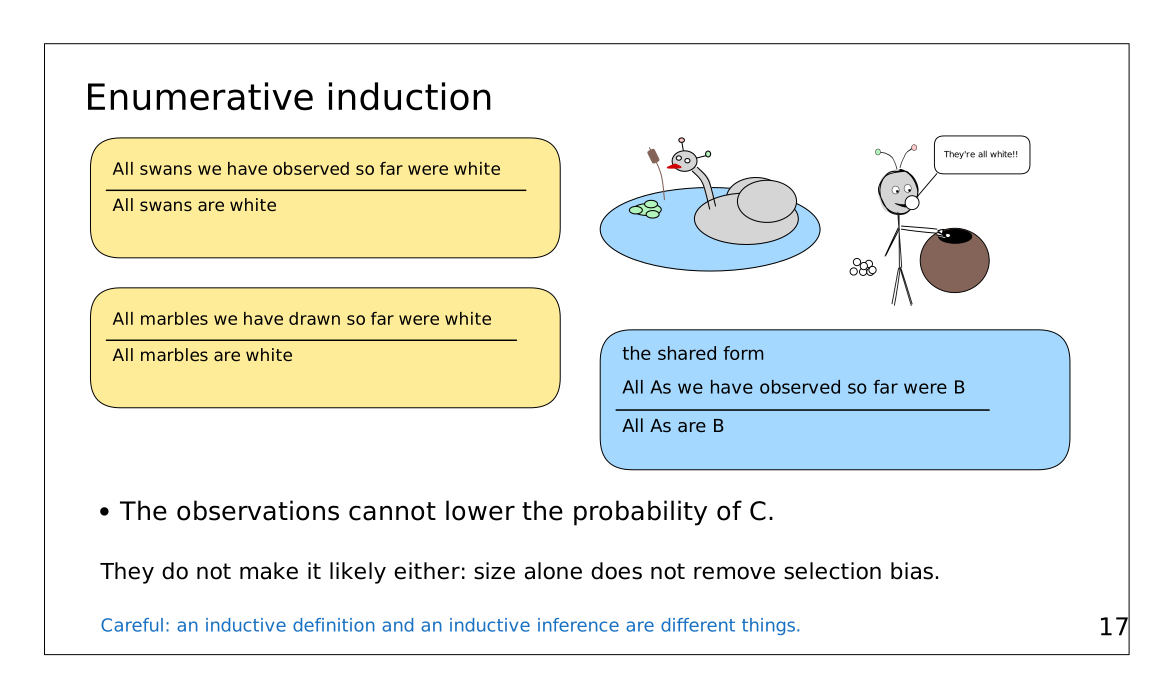
17. Enumerative induction

Heading: "Enumerative induction". Two yellow panels: from "All swans we have observed so far were white" infer "All swans are white"; and from "All marbles we have drawn so far were white" infer "All marbles are white". At the right, a swan on a pond, and the mascot at a jar of marbles announcing "They're all white!!".

A blue box, headed "the shared form", gives the schema: from "All As we have observed so far were B" infer "All As are B".

One point: the observations cannot lower the probability of C.

Closing lines: "They do not make it likely either: size alone does not remove selection bias," and "Careful: an inductive definition and an inductive inference are different things."

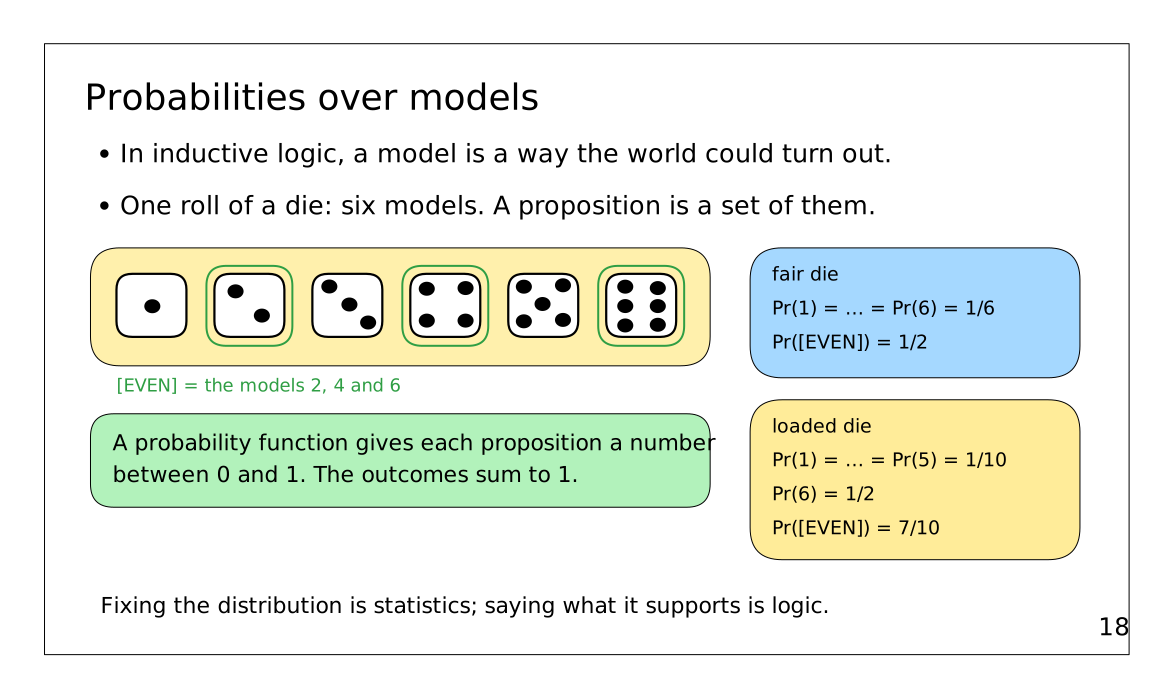
18. Probabilities over models

Heading: "Probabilities over models". Two points: in inductive logic a model is a way the world could turn out; one roll of a die gives six models, and a proposition is a set of them.

A yellow band shows the six dice faces. The faces 2, 4 and 6 are ringed in green, and labelled "[EVEN] = the models 2, 4 and 6".

A green box: a probability function gives each proposition a number between 0 and 1, and the outcomes sum to 1.

Two panels give distributions. Fair die: Pr(1) = … = Pr(6) = 1/6, so Pr([EVEN]) = 1/2. Loaded die: Pr(1) = … = Pr(5) = 1/10 and Pr(6) = 1/2, so Pr([EVEN]) = 7/10.

Closing line: "Fixing the distribution is statistics; saying what it supports is logic."

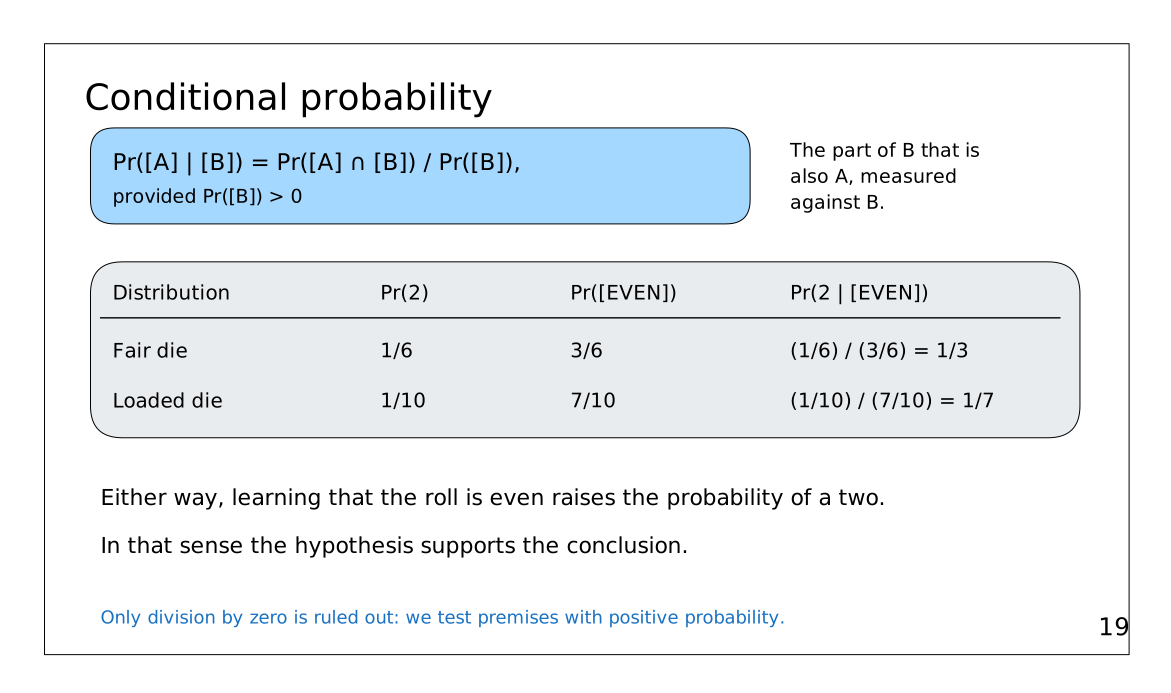
19. Conditional probability

Heading: "Conditional probability". A blue box gives the definition: Pr([A] | [B]) = Pr([A] ∩ [B]) / Pr([B]), provided Pr([B]) > 0. Beside it: the part of B that is also A, measured against B.

A table with four columns — distribution, Pr(2), Pr([EVEN]) and Pr(2 | [EVEN]). Fair die: 1/6, 3/6, and (1/6) / (3/6) = 1/3. Loaded die: 1/10, 7/10, and (1/10) / (7/10) = 1/7.

Closing lines: "Either way, learning that the roll is even raises the probability of a two.", "In that sense the hypothesis supports the conclusion," and "Only division by zero is ruled out: we test premises with positive probability."

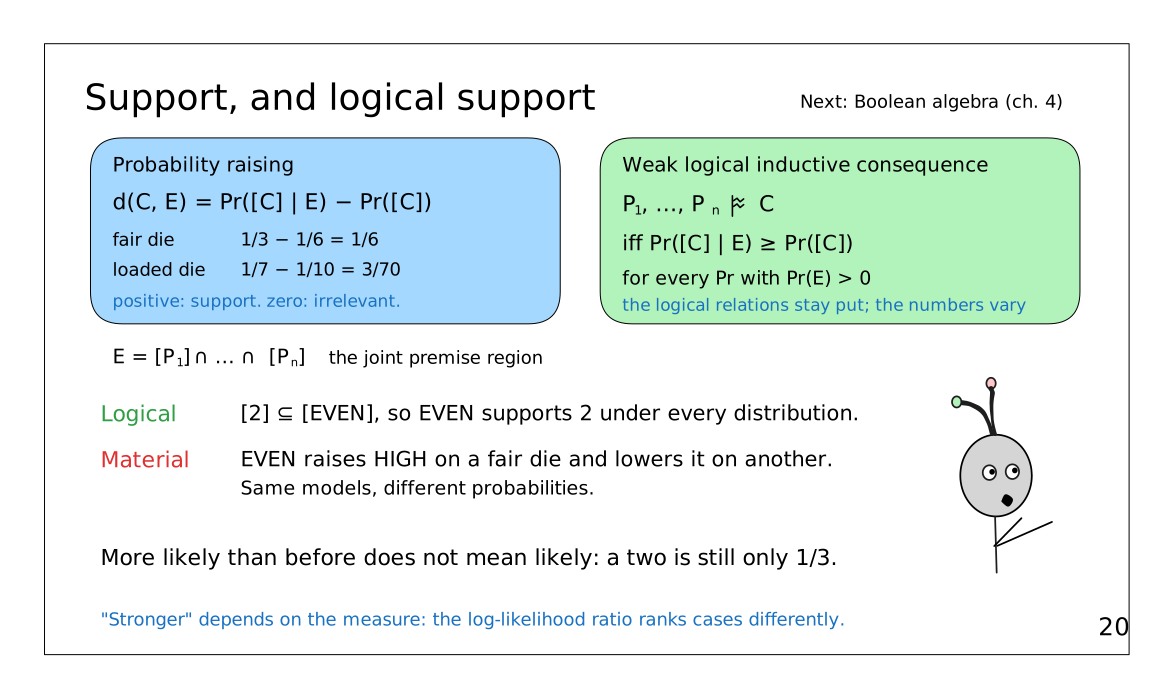
20. Support, and logical support

Heading: "Support, and logical support". At the top right: "Next: Boolean algebra (ch. 4)".

A blue box, headed "Probability raising", defines d(C, E) = Pr([C] | E) − Pr([C]), and works it out: fair die, 1/3 − 1/6 = 1/6; loaded die, 1/7 − 1/10 = 3/70. Positive means support; zero means the premises are irrelevant.

A green box, headed "Weak logical inductive consequence", gives the definition: P₁, …, Pₙ inductively support C if and only if Pr([C] | E) ≥ Pr([C]) for every probability function Pr with Pr(E) > 0. The logical relations stay put; the numbers vary.

Below the boxes, E is defined as [P₁] ∩ … ∩ [Pₙ], the joint premise region. Then two lines. Logical: [2] ⊆ [EVEN], so EVEN supports 2 under every distribution. Material: EVEN raises HIGH on a fair die and lowers it on another — same models, different probabilities. At the right, the mascot ∀I looks suitably impressed.

Closing lines: "More likely than before does not mean likely: a two is still only 1/3," and "'Stronger' depends on the measure: the log-likelihood ratio ranks cases differently."