Lecture 2

Formal languages

Johannes Korbmacher Lecture slides

Title slide for Logical methods for AI, Lecture 2, on formal languages.
1 / 20 · Logical methods for AI — Lecture 2
The five learning goals for this lecture, each tagged with a level of Bloom's taxonomy.
2 / 20 · What you'll be able to do
Why AI needs formal languages, for instructions and for knowledge.
3 / 20 · Why formal languages?
A two-column comparison of natural and formal languages.
4 / 20 · Natural and formal languages
The ambiguous mushroom rule, with three mushrooms showing the readings it allows.
5 / 20 · Ambiguity
The rule of modus ponens, its schematic form, and an everyday instance.
6 / 20 · Modus ponens
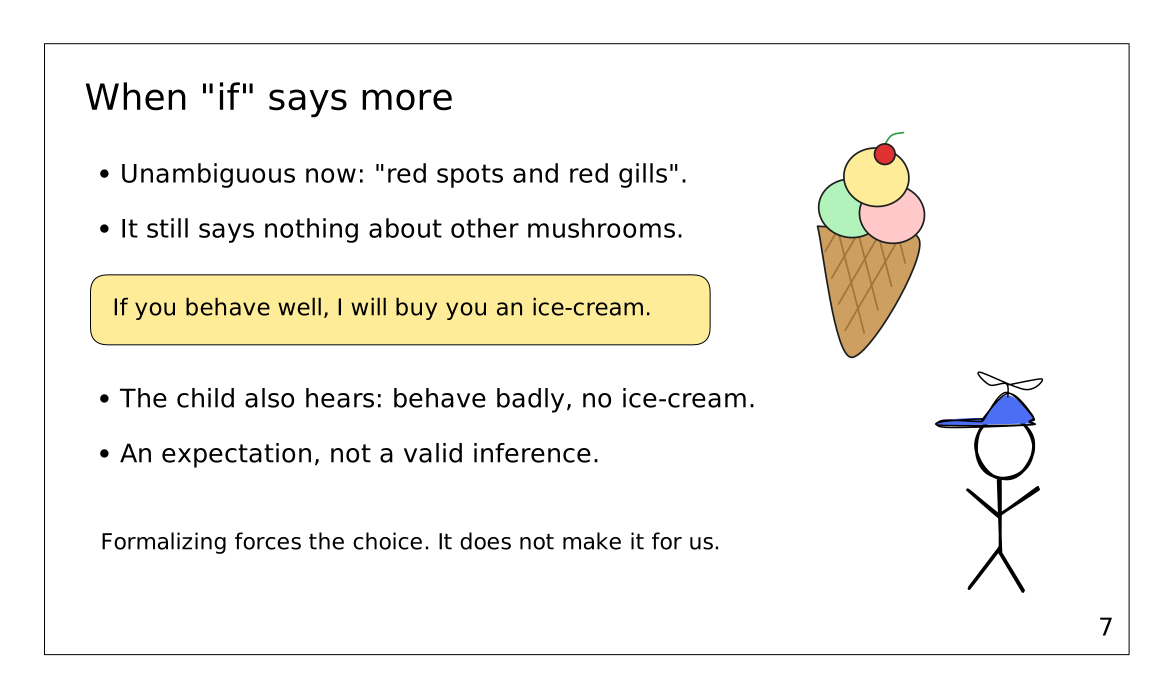
The ice-cream promise, which suggests more than it literally says.
7 / 20 · When "if" says more
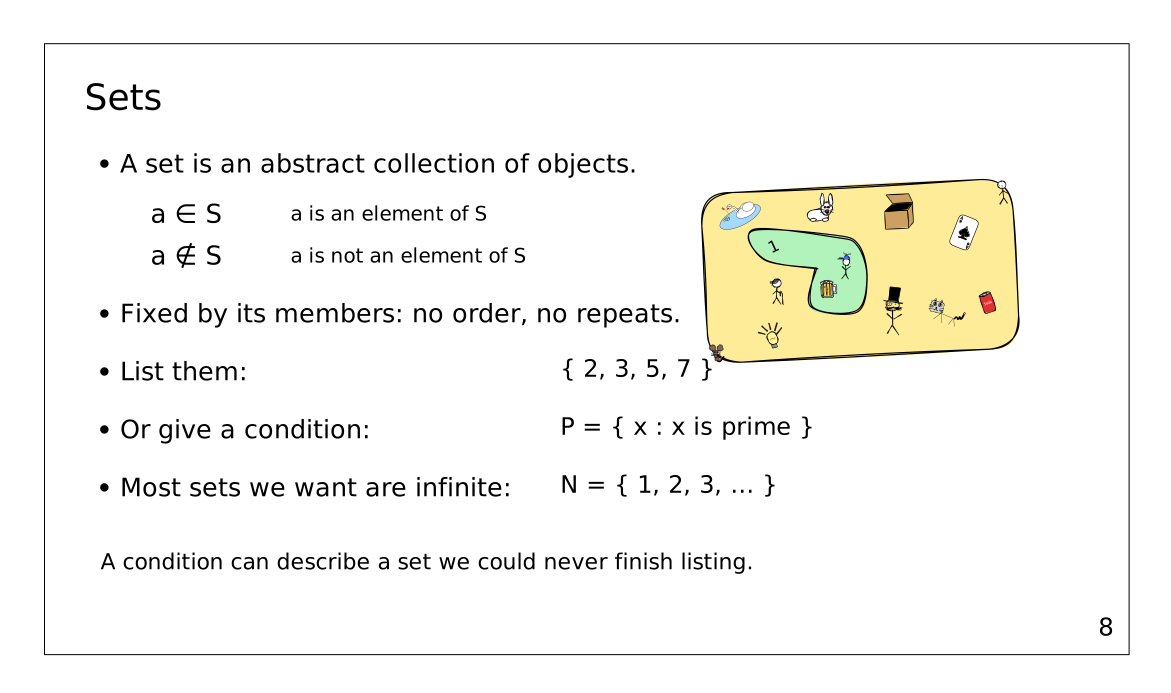
The definition of a set, its membership notation, and the two ways of describing one.
8 / 20 · Sets
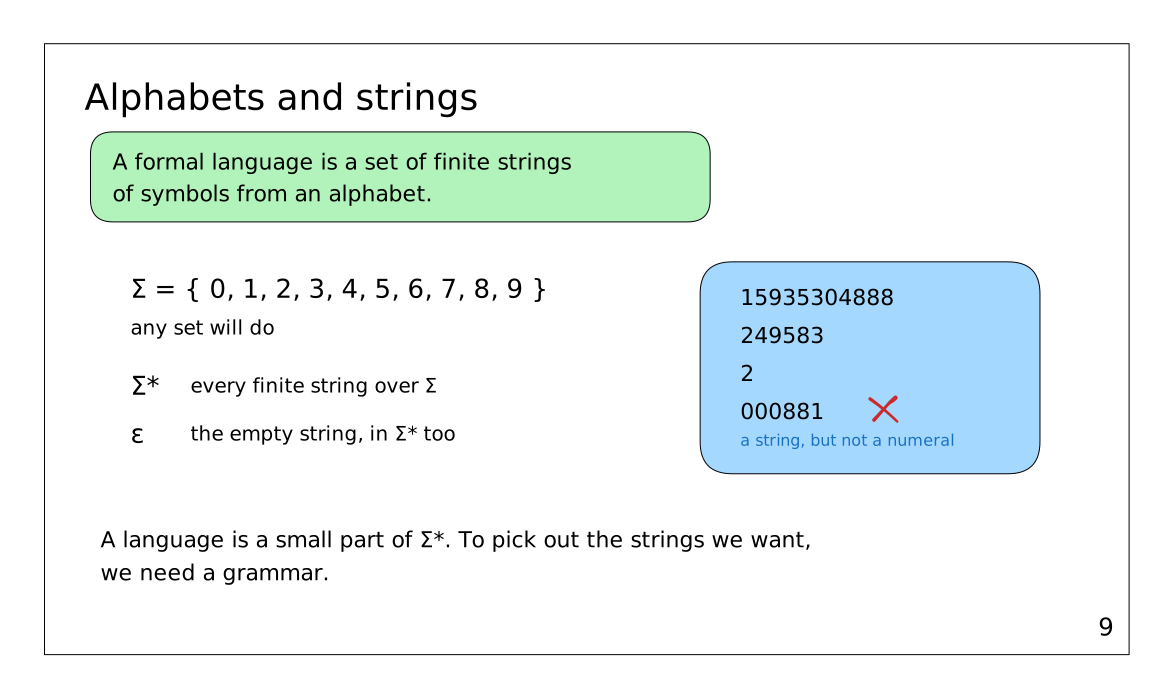
The definition of a formal language, the alphabet of digits, and the Kleene star.
9 / 20 · Alphabets and strings
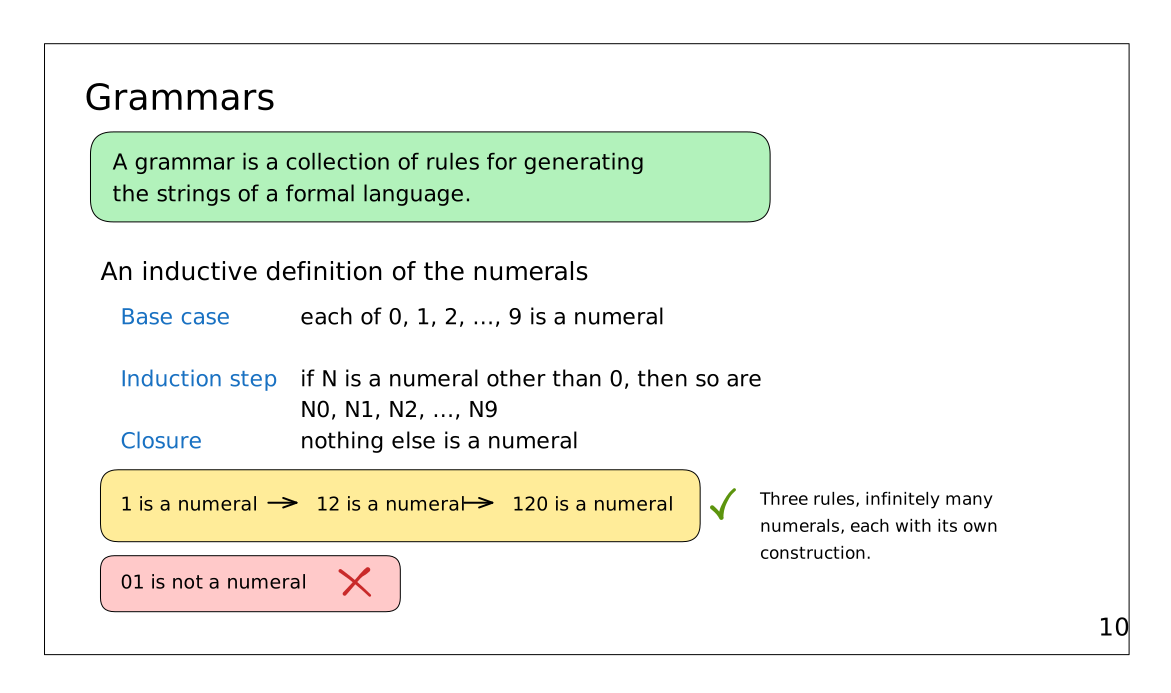
An inductive definition of the numerals, in three clauses, with a worked construction.
10 / 20 · Grammars
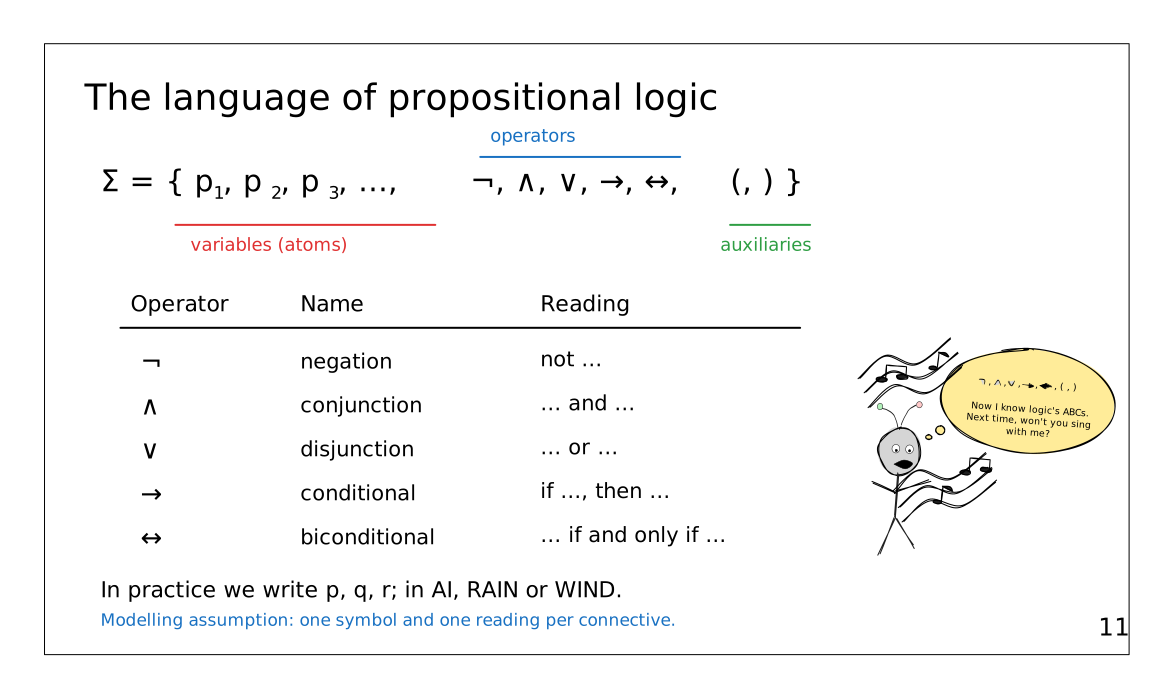
The alphabet of propositional logic and a table of its five operators.
11 / 20 · The language of propositional logic
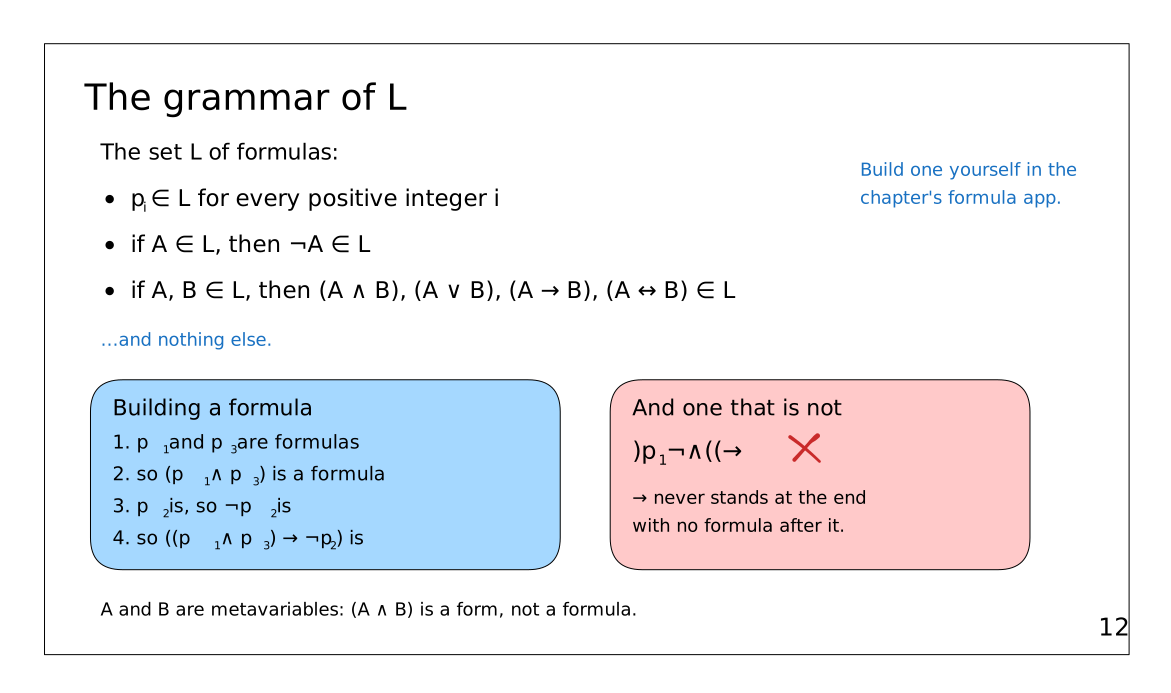
The inductive definition of the set L of formulas, with a formula built and a non-formula rejected.
12 / 20 · The grammar of L
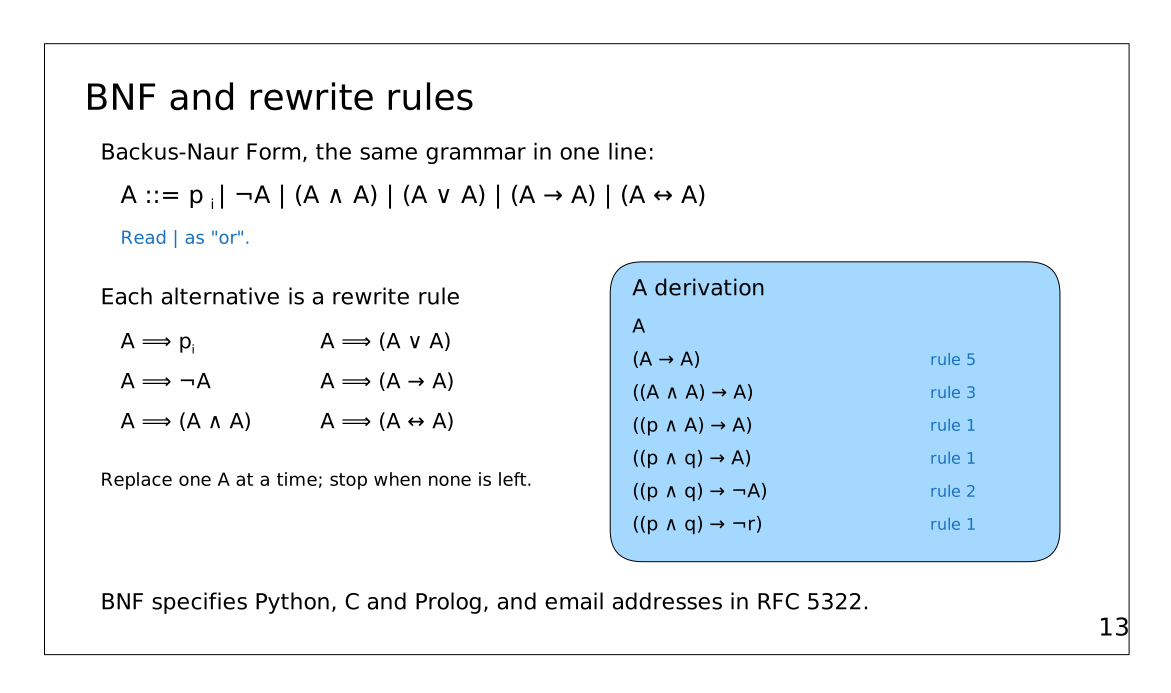
The same grammar in Backus-Naur form, its six rewrite rules, and a derivation.
13 / 20 · BNF and rewrite rules
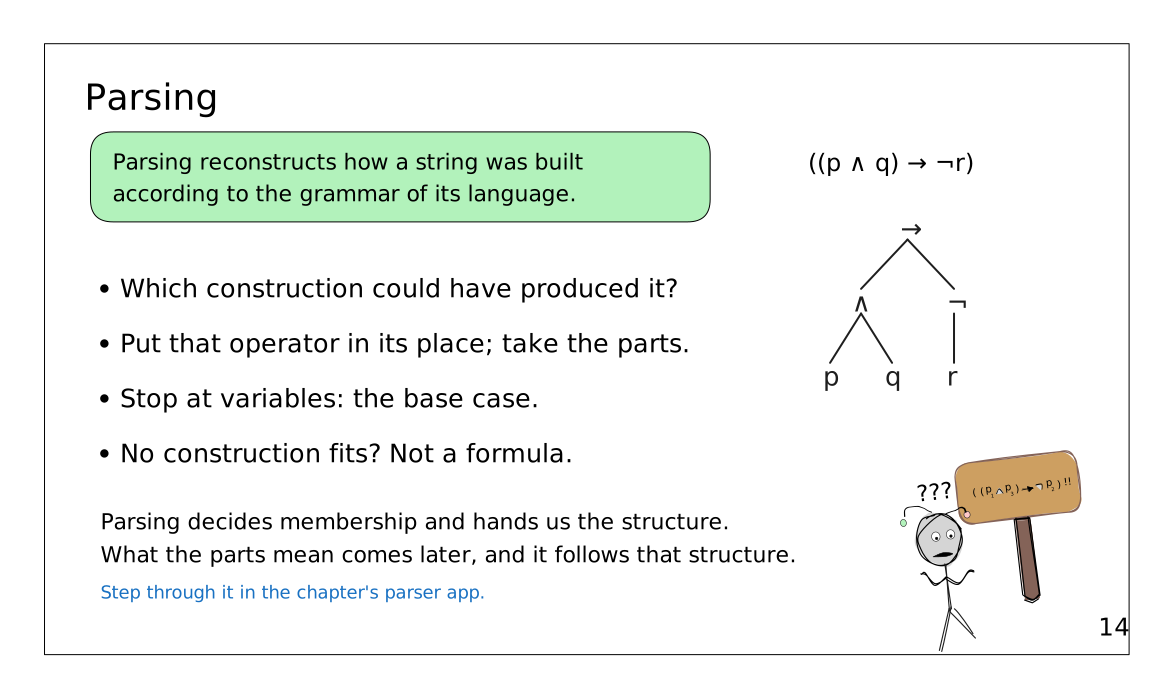
The parsing procedure step by step, with the syntax tree it produces.
14 / 20 · Parsing
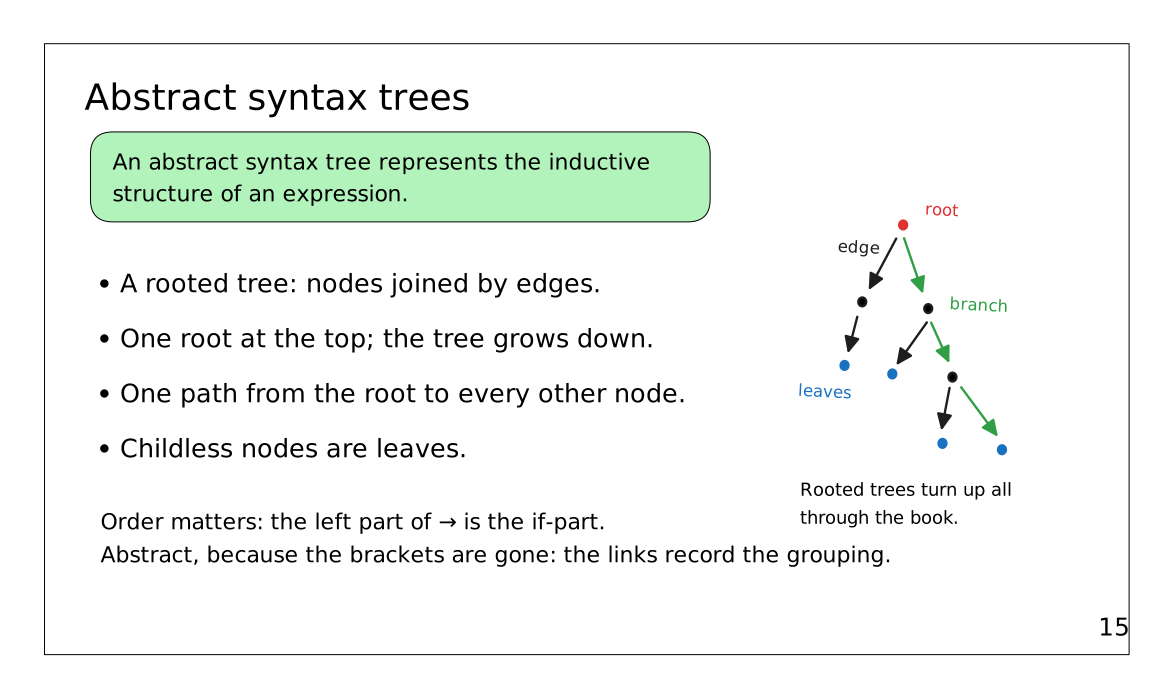
The vocabulary of rooted trees, illustrated on the book's tree diagram.
15 / 20 · Abstract syntax trees
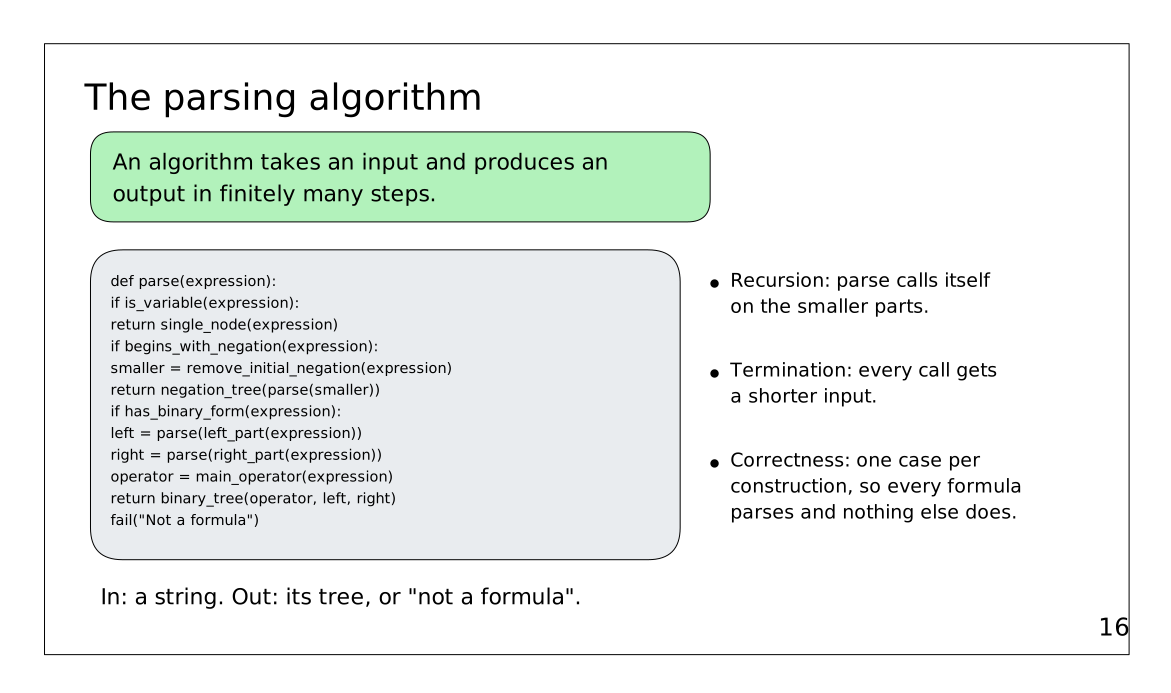
The parsing algorithm written in pseudocode, with notes on recursion, termination and correctness.
16 / 20 · The parsing algorithm
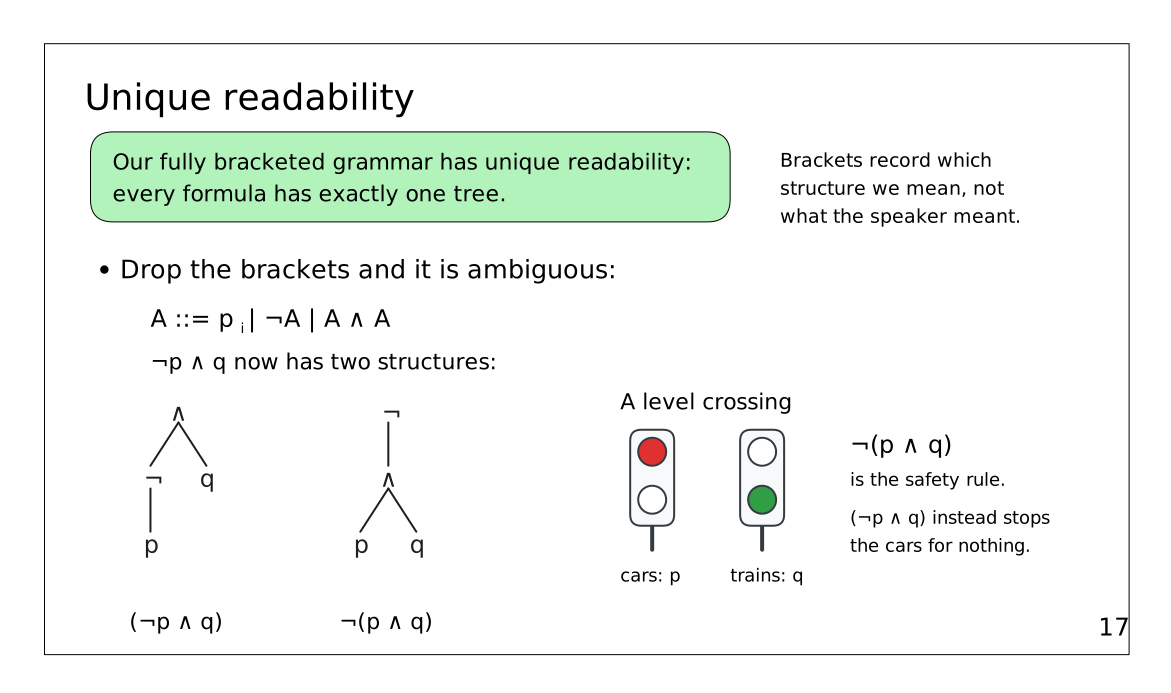
Unique readability, the two trees an unbracketed grammar allows, and the level-crossing example.
17 / 20 · Unique readability
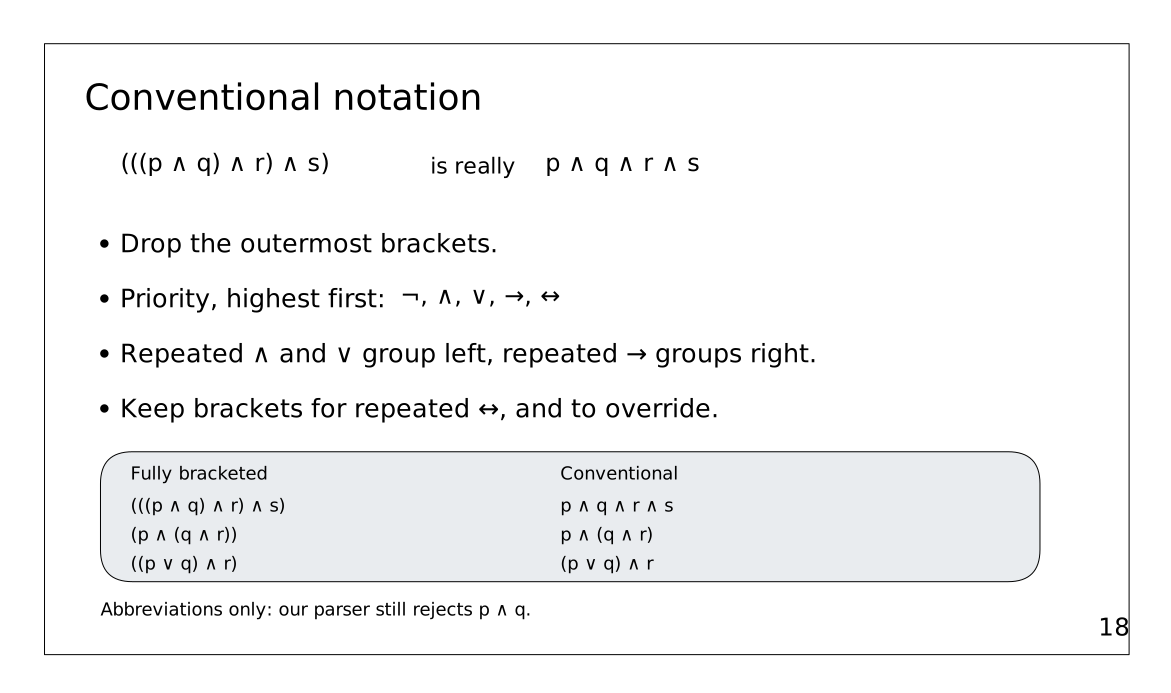
The bracket-saving conventions, with a table of fully bracketed formulas and their abbreviations.
18 / 20 · Conventional notation
Formalizing claims about a letter in a desk with two drawers, as a table of formulas.
19 / 20 · Formalization
Knowledge bases and expert systems, with a worked knowledge base in propositional logic.
20 / 20 · Knowledge bases and expert systems

What is on the slidesWritten description

Written description of every slide. Each entry says what the slide shows, including its drawings and diagrams, so the lecture can be read without seeing it. The textbook chapter explains the same material at length.

1. Logical methods for AI — Lecture 2

A pink title card reads "Logical methods for ∀I, Lecture 2". The A of AI is drawn as the upside-down A of the universal quantifier, ∀, which is the course mascot's name.

Below the card: "Chapter 2: Formal languages", and the course address, logicalmethods.ai. At the right the mascot ∀I speaks, and what comes out of its mouth is a green screen of ones and zeros.

2. What you'll be able to do

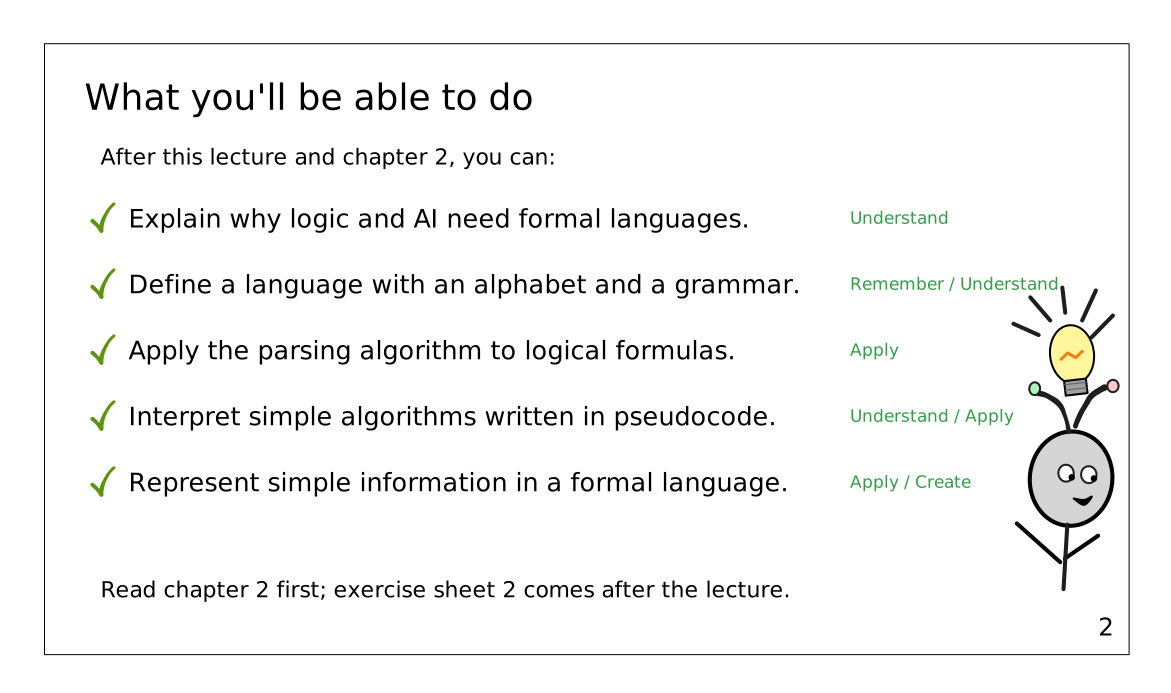
Heading: "What you'll be able to do". Introduction: "After this lecture and chapter 2, you can:". Five goals follow, each ticked off with a green check mark and tagged on the right with its level in Bloom's revised taxonomy.

One: explain why logic and AI need formal languages. Understand. Two: define a language with an alphabet and a grammar. Remember and understand. Three: apply the parsing algorithm to logical formulas. Apply. Four: interpret simple algorithms written in pseudocode. Understand and apply. Five: represent simple information in a formal language. Apply and create.

Closing line: "Read chapter 2 first; exercise sheet 2 comes after the lecture." The mascot ∀I stands at the right wearing a lit lightbulb.

3. Why formal languages?

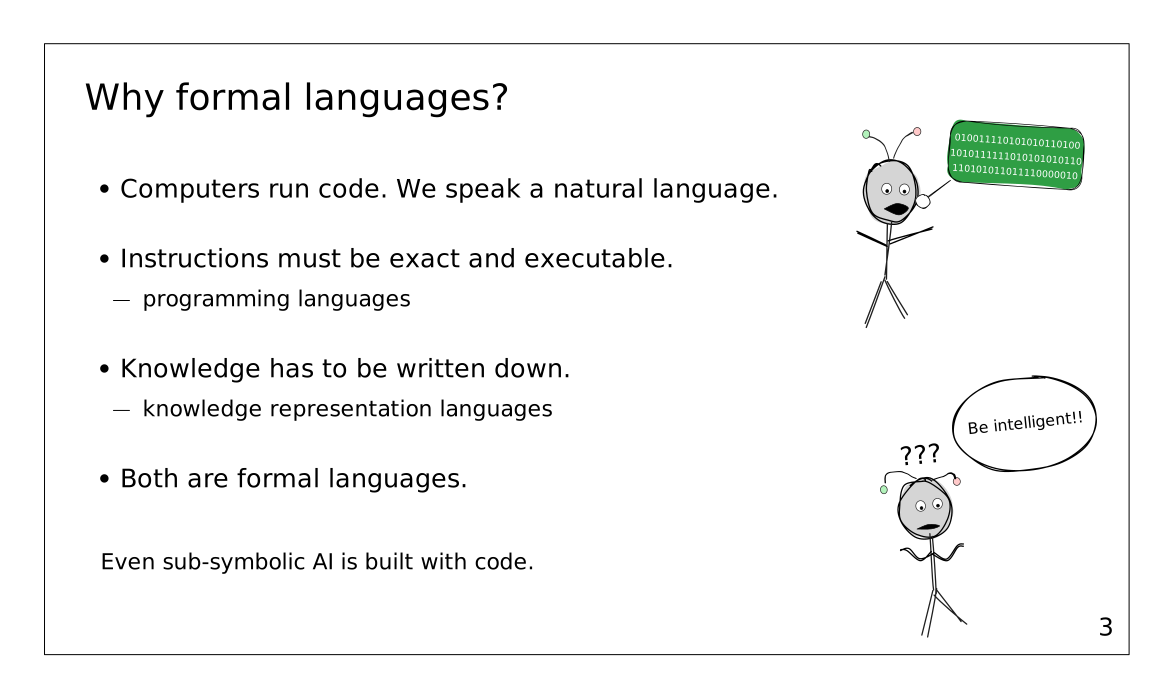
Heading: "Why formal languages?". Computers run code; we speak a natural language. Instructions must be exact and executable — that is what programming languages are for. Knowledge has to be written down — that is what knowledge representation languages are for. Both are formal languages.

Closing line: even sub-symbolic AI is built with code.

Two drawings on the right. Above, the mascot ∀I speaks a green screen of ones and zeros. Below, a second mascot with a worried face and three question marks over its head hears the instruction "Be intelligent!!".

4. Natural and formal languages

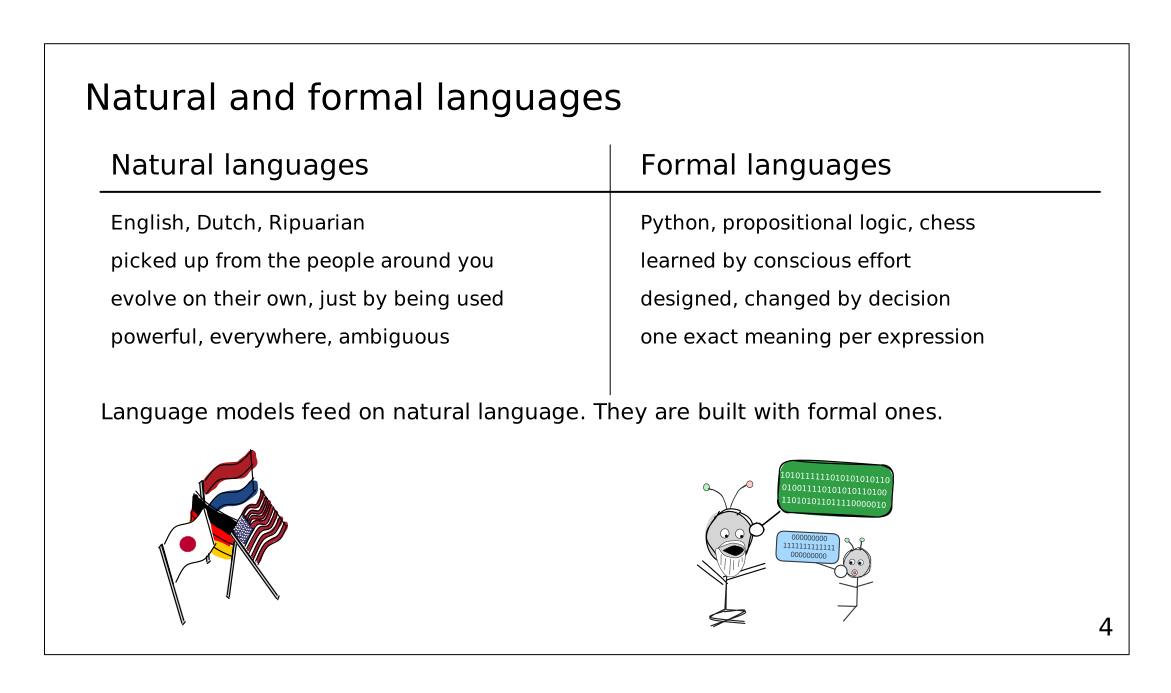
Heading: "Natural and formal languages", set out in two columns.

Natural languages: English, Dutch, Ripuarian; picked up from the people around you; they evolve on their own, just by being used; powerful, everywhere, ambiguous.

Formal languages: Python, propositional logic, chess notation; learned by conscious effort; designed, changed by decision; one exact meaning per expression.

A line underneath: language models feed on natural language, and they are built with formal ones.

Two drawings at the foot. On the left, a bunch of national flags. On the right, the mascot ∀I speaks a screen of ones and zeros to a smaller mascot, who answers with a screen of its own.

5. Ambiguity

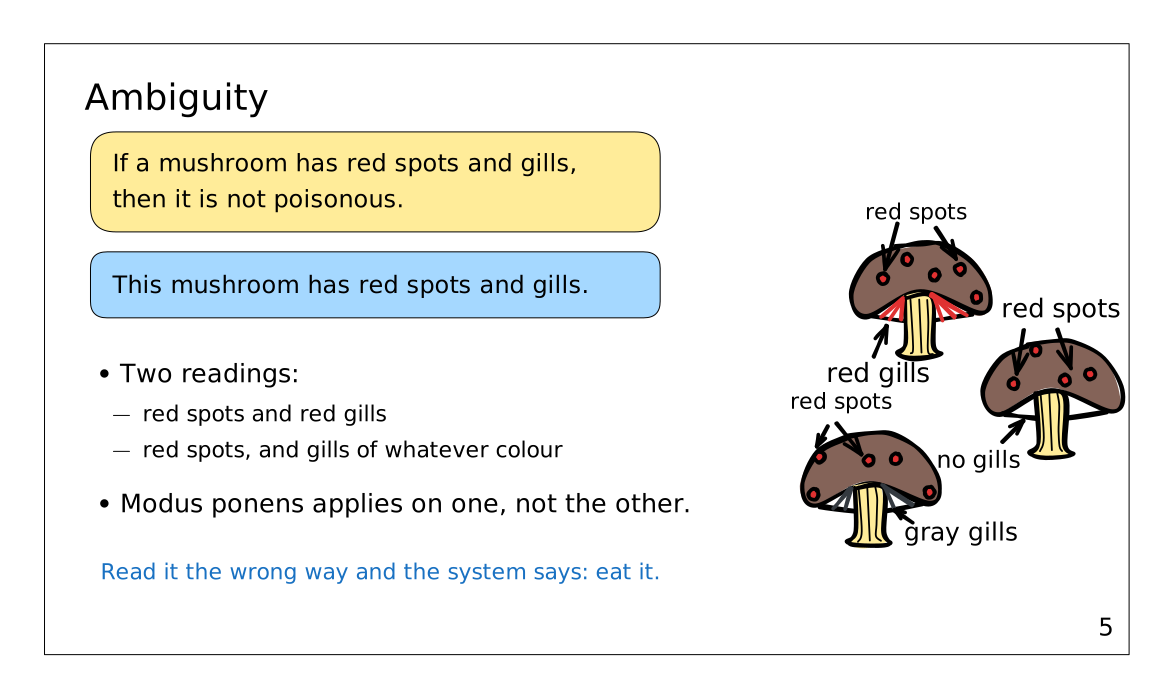
Heading: "Ambiguity". A yellow card holds the rule we want to give an AI system: "If a mushroom has red spots and gills, then it is not poisonous." A blue card holds what the user tells it: "This mushroom has red spots and gills."

There are two readings: red spots and red gills, or red spots and gills of whatever colour. Modus ponens applies on one, not the other.

In blue: read it the wrong way and the system says: eat it.

The drawing on the right shows three mushrooms with brown caps and red spots, labelled with arrows: one has red gills, one has no gills, and one has gray gills.

6. Modus ponens

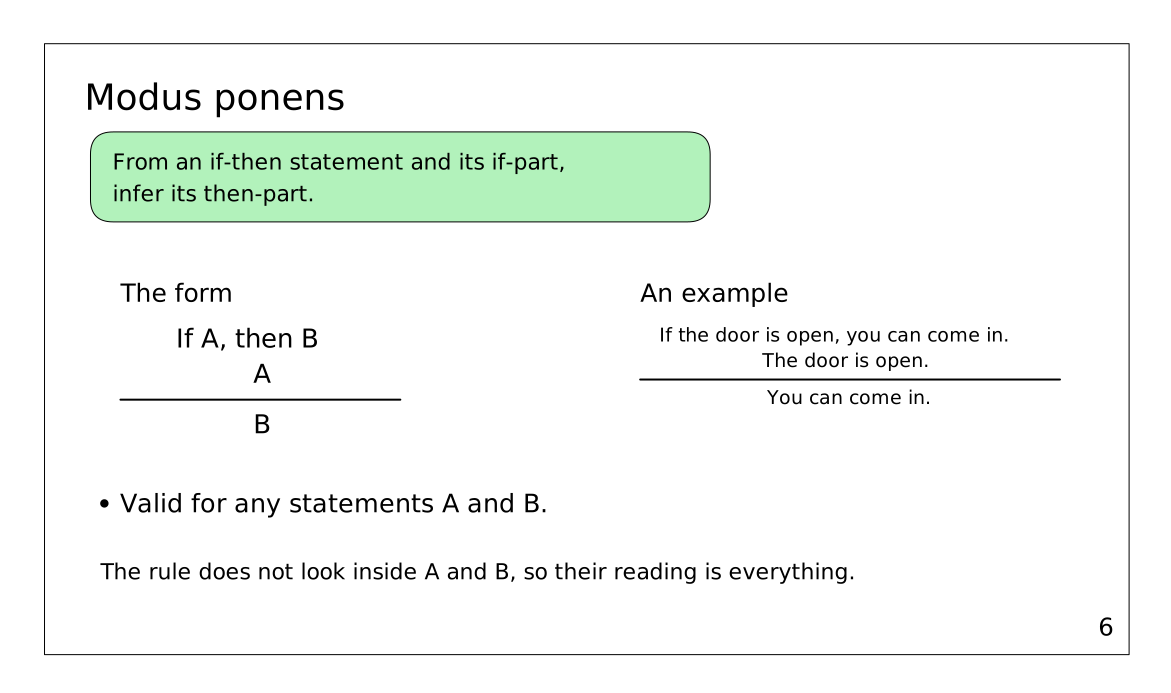
Heading: "Modus ponens". A green card gives the rule: from an if-then statement and its if-part, infer its then-part.

Under "The form", an inference figure: from the premises "If A, then B" and "A", ruled off, the conclusion "B". Under "An example", the same figure with English sentences: from "If the door is open, you can come in." and "The door is open.", the conclusion "You can come in."

The rule is valid for any statements A and B. Closing line: the rule does not look inside A and B, so their reading is everything.

7. When "if" says more

Heading: "When 'if' says more". The mushroom rule is unambiguous once it reads "red spots and red gills", and it still says nothing about other mushrooms.

A yellow card holds a promise: "If you behave well, I will buy you an ice-cream." The child also hears: behave badly, no ice-cream. That is an expectation, not a valid inference.

Closing line: formalizing forces the choice; it does not make it for us.

On the right, a drawn ice-cream cone with three scoops and a cherry, and below it Little Jimmy, the course's stick figure in a propeller cap.

8. Sets

Heading: "Sets". A set is an abstract collection of objects. In the notation, "a ∈ S" reads "a is an element of S" and "a ∉ S" reads "a is not an element of S". A set is fixed by its members: no order, no repeats.

Two ways to describe one. List them: { 2, 3, 5, 7 }. Or give a condition: P = { x : x is prime }. Most sets we want are infinite: N = { 1, 2, 3, … }.

Closing line: a condition can describe a set we could never finish listing.

The drawing at the right is the book's set picture: a yellow rectangle of assorted objects — a rabbit, a cardboard box, a playing card, a beer, a soda can, a lightbulb, a mouse and several little people — with a green outline drawn around some of them.

9. Alphabets and strings

Heading: "Alphabets and strings". A green card gives the definition: a formal language is a set of finite strings of symbols from an alphabet.

Σ = { 0, 1, 2, 3, 4, 5, 6, 7, 8, 9 }; any set will do. Σ* is every finite string over Σ. ε is the empty string, in Σ* too.

A blue card lists strings of that alphabet: 15935304888, 249583, and 2. Below them 000881, marked with a red cross and labelled "a string, but not a numeral".

Closing lines: a language is a small part of Σ*, so to pick out the strings we want, we need a grammar.

10. Grammars

Heading: "Grammars". A green card gives the definition: a grammar is a collection of rules for generating the strings of a formal language.

Then an inductive definition of the numerals, in three labelled clauses. Base case: each of 0, 1, 2, …, 9 is a numeral. Induction step: if N is a numeral other than 0, then so are N0, N1, N2, …, N9. Closure: nothing else is a numeral.

A yellow strip shows the construction running: "1 is a numeral" leads to "12 is a numeral" leads to "120 is a numeral", ticked with a green check. A pink card below it reads "01 is not a numeral", marked with a red cross.

A note at the right: three rules, infinitely many numerals, each with its own construction.

11. The language of propositional logic

Heading: "The language of propositional logic". The alphabet is written out and annotated in three colours:

Σ = { p₁, p₂, p₃, …, ¬, ∧, ∨, →, ↔, (, ) }

The variables p₁, p₂, p₃, … are underlined in red and labelled "variables (atoms)". The operators ¬, ∧, ∨, →, ↔ are underlined in blue and labelled "operators". The brackets are underlined in green and labelled "auxiliaries".

A table with three columns — operator, name, reading — and five rows. ¬ is negation, read "not …". ∧ is conjunction, read "… and …". ∨ is disjunction, read "… or …". → is the conditional, read "if …, then …". ↔ is the biconditional, read "… if and only if …".

Closing lines: in practice we write p, q, r; in AI, RAIN or WIND. And the modelling assumption: one symbol and one reading per connective.

At the right the mascot ∀I sings, surrounded by musical notes, with a speech bubble showing the operators: "Now I know logic's ABCs. Next time, won't you sing with me?"
12. The grammar of L

Heading: "The grammar of L". The set L of formulas: pᵢ ∈ L for every positive integer i; if A ∈ L, then ¬A ∈ L; and if A, B ∈ L, then (A ∧ B), (A ∨ B), (A → B), (A ↔ B) ∈ L. In blue: and nothing else.

A blue card, "Building a formula", runs the construction. One: p₁ and p₃ are formulas. Two: so (p₁ ∧ p₃) is a formula. Three: p₂ is, so ¬p₂ is. Four: so ((p₁ ∧ p₃) → ¬p₂) is.

A pink card, "And one that is not", shows the string )p₁¬∧((→ marked with a red cross: → never stands at the end with no formula after it.

Closing line: A and B are metavariables, so (A ∧ B) is a form, not a formula. A note at the right points at the chapter's formula app, where you can build one yourself.

13. BNF and rewrite rules

Heading: "BNF and rewrite rules". Backus-Naur Form gives the same grammar in one line:

A ::= pᵢ | ¬A | (A ∧ A) | (A ∨ A) | (A → A) | (A ↔ A)

Read | as "or". Each alternative is a rewrite rule, and the six are listed: A ⟹ pᵢ, A ⟹ ¬A, A ⟹ (A ∧ A), A ⟹ (A ∨ A), A ⟹ (A → A), A ⟹ (A ↔ A). Replace one A at a time; stop when none is left.

A blue card holds a derivation, each line labelled with the rule used: from A to (A → A) by rule 5, to ((A ∧ A) → A) by rule 3, to ((p ∧ A) → A) and then ((p ∧ q) → A) by rule 1, to ((p ∧ q) → ¬A) by rule 2, and finally to ((p ∧ q) → ¬r) by rule 1.

Closing line: BNF specifies Python, C and Prolog, and email addresses in RFC 5322.

14. Parsing

Heading: "Parsing". A green card gives the definition: parsing reconstructs how a string was built according to the grammar of its language.

The procedure: which construction could have produced it? Put that operator in its place; take the parts. Stop at variables, the base case. No construction fits? Not a formula.

Closing lines: parsing decides membership and hands us the structure, and what the parts mean comes later, following that structure. A note in blue points at the chapter's parser app, where you can step through it.

At the right, the formula ((p ∧ q) → ¬r) and its tree: → at the top, with ∧ below to the left and ¬ below to the right; ∧ has the leaves p and q, and ¬ has the leaf r. Below the tree the mascot ∀I holds a signpost with the same formula on it.

15. Abstract syntax trees

Heading: "Abstract syntax trees". A green card gives the definition: an abstract syntax tree represents the inductive structure of an expression.

A rooted tree is nodes joined by edges. There is one root at the top, and the tree grows down. There is one path from the root to every other node. Childless nodes are leaves.

Closing lines: order matters, because the left part of → is the if-part; and the tree is called abstract because the brackets are gone — the links record the grouping.

The drawing at the right is the book's labelled tree: a red root at the top, black nodes below it joined by arrows, blue leaves at the bottom, with "root", "edge", "branch" and "leaves" labelled on the diagram. A note beneath it: rooted trees turn up all through the book.

16. The parsing algorithm

Heading: "The parsing algorithm". A green card gives the definition: an algorithm takes an input and produces an output in finitely many steps.

A grey card holds the pseudocode. The procedure parse takes an expression. If the expression is a variable, it returns a single node. If it begins with a negation, it removes that negation, parses the smaller expression, and returns a negation tree over the result. If it has binary form, it parses the left part and the right part, takes the main operator, and returns a binary tree of the operator over the two results. Otherwise it fails with "Not a formula".

Notes at the right: recursion, because parse calls itself on the smaller parts; termination, because every call gets a shorter input; and correctness, because there is one case per construction, so every formula parses and nothing else does.

Closing line: in, a string; out, its tree, or "not a formula".

17. Unique readability

Heading: "Unique readability". A green card states the theorem: our fully bracketed grammar has unique readability — every formula has exactly one tree.

Drop the brackets, so that A ::= pᵢ | ¬A | A ∧ A, and it is ambiguous: ¬p ∧ q now has two structures. Both are drawn. The first has ∧ at the root, with ¬ over p on the left and q on the right, and is captioned (¬p ∧ q). The second has ¬ at the root over ∧, which carries p and q, and is captioned ¬(p ∧ q).

At the right, "A level crossing": two drawn signals, one showing red for cars (p) and one showing green for trains (q). ¬(p ∧ q) is the safety rule; (¬p ∧ q) instead stops the cars for nothing.

A note beside the theorem: brackets record which structure we mean, not what the speaker meant.

18. Conventional notation

Heading: "Conventional notation". (((p ∧ q) ∧ r) ∧ s) is really p ∧ q ∧ r ∧ s.

The conventions: drop the outermost brackets; priority, highest first, is ¬, ∧, ∨, →, ↔; repeated ∧ and ∨ group left, repeated → groups right; and keep brackets for repeated ↔, and to override.

A grey table pairs fully bracketed formulas with their conventional abbreviations: (((p ∧ q) ∧ r) ∧ s) with p ∧ q ∧ r ∧ s; (p ∧ (q ∧ r)) with p ∧ (q ∧ r); and ((p ∨ q) ∧ r) with (p ∨ q) ∧ r.

Closing line: abbreviations only — our parser still rejects p ∧ q.

19. Formalization

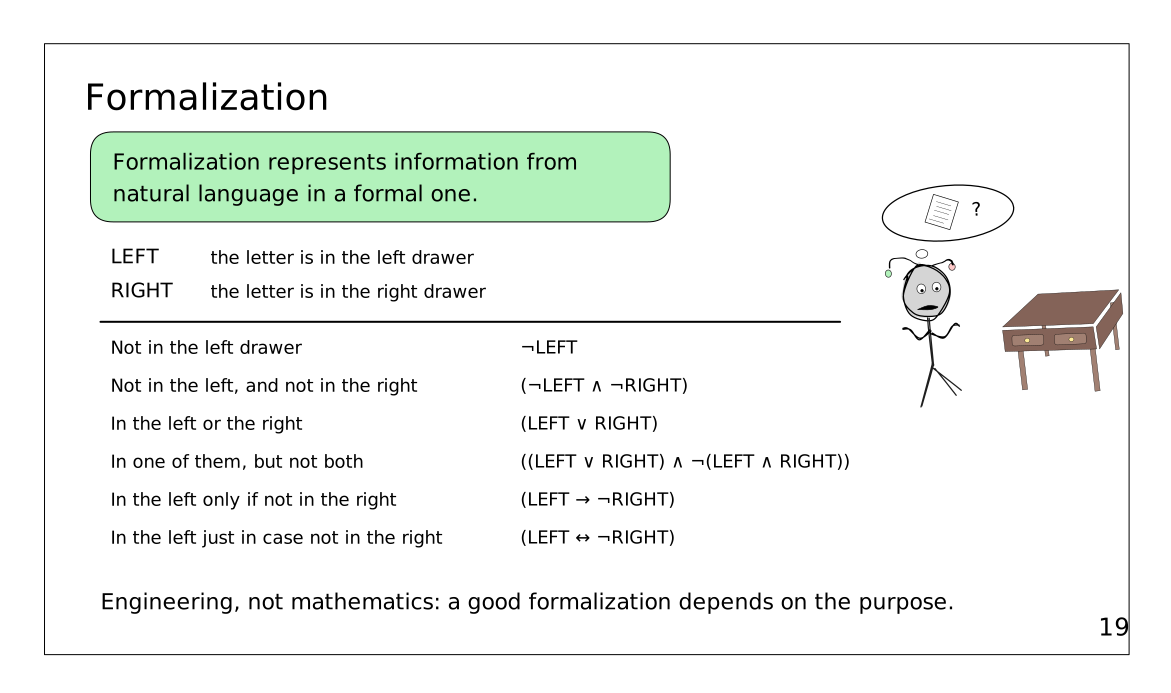
Heading: "Formalization". A green card gives the definition: formalization represents information from natural language in a formal one.

Two propositional variables are stipulated: LEFT, the letter is in the left drawer; RIGHT, the letter is in the right drawer. A table then pairs English claims with their formulas. "Not in the left drawer" is ¬LEFT. "Not in the left, and not in the right" is (¬LEFT ∧ ¬RIGHT). "In the left or the right" is (LEFT ∨ RIGHT). "In one of them, but not both" is ((LEFT ∨ RIGHT) ∧ ¬(LEFT ∧ RIGHT)). "In the left only if not in the right" is (LEFT → ¬RIGHT). "In the left just in case not in the right" is (LEFT ↔ ¬RIGHT).

Closing line: engineering, not mathematics — a good formalization depends on the purpose.

The drawing at the right shows the mascot ∀I beside a desk with two drawers, wondering where the letter is.

20. Knowledge bases and expert systems

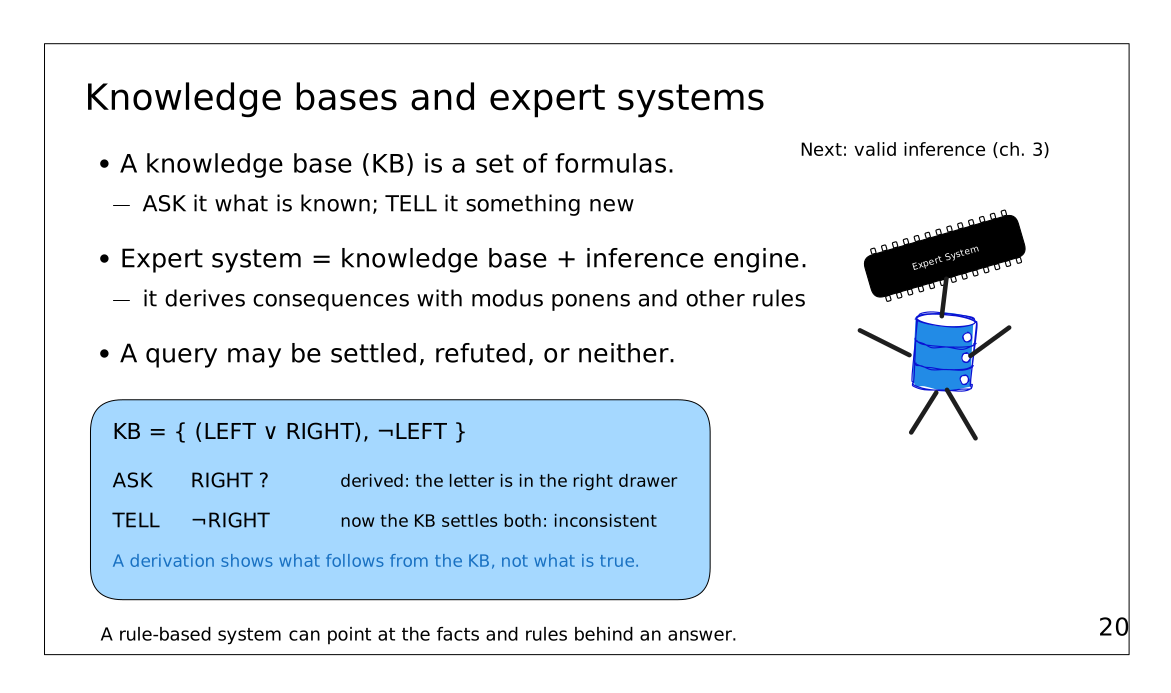
Heading: "Knowledge bases and expert systems". A knowledge base (KB) is a set of formulas: you ASK it what is known, and TELL it something new. An expert system is a knowledge base plus an inference engine, which derives consequences with modus ponens and other rules. A query may be settled, refuted, or neither.

A blue card works a small knowledge base through, continuing the drawer example: KB = { (LEFT ∨ RIGHT), ¬LEFT }. ASK RIGHT? — derived: the letter is in the right drawer. TELL ¬RIGHT — now the KB settles both, so it is inconsistent. In blue: a derivation shows what follows from the KB, not what is true.

Closing line: a rule-based system can point at the facts and rules behind an answer. At the top right: "Next: valid inference (ch. 3)". Below it, the drawing of an expert system as a mascot: a blue database cylinder for a body and an inference-engine chip for a head.