Lecture 1
Logic and AI
Johannes Korbmacher Lecture slides
Use ← / →, Page Up / Page Down, or Space to navigate. Press F for full screen and Esc to exit. Each slide has a shareable URL.
What is on the slidesWritten description
Written description of every slide. Each entry says what the slide shows, including its drawings and diagrams, so the lecture can be read without seeing it. The textbook chapter explains the same material at length.
1. Logical methods for AI — Lecture 1
A pink title card reads "Logical methods for ∀I, Lecture 1". The A of AI is drawn as the upside-down A of the universal quantifier, ∀, which is the course mascot's name.
Below the card: "Chapter 1: Logic and AI", and the course address, logicalmethods.ai. The mascot ∀I waves from the corner, saying "HI!!" and holding a flag that reads "I ♥ ∀I".
2. What you'll be able to do
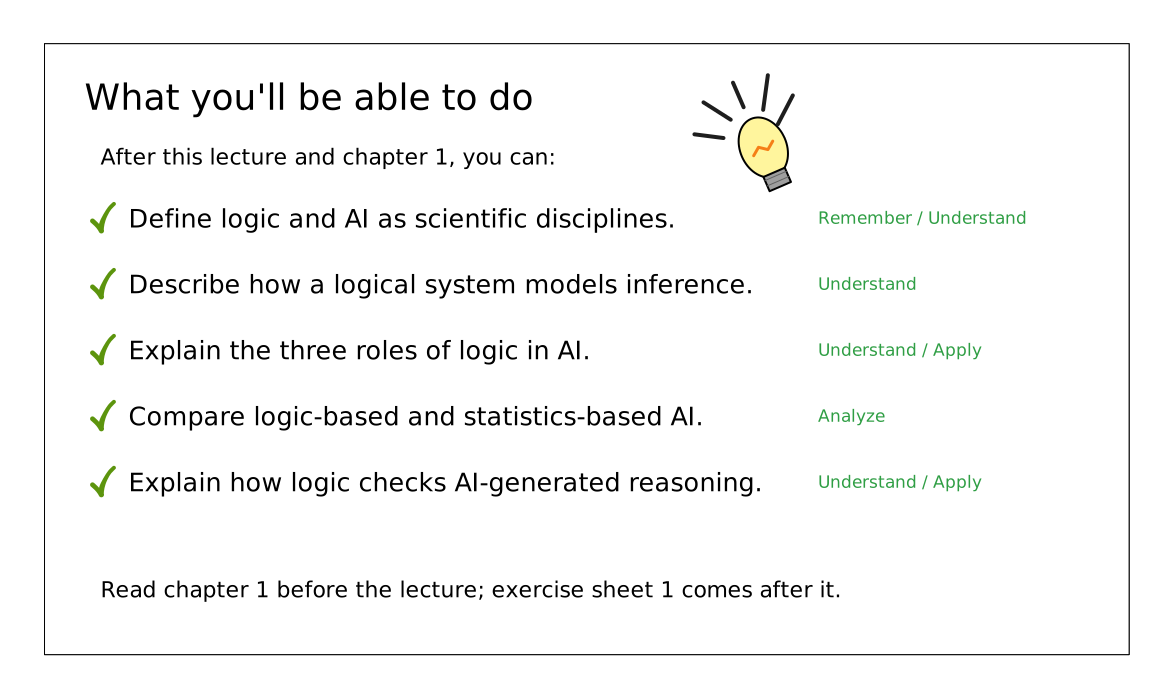
Heading: "What you'll be able to do". Introduction: "After this lecture and chapter 1, you can:". Five goals follow, each ticked off with a green check mark and tagged on the right with its level in Bloom's revised taxonomy.
One: define logic and AI as scientific disciplines. Remember and understand. Two: describe how a logical system models inference. Understand. Three: explain the three roles of logic in AI. Understand and apply. Four: compare logic-based and statistics-based AI. Analyze. Five: explain how logic checks AI-generated reasoning. Understand and apply.
Closing line: "Read chapter 1 before the lecture; exercise sheet 1 comes after it." The mascot ∀I stands at the right wearing a lit lightbulb.
3. Artificial intelligence
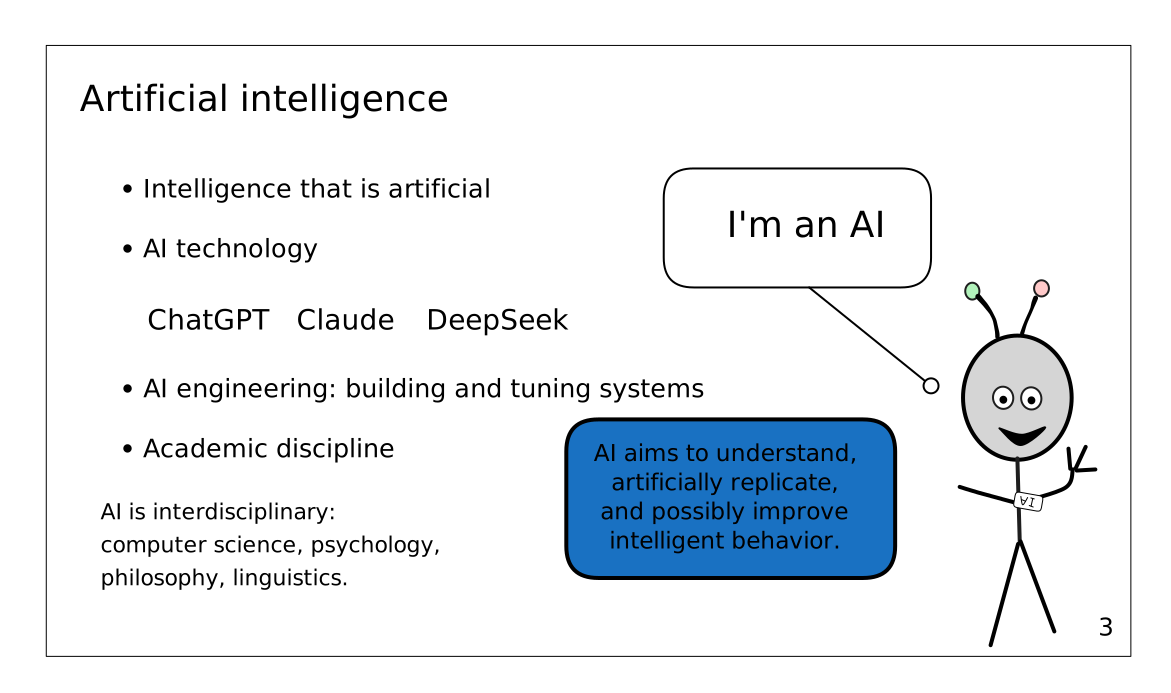
Heading: "Artificial intelligence". The word is used in four ways, listed down the left: intelligence that is artificial; AI technology; AI engineering, meaning building and tuning those systems; and AI as an academic discipline.
Under "AI technology" are the plain text names ChatGPT, Claude and DeepSeek.
On the right the mascot ∀I waves, with a speech bubble saying "I'm an AI". Below it, a blue box gives the definition of the discipline: "AI aims to understand, artificially replicate, and possibly improve intelligent behavior."
Bottom left: "AI is interdisciplinary: computer science, psychology, philosophy, linguistics."
4. Logic
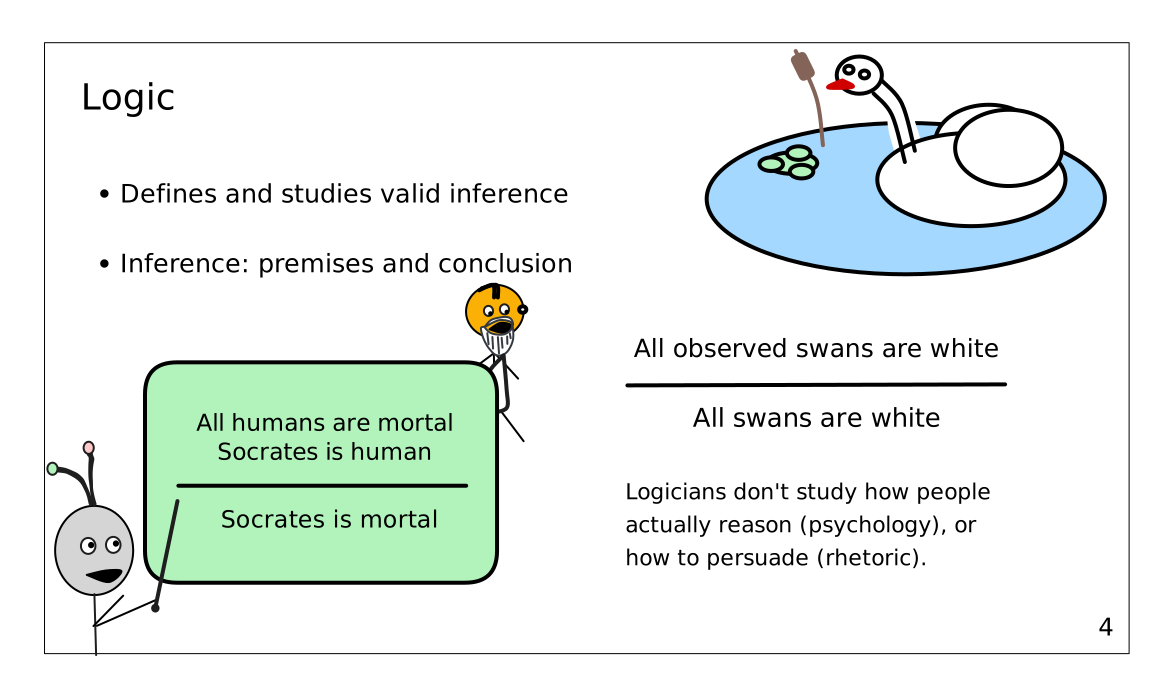
Heading: "Logic". Two points: logic defines and studies valid inference; an inference has premises and a conclusion.
Two example inferences are written with an inference line, which separates the premises above from the conclusion below. In a green box at the lower left, with the mascot ∀I pointing at it: from "All humans are mortal" and "Socrates is human", infer "Socrates is mortal". Socrates himself stands beside the box, a bearded figure in the course's hand. On the right: from "All observed swans are white", infer "All swans are white", with a drawing of a white swan on a pond above it.
A note under the swan example: "Logicians don't study how people actually reason (psychology), or how to persuade (rhetoric)."
5. Reading an inference
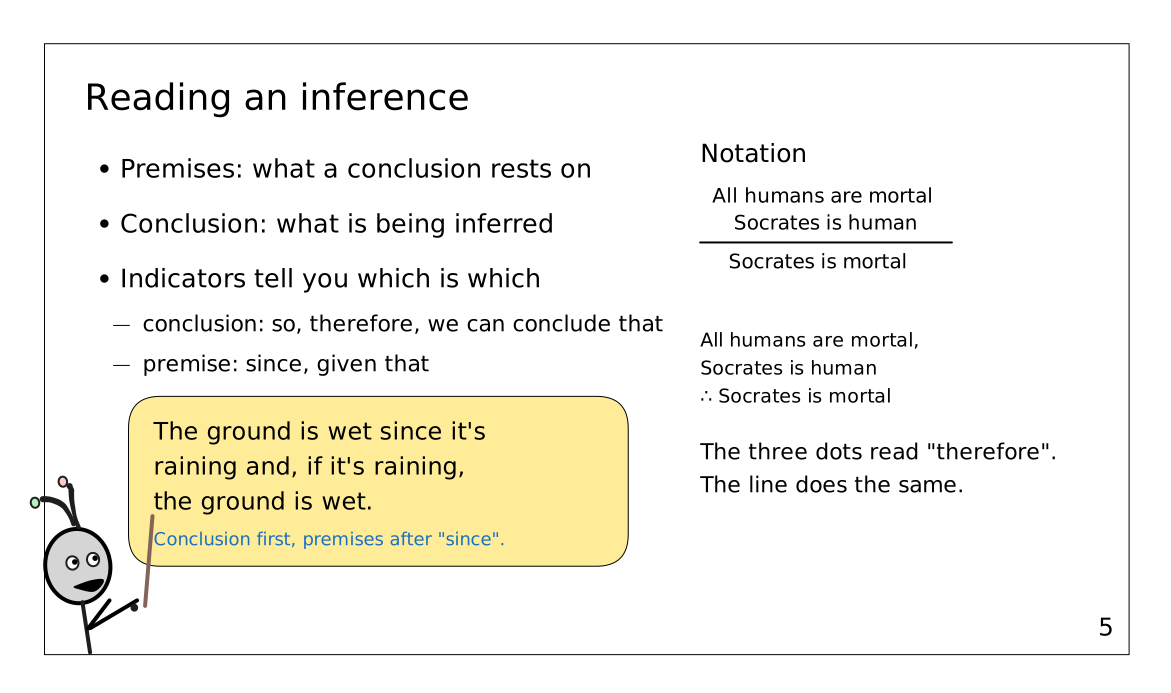
Heading: "Reading an inference". Left column: premises are what a conclusion rests on; the conclusion is what is being inferred; indicators tell you which is which. Two kinds of indicator are listed: conclusion indicators, such as "so", "therefore" and "we can conclude that"; and premise indicators, such as "since" and "given that".
A yellow card holds a worked example: "The ground is wet since it's raining and, if it's raining, the ground is wet." A note underneath reads "Conclusion first, premises after 'since'."
The right column is headed "Notation". First the inference-line form: "All humans are mortal" and "Socrates is human" above a horizontal line, and "Socrates is mortal" below it. Then the same inference written on one run: "All humans are mortal, Socrates is human ∴ Socrates is mortal". Two notes: the three dots read "therefore", and the line does the same. The mascot ∀I points at the notation with a stick.
6. Deduction
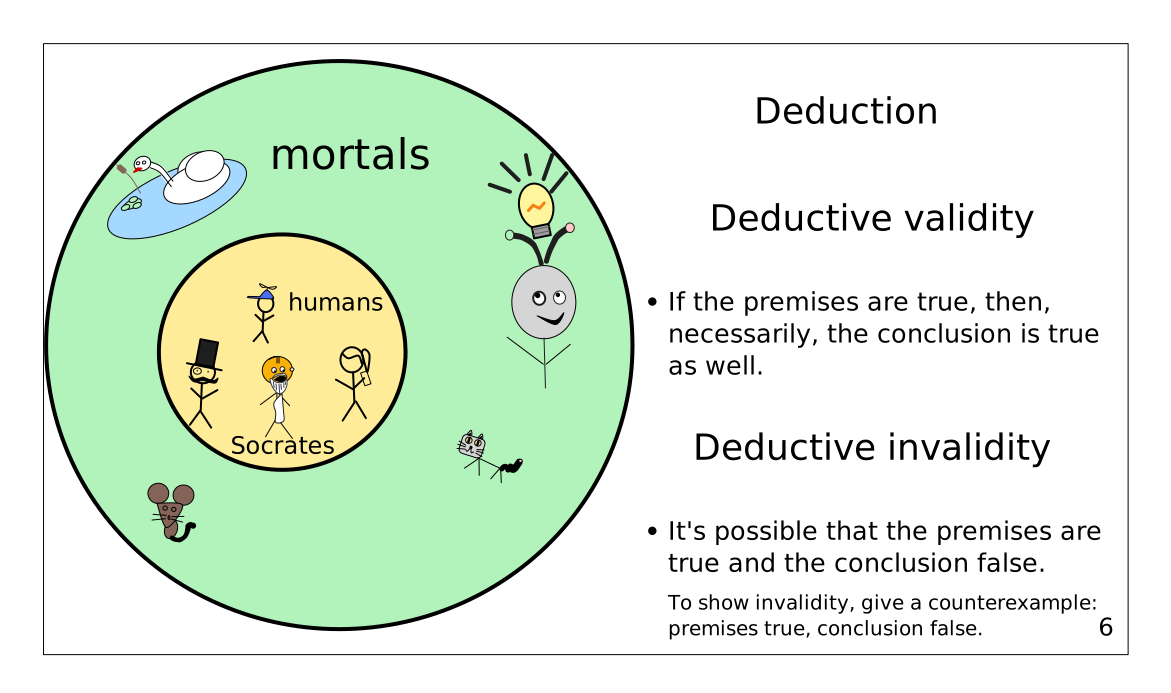
Heading: "Deduction". The left half is a diagram of two nested circles. A large green circle is labelled "mortals". Inside it sits a smaller yellow circle labelled "humans", holding several stick figures, one of them labelled "Socrates". Inside the green circle but outside the yellow one are other mortal things: a swan on a pond, the mascot ∀I with a lit lightbulb, a mouse and a beetle. The picture is the Socrates inference: every human is somewhere inside the mortals circle, so Socrates is too.
Right column. Deductive validity: if the premises are true, then, necessarily, the conclusion is true as well. Deductive invalidity: it's possible that the premises are true and the conclusion false. A closing note: to show invalidity, give a counterexample, that is, a case with true premises and a false conclusion.
7. Induction
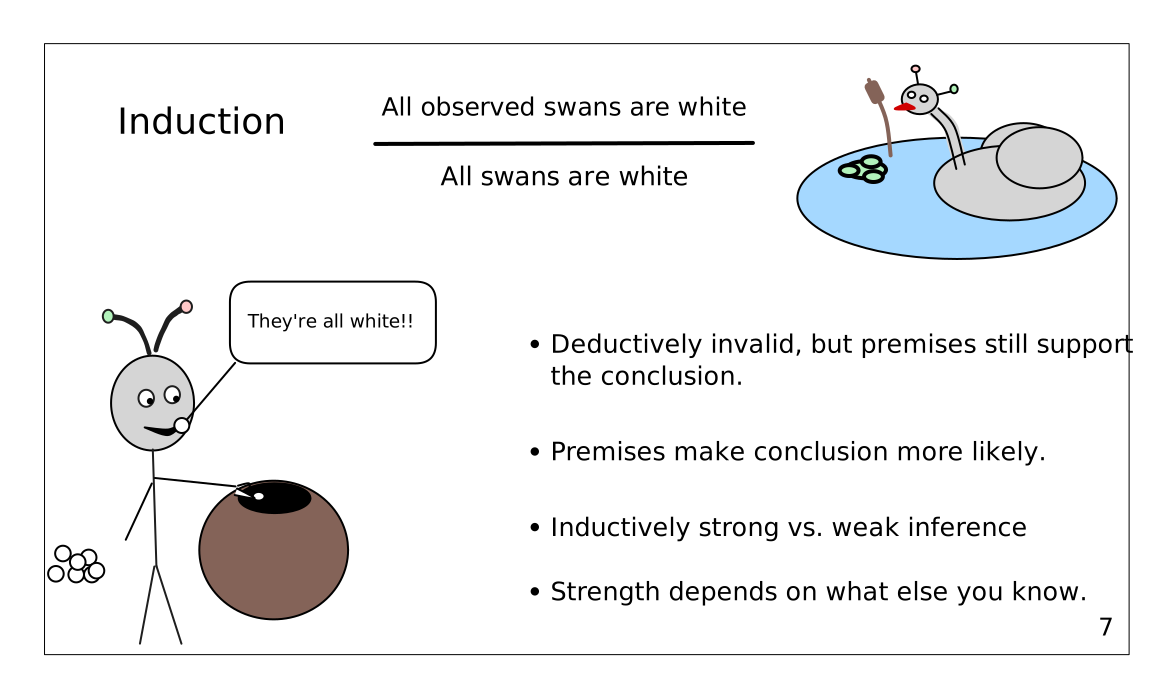
Heading: "Induction". At the top, the swan inference again: from "All observed swans are white", infer "All swans are white", with a swan on a pond drawn beside it.
On the left the mascot ∀I reaches into a brown bowl and pulls out white marbles, which lie beside it. Its speech bubble says "They're all white!!"
Four points on the right. The inference is deductively invalid, but the premises still support the conclusion. The premises make the conclusion more likely. So an inductive inference can be strong or weak, rather than simply valid or invalid. And strength depends on what else you know: if someone tells you they hid a black marble in the bowl, no number of white ones should convince you.
8. Logical theory
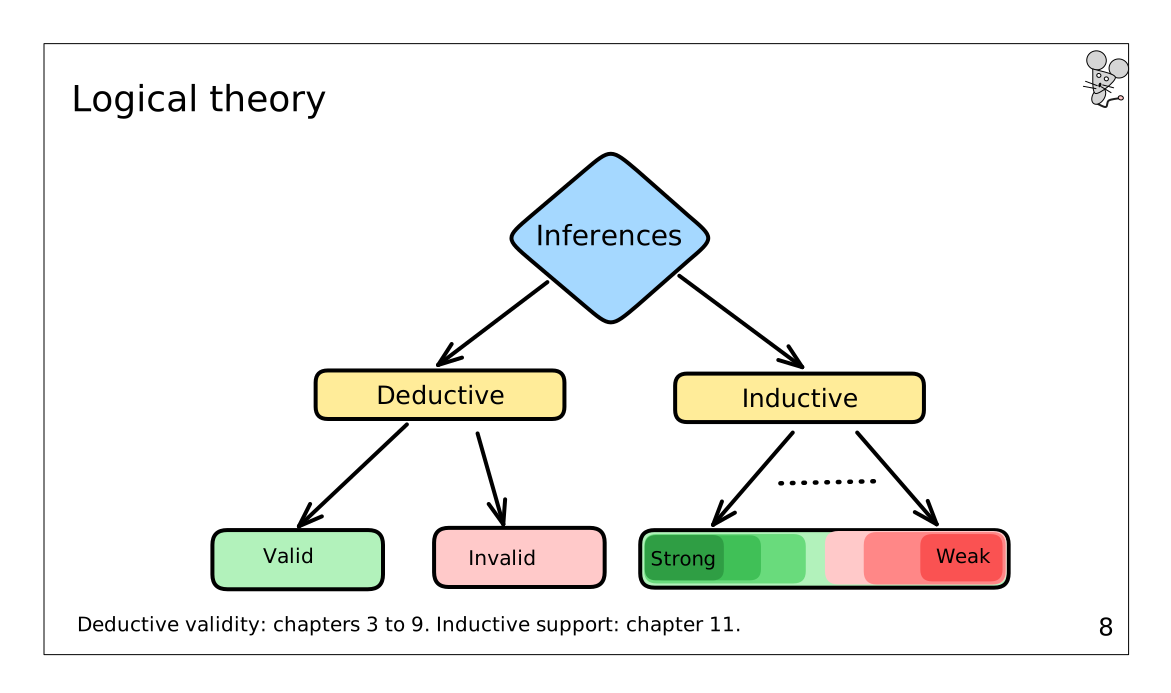
Heading: "Logical theory". A tree diagram classifies inferences. At the top, a blue diamond labelled "Inferences" branches into two yellow boxes: "Deductive" on the left and "Inductive" on the right.
"Deductive" branches into two boxes: a green one labelled "Valid" and a pink one labelled "Invalid". The split is sharp; an inference is one or the other.
"Inductive" branches onto a single bar that shades continuously from green at the left, labelled "Strong", to red at the right, labelled "Weak", with a dotted line across the middle. Inductive support is a matter of degree, not of two boxes.
A note at the bottom: deductive validity is chapters 3 to 9; inductive support is chapter 11. A mouse watches from the top corner.
9. Logical systems
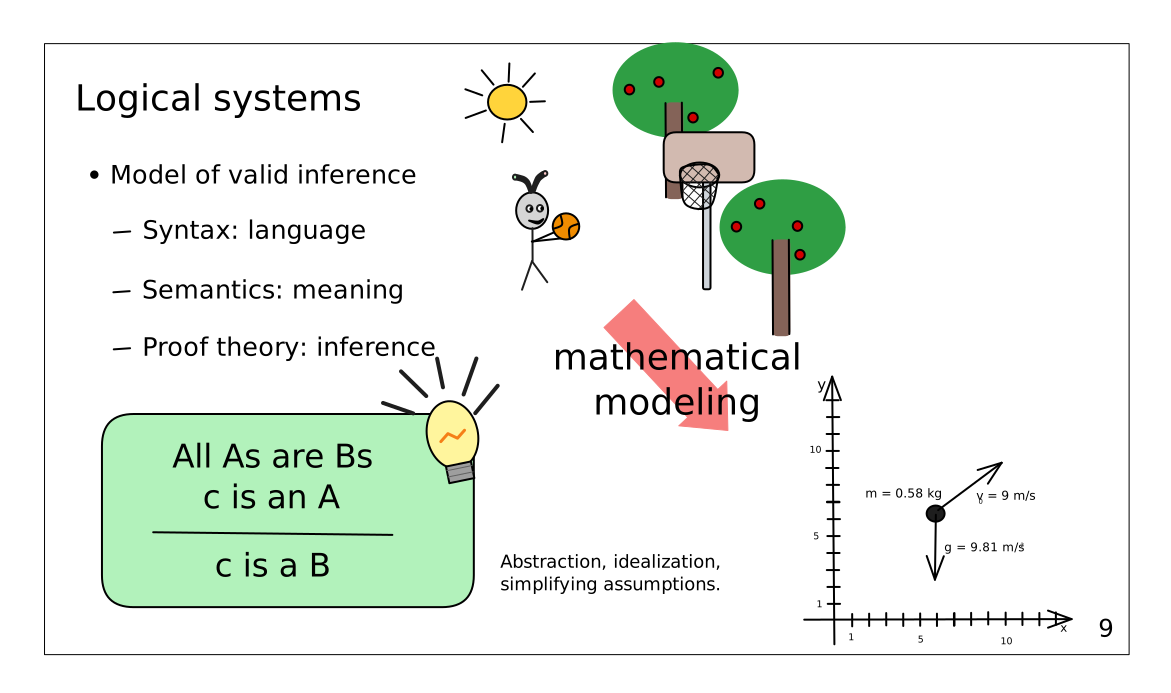
Heading: "Logical systems". A logical system is a model of valid inference with three parts: a syntax, which models the language; a semantics, which models meaning; and a proof theory, which models stepwise inference. A green card below shows a schematic inference: from "All As are Bs" and "c is an A", infer "c is a B".
The right half makes the comparison with physics. A drawing shows the mascot ∀I throwing a ball at a basketball hoop, with trees and the sun. A large pink arrow labelled "mathematical modeling" points from that scene to a coordinate system, where the ball has become a single point carrying labels: mass m = 0.58 kg, initial speed v₀ = 9 m/s, and gravity g = 9.81 m/s².
A note between the two: models work by abstraction, idealization, and simplifying assumptions. Logical systems are built the same way.
10. Logic and AI
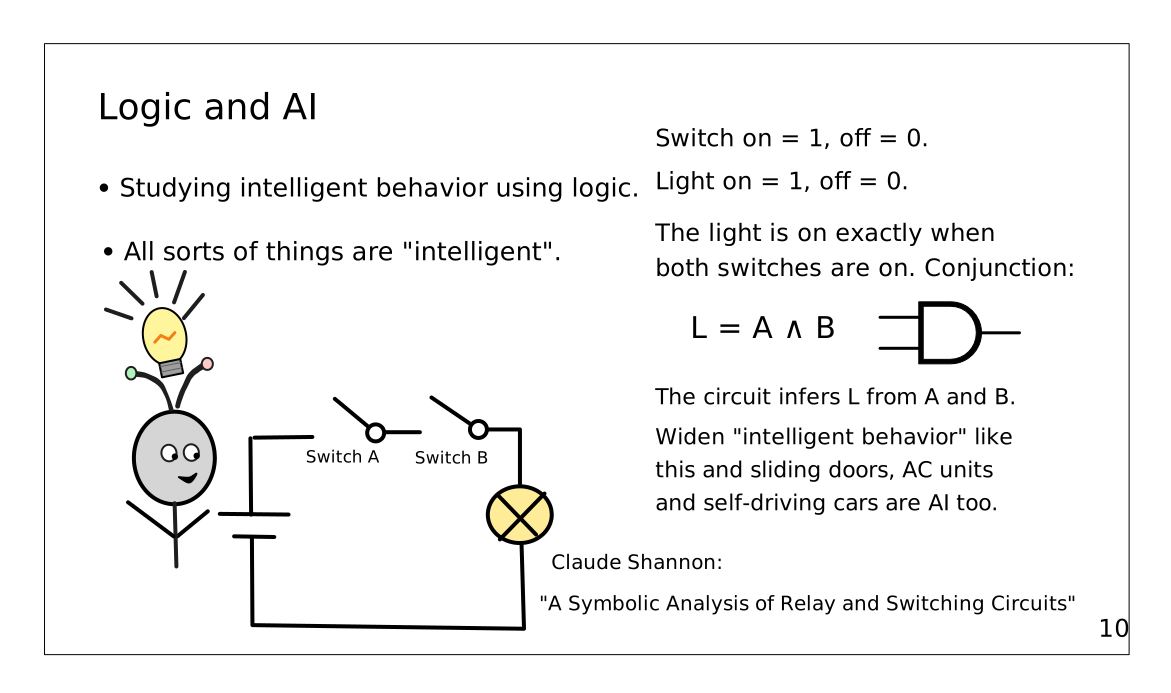
Heading: "Logic and AI". Two points on the left: we study intelligent behavior using logic, and all sorts of things count as "intelligent".
Below them the mascot ∀I stands beside a hand-drawn circuit, wearing a lit lightbulb. The circuit has a battery, then two switches in series labelled "Switch A" and "Switch B", then a lamp. Current reaches the lamp only when both switches are closed.
The right column works the idea through. Switch on counts as 1, off as 0. Light on counts as 1, off as 0. The light is on exactly when both switches are on, which is the operation of conjunction: L = A ∧ B, shown beside the standard AND-gate symbol. So the circuit infers L from A and B: it performs an inference. Widen "intelligent behavior" like this and sliding doors, air conditioning units and self-driving cars are AI systems too.
Attribution at the bottom: Claude Shannon, "A Symbolic Analysis of Relay and Switching Circuits".
11. Logic-based and statistics-based AI
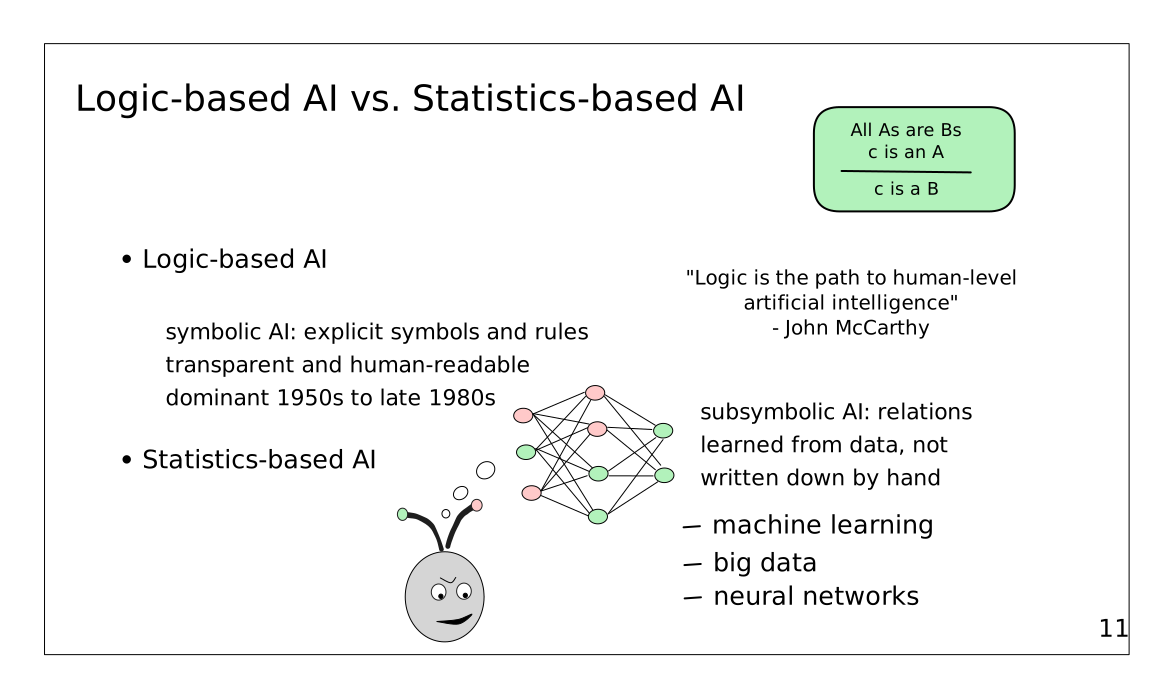
Heading: "Logic-based AI vs. Statistics-based AI".
Logic-based AI, listed first, is also called symbolic AI: it uses explicit symbols and rules, it is transparent and human-readable, and it was dominant from the 1950s to the late 1980s. A green card at the top right shows its characteristic object, the schematic inference from "All As are Bs" and "c is an A" to "c is a B", and beside it John McCarthy's line: "Logic is the path to human-level artificial intelligence."
Statistics-based AI is listed second. A drawing shows a neural network: three columns of coloured nodes, every node joined by arrows to the nodes in the next column, with the mascot ∀I looking up at it. The notes beside it read: subsymbolic AI, whose relations are learned from data rather than written down by hand. Its keywords are listed: machine learning, big data, neural networks.
12. Three ways logic contributes to AI
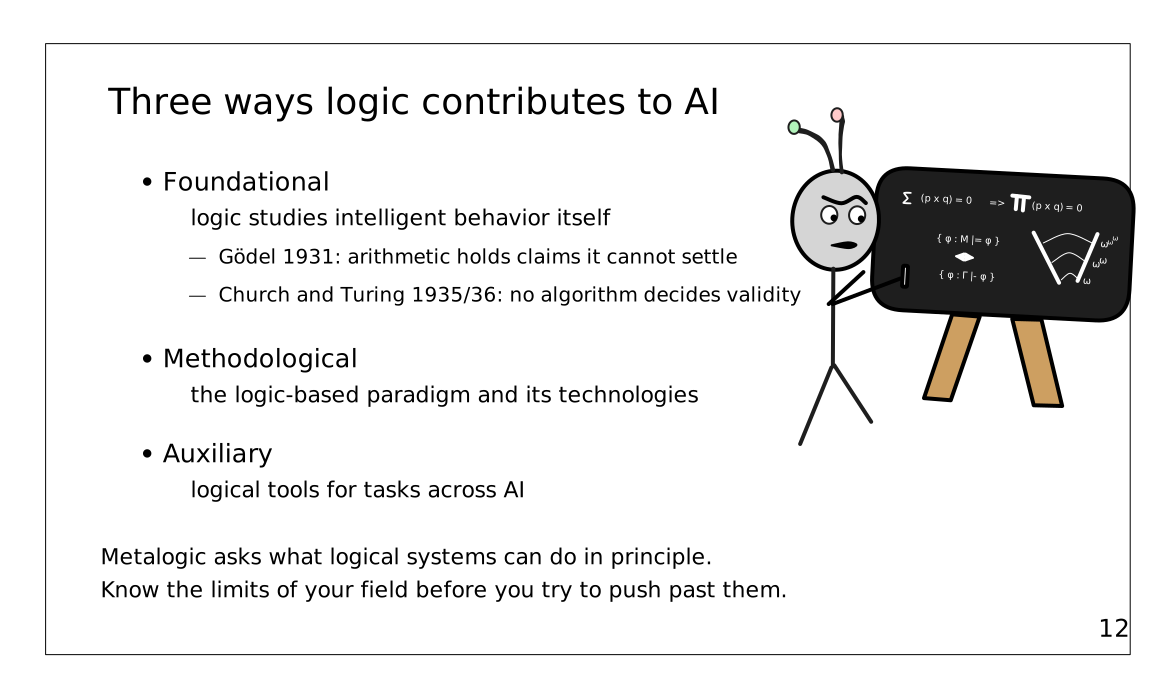
Heading: "Three ways logic contributes to AI". Three roles are named, each with a one-line gloss.
Foundational: logic studies intelligent behavior itself. Two results are listed underneath. Gödel, 1931: arithmetic holds claims it cannot settle, because every consistent, effectively axiomatized theory of arithmetic contains a statement it can neither prove nor refute. Church and Turing, 1935 and 1936: no algorithm decides, for every inference of predicate logic, whether it is valid.
Methodological: the logic-based paradigm and its technologies. Auxiliary: logical tools for tasks across AI. Both get a slide of their own later.
Closing lines: metalogic asks what logical systems can do in principle, and it is worth knowing the limits of your field before you try to push past them. On the right, the mascot ∀I stands at a blackboard covered in metalogical formulas.
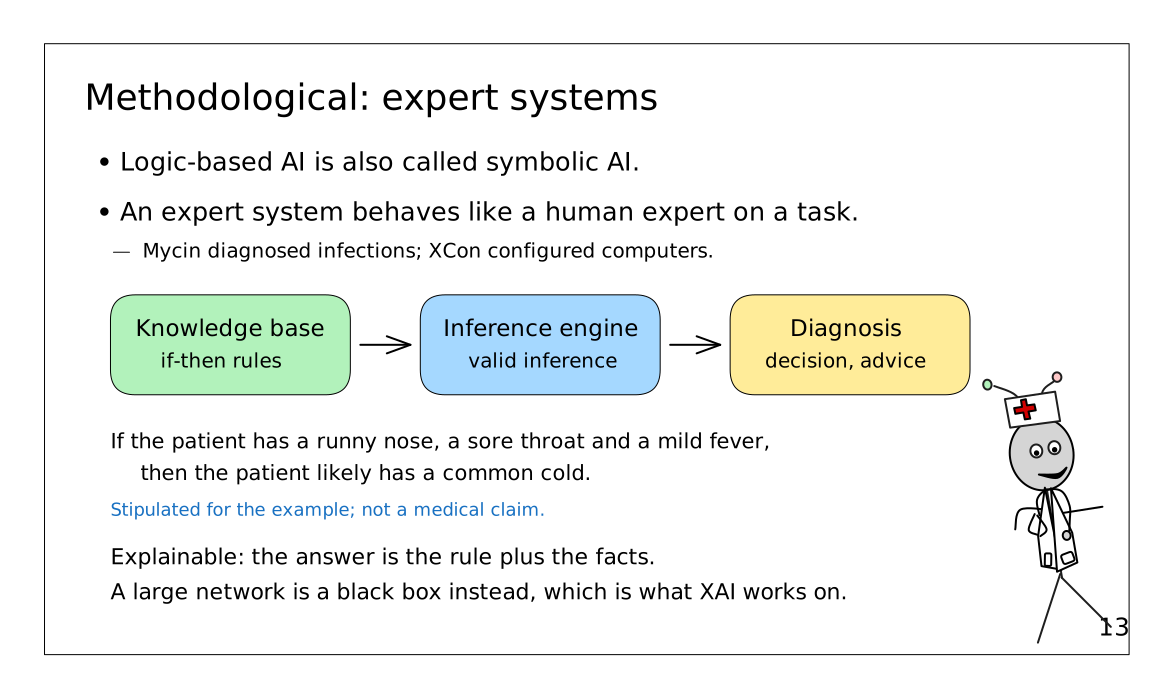
13. Methodological: expert systems
Heading: "Methodological: expert systems". Logic-based AI is also called symbolic AI. An expert system behaves like a human expert on a task; Mycin diagnosed infections and XCon configured computers.
A diagram of three boxes joined left to right by arrows. A green box, "Knowledge base", holding if-then rules. An arrow to a blue box, "Inference engine", which applies valid inference. An arrow to a yellow box: a diagnosis, decision or piece of advice.
An example rule is written out below: if the patient has a runny nose, a sore throat and a mild fever, then the patient likely has a common cold. A note marks it as stipulated for the example, not a medical claim. The mascot ∀I stands beside it in a doctor's coat and head mirror.
Two closing lines. Such a system is explainable: the answer is the rule plus the facts. A large neural network is a black box instead, which is what explainable AI works on.
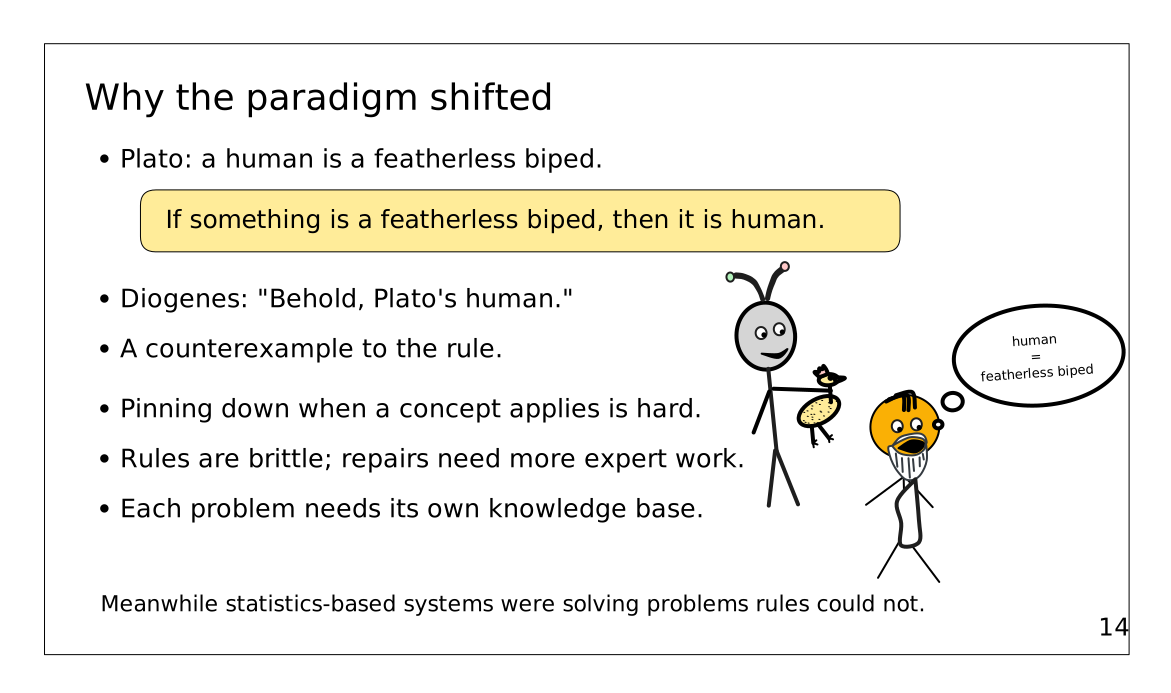
14. Why the paradigm shifted
Heading: "Why the paradigm shifted". Plato defined a human as a featherless biped. The definition is written out as a rule in a yellow box: "If something is a featherless biped, then it is human."
Diogenes says "Behold, Plato's human." That is a counterexample to the rule. On the right, the scene is drawn: Diogenes holds up a plucked chicken, while Plato, thinking "human = featherless biped", has nothing to say.
The lesson for expert systems follows. Pinning down when a concept applies is hard. Rules are brittle, and repairs need more expert work. Each problem needs its own knowledge base.
Closing line: meanwhile, statistics-based systems were solving problems rules could not.
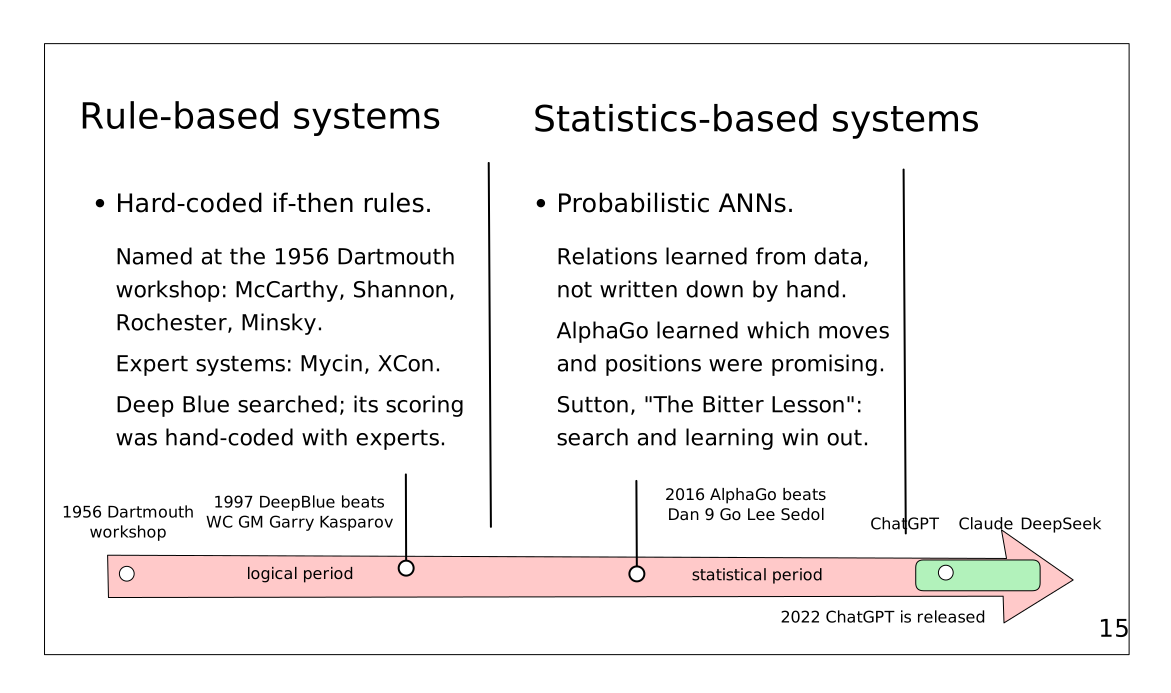
15. A brief history of AI
Two headings side by side, separated by vertical rules: "Rule-based systems" on the left and "Statistics-based systems" on the right.
Under the left heading: hard-coded if-then rules. The field was named at the 1956 Dartmouth workshop, organized by McCarthy, Shannon, Rochester and Minsky. Its technologies were expert systems such as Mycin and XCon. Deep Blue searched, but its scoring was hand-coded with experts.
Under the right heading: probabilistic artificial neural networks. Relations are learned from data, not written down by hand. AlphaGo learned which moves and positions were promising. Sutton's "The Bitter Lesson": search and learning win out. The plain text names ChatGPT, Claude and DeepSeek sit in the corner of this column.
Across the bottom runs a timeline, drawn as a long pink arrow pointing right. Marked points, in order: 1956, the Dartmouth workshop; 1997, Deep Blue beats world champion Garry Kasparov; 2016, AlphaGo beats the 9-dan Go player Lee Sedol; and 2022, ChatGPT is released. The stretch before 1997 is labelled "logical period" and the stretch after it "statistical period", with the final segment picked out in green.
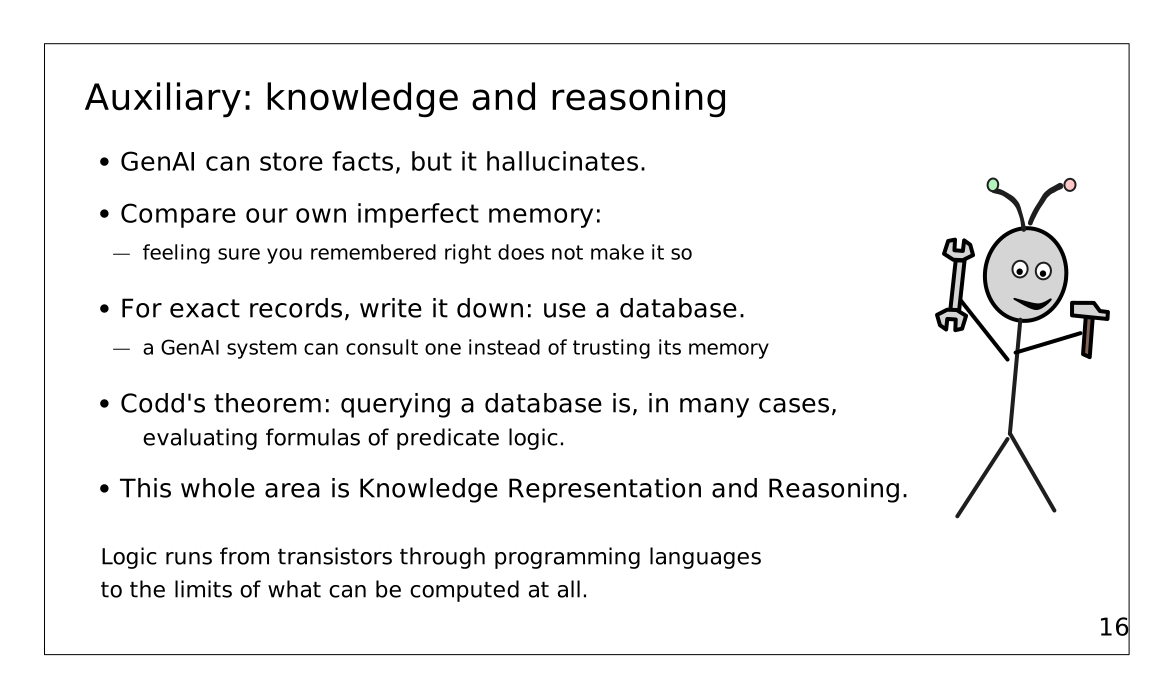
16. Auxiliary: knowledge and reasoning
Heading: "Auxiliary: knowledge and reasoning". Generative AI can store facts, but it hallucinates. Compare our own imperfect memory: feeling sure you remembered right does not make it so.
For exact records, write it down and use a database. A generative AI system can consult one instead of trusting its memory. Codd's theorem says that querying a database is, in many cases, evaluating formulas of predicate logic. This whole area is Knowledge Representation and Reasoning.
Closing lines: logic runs from transistors through programming languages to the limits of what can be computed at all. The mascot ∀I stands at the right holding a wrench and a hammer, because these are tools.
17. System 1 and system 2
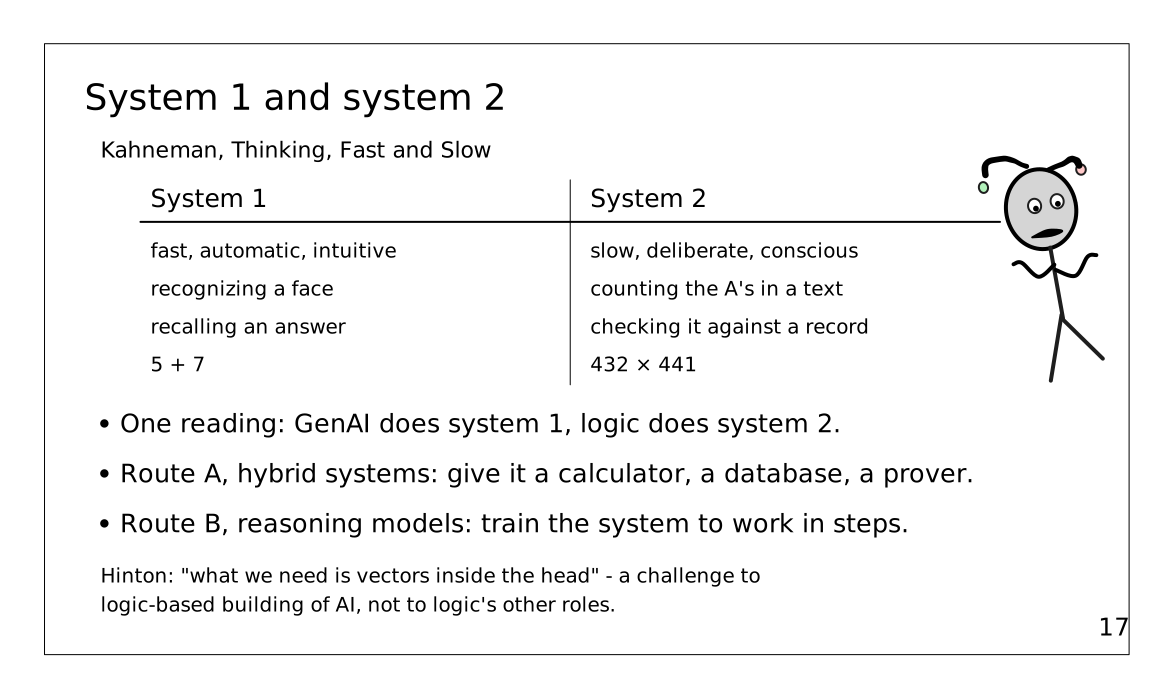
Heading: "System 1 and system 2", after Kahneman's "Thinking, Fast and Slow". A two-column table compares them, with system 1 in the left column and system 2 in the right.
Row by row. System 1 is fast, automatic and intuitive; system 2 is slow, deliberate and conscious. System 1 recognizes a face; system 2 counts the A's in a text. System 1 recalls an answer; system 2 checks it against a record. System 1 does 5 + 7; system 2 works out 432 × 441. The mascot ∀I stands beside the table looking thoroughly confused.
Three points below the table. One reading of the distinction: generative AI does system 1, and logic does system 2. Route A, hybrid systems: give the model a calculator, a database, a prover. Route B, reasoning models: train the system to work in steps.
A closing note quotes Geoffrey Hinton: "what we need is vectors inside the head". That challenges logic-based building of AI, not logic's other roles.
18. Checking the reasoning
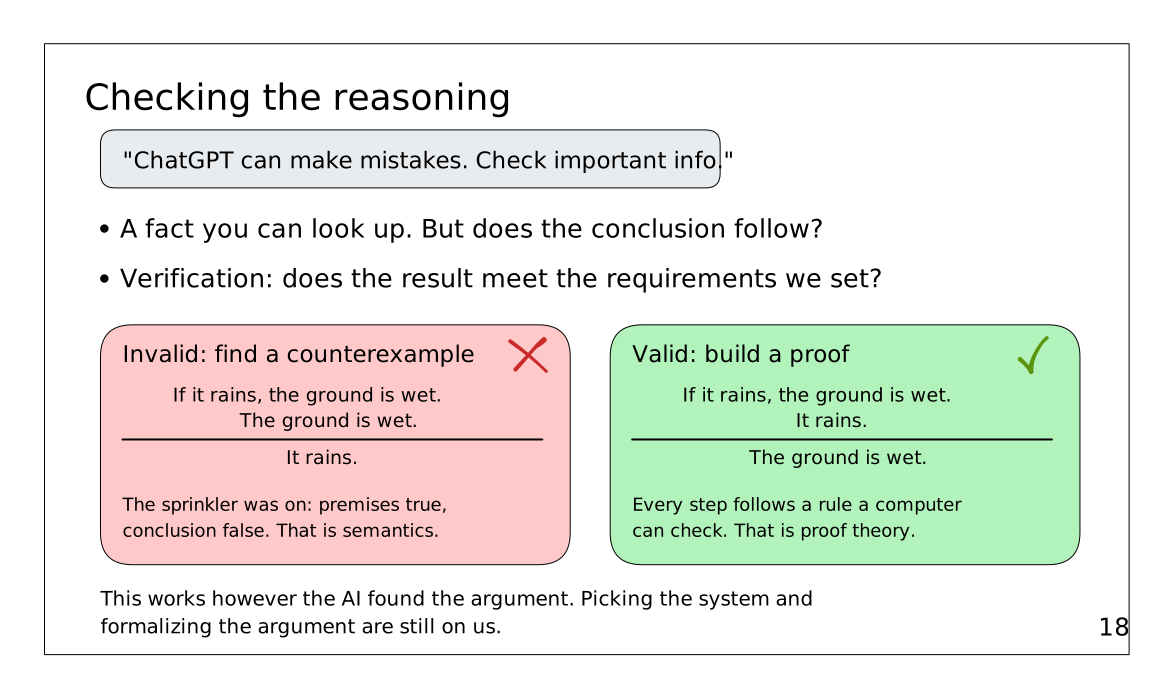
Heading: "Checking the reasoning". A grey box quotes the familiar disclaimer: "ChatGPT can make mistakes. Check important info." A fact you can look up. But does the conclusion follow? Verification means asking whether the result meets the requirements we set.
Two boxes show the two checks, each written with an inference line.
The pink box on the left, marked with a red cross, is headed "Invalid: find a counterexample". From "If it rains, the ground is wet" and "The ground is wet", infer "It rains." The note underneath: the sprinkler was on, so the premises are true and the conclusion false. That is semantics at work.
The green box on the right, marked with a green check, is headed "Valid: build a proof". From "If it rains, the ground is wet" and "It rains", infer "The ground is wet." The note underneath: every step follows a rule a computer can check. That is proof theory at work.
Closing lines: this works however the AI found the argument, but picking the logical system and formalizing the argument are still on us.
19. Checking AI-generated mathematics
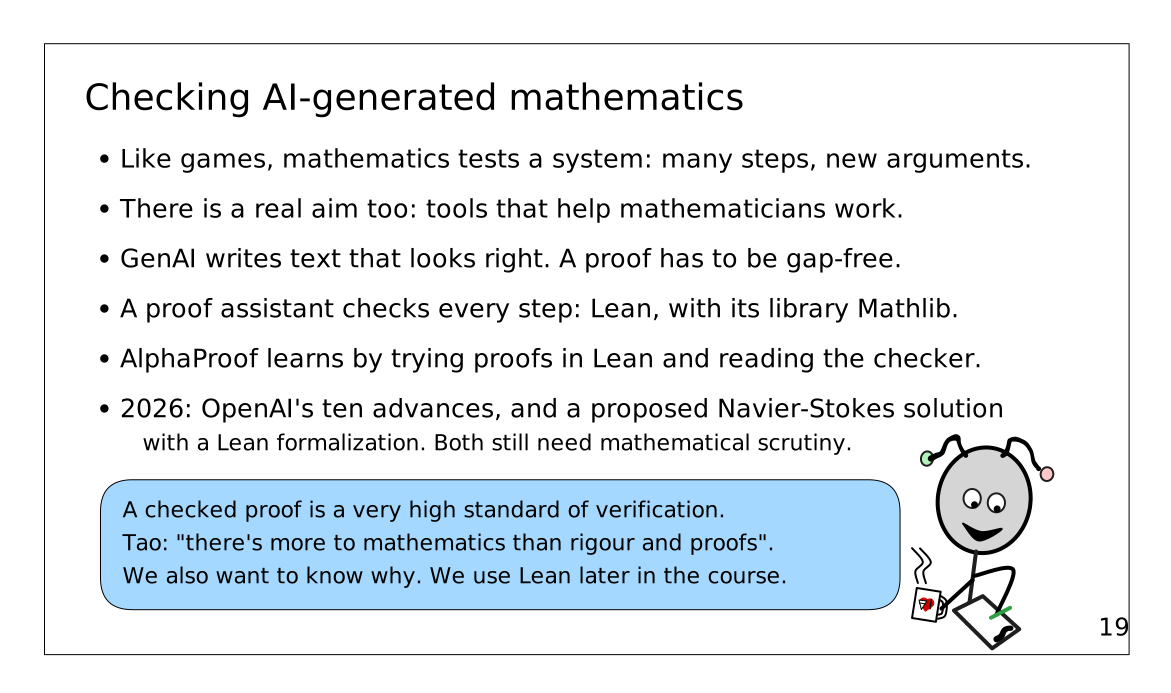
Heading: "Checking AI-generated mathematics". Like games, mathematics tests a system: many steps, and new arguments. There is a real aim too, namely tools that help mathematicians work.
Generative AI writes text that looks right, whereas a proof has to be gap-free. A proof assistant checks every step: Lean, with its library Mathlib. AlphaProof learns by trying proofs in Lean and reading the checker's verdict. In 2026 came OpenAI's ten advances and a proposed Navier-Stokes solution with a Lean formalization; both still need mathematical scrutiny.
A blue box closes the slide. A checked proof is a very high standard of verification. But, as Tao puts it, "there's more to mathematics than rigour and proofs": we also want to know why. We use Lean ourselves later in the course. Beside the box the mascot ∀I sits with a coffee, ticking off a sheet of paper.
20. The future of logic and AI
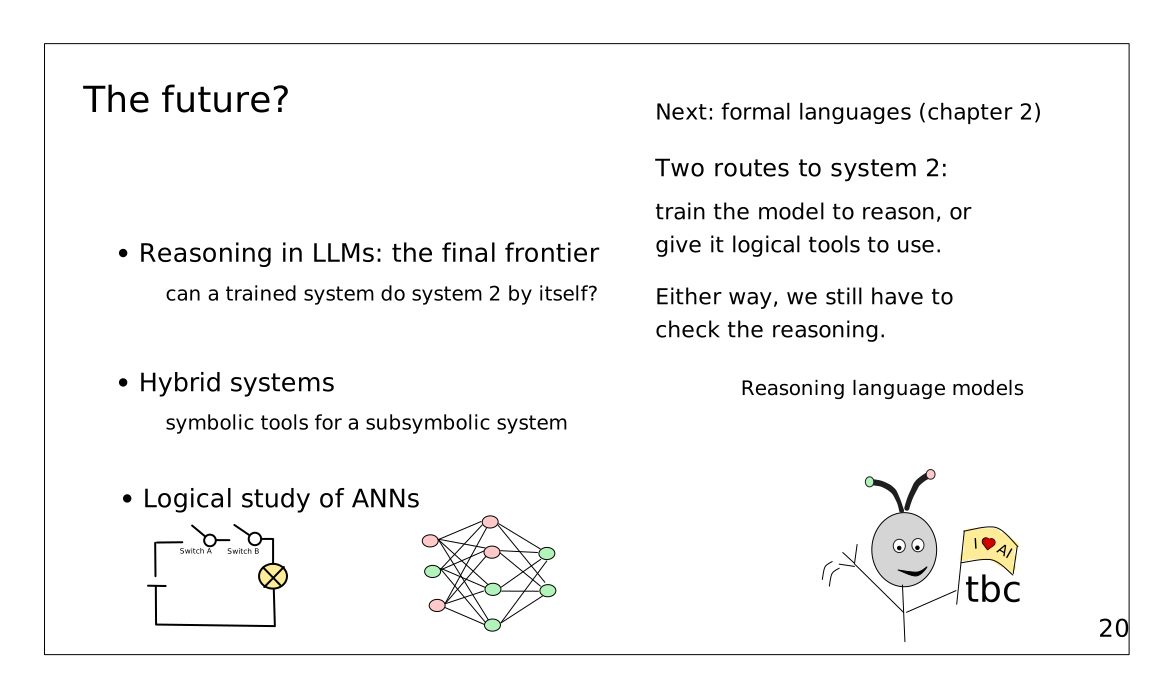
Heading: "The future?". Three directions are listed on the left, each with a gloss. Reasoning in large language models, the final frontier: can a trained system do system 2 by itself? Hybrid systems: symbolic tools for a subsymbolic system, drawn beside a small copy of the switch circuit from the Shannon slide. The logical study of artificial neural networks, drawn beside a small copy of the network diagram.
On the right: two routes to system 2, namely train the model to reason, or give it logical tools to use. Either way, we still have to check the reasoning. The phrase "reasoning language models" sits under it.
The mascot ∀I waves a sign reading "I ♥ ∀I" beside the words "tbc", to be continued. A pointer at the top right: next is formal languages, chapter 2.